

Take Note, America
Hungary’s opposition turned private frustration into public power by giving people something to do. With 124 days until the midterms, the anti-Trump coalition has to do the same.

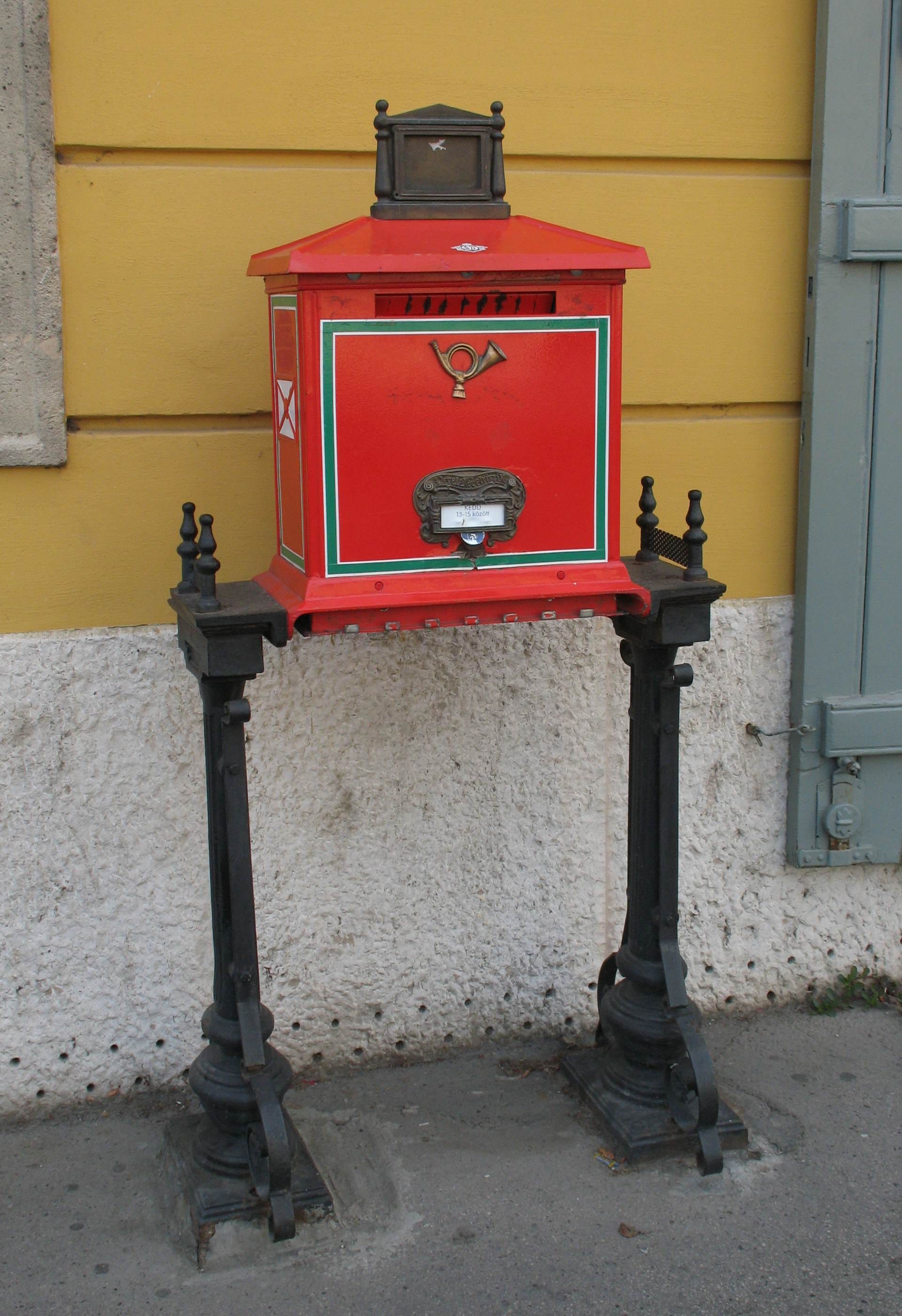
In Bucsuta, a village of about 200 people in western Hungary, the campaign against Viktor Orbán arrived in a mailbox as a newspaper.
The paper was called Tiszta Hang, or Clean Voice. It looked modest: folded paper, ink, something to be held at a kitchen table, then left on a counter where someone else might pick it up. It was organised by Tisza, the party that formed around Péter Magyar, a former insider who broke with Orbán’s system, became the most credible challenger the prime minister had faced in sixteen years, and went on to lead Tisza to a landslide on 12 April 2026. On 27 December 2025, according to Válasz Online, an activist described delivering copies house by house, slipping them into mailboxes across the village.
The scene is easy to miss if you think of campaigns as rallies or television ads. Picture a narrow street at dusk, the kind where you can hear a gate latch from two houses away. A volunteer walks it slowly, stopping at each mailbox, placing the paper inside, moving on. There is no guarantee anyone will read it. There is only the possibility that, in a place where opposition rarely dares to set foot, someone opens their mailbox and realises they are less alone than they thought.
This can be read as just a small action. But it worked in Hungary because it was not just about one leader directing it. Hungarians themselves found each other through these acts, turning scattered frustration into something shared and visible. A movement that began in scandal and fury, with crowds filling public squares, was distilled into a task: take the paper, walk the street, leave it where someone might find it, and, in doing so, make it easier for others to recognise they were not alone.
Tisza later claimed tens of thousands of activists and thousands of local Tisza Islands, referring to volunteer groups.
America’s anti-Trump coalition has no shortage of resources or energy. What it lacks is a way to turn all of that into a coordinated campaign.
From 1 July through 3 November, there are 124 calendar days. There are 124 opportunities until the 2026 midterms. That number is a calendar, but it can also be a schedule of weekends, filing deadlines, early-vote windows and canvass shifts that will either be filled or left empty. It is enough time to build discipline out of what already exists. It is enough time to identify who owns each precinct, who is responsible for each voter file, which weekends are for registration drives and which are for ballot chasing. It is enough time to turn sign-ups into lists, lists into repeated contact, and volunteer interest into assigned work.
All 435 House seats are on the ballot. Democrats need a net gain of three to take the majority, a margin small enough that a few districts, and within them a few thousand votes, will decide control. In the Senate, 33 regular seats and two special elections are up; Democrats need four seats to flip the chamber. Around those headline races sit governorships, state legislatures, judicial contests and ballot measures that will shape how policy is written and how future elections are run. The remaining time until the midterm requires a working plan.
The anti-Trump coalition enters this stretch with real advantages. Trump is weak. In June, AP-NORC put his job approval at 37 per cent in a national poll of 3,040 adults, with most Democrats and independents disapproving of his handling of major issues.
Still, Democratic weakness sits beside Trump’s. AP-NORC found in February that Democrats’ favourable view of their own party had fallen from 85 per cent in September 2024 to 67 per cent in October 2025, with no clear recovery despite special-election wins. The party simultaneously has a mobilisation opportunity and a trust problem.
Young voters sharpen this problem. Harvard’s Spring 2026 Youth Poll found Democrats leading Republicans among young registered voters, but only 35 per cent of young Americans said they would definitely vote in November. Only 33 per cent said they trusted that the 2026 elections would be conducted fairly. That is favourable terrain for Democrats only if campaigns treat distrust as a practical obstacle. A voter who distrusts the process may still vote. They may also miss a deadline, ignore a reminder, or decide that the system has already made their choice irrelevant.
Hungary’s case is valuable here because Tisza showed how private dissatisfaction can be made public and put to use. It changed what those thresholds meant.
Magyar’s rise began in 2024, after a pardon scandal badly damaged the Orbán system and forced the resignation of then-President Katalin Novák. Magyar had been close enough to the governing world to make his break hard to dismiss. At first, his weapon was visibility. Large rallies in Budapest gave a fragmented opposition a new place to stand. Tisza then built forms around that visibility: local groups, volunteer tasks, printed material, candidate selection, digital tools and a country tour that entered territory Fidesz had claimed as extremely loyal strongholds.
The unadorned version says Magyar toured, voters saw him, and Tisza won. The evidence is more applicable than that. Good Authority notes that Tisza targeted rural and competitive districts while largely skipping places where it was already strong, including Budapest. More visits did not mean bigger swings. Districts with no Magyar visits swung about 35 points toward Tisza; those with four or five visits swung about 32. The likely explanation is strategic targeting. Tisza spent time in the more challenging areas.
That caveat strengthens the comparison. Magyar’s tour should not be treated as a singular solution. It was a way of contesting public space. It made momentum legible in places where opposition had often been private. But even that is not the full story. The deeper shift was that Magyar made a claim about Hungary itself: that it belonged to its people, not to its government, not to a party, not to a system that divided citizens into loyalists and outsiders.
He expressed that idea in a line that became one of the campaign’s most effective refrains: “nincs jobb, nincs bal, csak a magyar”, meaning “there is no right, there is no left, only the Hungarian.” In Hungarian, the phrase rhymes and carries a cadence that made it easy to repeat and remember. It resonated widely by shifting the focus toward a shared political community, inviting voters to see themselves as part of the same whole regardless of past affiliations.
Telex tracked Magyar’s 80-day tour from 15 July to 23 October 2025. It began in Tokaj and ended in Budakalász. The stops were scattered across smaller municipalities, places where a campaign visit is an event because it rarely happens. Telex calculated 128 municipalities where Magyar gave a speech or held a substantive voter meeting; Magyar later claimed 158. Nearly half of those places had fewer than 10,000 residents. The smallest, Tiszabábolna, had 277 people, small enough that a campaign stop is more of a gathering than a rally, where everyone recognises everyone else.
To add to this, Magyar went to Arló, a Borsod village of about 3,400 people, where Fidesz had taken 70.33 per cent in the 2024 European Parliament election, the last national election in Hungary before that year’s parliamentary elections. Tisza organisers held an event in Tiszadada, where Fidesz had won 69.92 per cent. He travelled to Nyíradony, a town of roughly 7,000 in the political orbit of Fidesz MP László Tasó; Telex noted that one local precinct had given Tasó nearly 90 per cent of the vote in 2022. Out of the 128 municipalities Telex examined, only eight had backed Tisza over Fidesz in the previous European election. These were places where opposition voters, if they existed, were used to being quiet about it.
Tisza was entering places where many opponents of the government had reason to feel alone. And in those places, Magyar’s message was more than just anti-Orbán; it was healing and connective. It told people that whether they were from Budapest or Pilisjászfalu, whether they had voted left or right, whether they had once supported Fidesz or never had, they were part of the same country. Hungary was not the government speaking at them. It was the people standing next to them.
Telex later followed Tisza activists in Tengőd, a Somogy County village where Fidesz had taken 68 per cent in the previous European election. The activists knocked on doors and handed out Tiszta Hang. Ernő Csatári, a local Tisza organiser, said the work mattered even when few people approached the table. The whole village knew they were there. That was already useful to Tisza and also served as a planted seed among even Fidesz voters.
In nearby Zamárdi, Telex found something closer to defection. One local entrepreneur said he had once voted for Fidesz and had gradually turned against Orbán’s politics. Another man described his own Fidesz vote as the biggest mistake of his life. These were private revisions becoming spoken public positions.
Those revisions happened because people started to identify with a broader political movement and recognise shared goals with others. Tisza built connections between individuals, helping them see themselves as part of a coordinated effort rather than isolated voters.
By March, Telex was reporting on Tisza campaigns that resembled field operations more than protest movements. In one district, campaigners were trying to reach 15,000 voters, about a fifth of the electorate. In another, a source said 60 to 80 regular volunteers could knock 300 to 400 addresses a day. A western Hungarian organiser put the strategy more bluntly: political victory was in their legs.
That line is true, but incomplete. Victory also lay in their ability to make people feel they belonged to the same political community again.
I hear this response constantly from the many thousands of readers who follow my work on The Hungary Report. The phrase comes back most often from Americans: “Take note, America.” The line is right, but only if the note is precise. Hungary offers no hero to import. It does, however, offer a sequence to study: visibility, affiliation, and work. And within that sequence, it offers something harder to replicate: a unifying claim about who the country belongs to.
That is the element that travelled like the wind in Hungary. The useful note for America is not just whether anti-Trump politics can become visible in conservative counties, exurban churches, union halls, campuses, school board rooms, public libraries, county fairs, ballot-measure offices and local campaign launches. It is whether that visibility can carry a message that cuts across the divisions that campaigns often reinforce.
Some of this is already happening. In South DeKalb, Georgia, Jon Ossoff joined more than 100 field organisers and volunteers at the opening of the Democratic Party of Georgia’s first coordinated campaign field office of the 2026 cycle, according to his campaign. The event also served as a canvas launch.
In Charlottesville, Virginia, more than 10,000 people lined Seminole Trail for a March 28 No Kings protest, according to local organisers cited by The Cavalier Daily. The signs stretched for roughly 900 yards. Organisations set up booths encouraging voters to support candidates and initiatives. Supporters of Tom Perriello collected ballot-access signatures. One University of Virginia student told the paper: “For me, this is one way to be civically engaged and resist [the Trump administration] in any way I can.”
The protest created a place to act. The more acute measure is what happened after people went home.
In Charlottesville, that bridge began to appear. C-VILLE reported that local organisers used the No Kings crowd to circulate May Day flyers and recruit people into further action. Kathryn Laughon of Indivisible Charlottesville said she was “blown away” by the response when she moved through the crowd talking about May Day. She later put the point plainly: one day was not the end of the work.
In Texas, Powered by People used No Kings rallies as canvassing sites, asking volunteers to check voter registrations, recruit new volunteers, identify future hosts and enter new contacts into REACH, a relational organising app. That is the campaign version of protest: count the people who came, find out where they live, assign them a next task, and decide who will call them back.
In Jackson, Tennessee, about 400 people turned out for a No Kings protest, according to News From the States. Cindy Boyles, an Indivisible organiser, said it was “empowering” to see that Jackson was not as deeply red as people assumed. Rachel Breslin, 27, described herself as “a blue dot drowning in a red sea.” Their value is psychological. In hostile territory, visibility can become permission. It tells people that private dissent has neighbours.
Visibility is the first act. The campaign begins when someone writes down the names.
Leah Greenberg of Indivisible has put the problem more bluntly: protest is a tactic; it is not a strategy on its own. Hahrie Han, the Johns Hopkins political scientist, offered the tougher warning about mass mobilisation: scale can look like power before it becomes power. That is the jeopardy of treating No Kings as a midterm signal. A crowd can show that people are willing to appear in public. It cannot, however, show, by itself, that anyone has been registered, trained, assigned a precinct or called back.
American opposition to Trump has shown remarkable energy and civic commitment, from legal challenges to large-scale mobilisations and sustained public engagement. However, the next 124 days call for a brutal, more exacting kind of effort: the patient work of assigning roles, tracking progress, and building lasting relationships with voters through repeated, thoughtful contact and relatable messaging.
But there is another gap as well. American campaigns often organise people as Democrats, Republicans or independents. Tisza organised people around a shared national situation. Magyar’s campaign began by asking them to see their political choices within that broader context.
The Democratic Party’s Local Listeners programme aims to reach over one million infrequent voters through volunteer training, phone calls, and grassroots events, reflecting a strategy of early, repeated local contact. The key question is whether it builds lasting capacity in the areas that matter most. Research supports this approach, showing that door-knocking can modestly boost turnout, about 1.5 percentage points on average in the U.S., especially among middle-propensity voters who are reachable but not yet committed.
But we should stay realistic. Research shows campaign ads and outreach rarely change minds in general elections, especially late in the race. What works is early contact and making it easier for people to actually vote.
The final stretch is not only about convincing large numbers of new people to change their minds, but neither is it purely about turning out those already committed. It is about both: expanding the coalition at the margins while ensuring that existing support actually shows up. Tisza’s campaign demonstrated that even in a polarised environment, some voters can be persuaded to cross over, including those who had previously supported Fidesz, when they are given a credible alternative and repeated, direct contact. But persuasion at that level still depends on the same infrastructure as turnout: people talking to people, answering questions, lowering the cost of switching, and making the act of voting feel immediate, patriotic and achievable.
That means contact that is specific and practical: a volunteer sitting with someone at a folding table and walking them through a registration form; a text that includes the exact early-voting dates for their county; a flyer explaining, in plain language, what a ballot measure would do; a campus organiser reminding students of deadlines before they leave for break; a neighbour offering a ride to a polling place; a follow-up call to fix a rejected ballot. It is repetitive, sometimes tedious work, but it is the difference between support that exists in theory and votes that are counted.
As of 30 June, 139 statewide ballot measures had already been certified across 39 states, each with its own campaign, volunteers, and voter lists. The danger is not a lack of activity but fragmentation: abortion rights, voter ID, citizenship rules and election administration fights running in parallel instead of reinforcing one another. Hungary’s lesson is not that America can copy Tisza’s structure, but that tools only matter when they assign work. Visibility must become affiliation, and affiliation must become repeated, local tasks. The American system is too large and complex for a single vehicle, but the question is the same: can anger be turned into an organised, countable effort before Election Day?
There are no guarantees. Democrats still face a profound deficit of trust, and the coming 124 days will reveal whether opposition energy matures into participation or fades into spectacle. The campaign that succeeds will rely on presence and persistence. This is how political change has always taken shape, through the accumulation of small, deliberate acts that bind people to one another and to a shared purpose.
I write this not from a campaign headquarters or a strategist’s office, but from my kitchen table in Barcelona, as one analyst trying to make sense of what is still possible. What I am attempting, in however modest a way, is to insist on a simple truth: people can be reached, systems can be altered, and even those that appear entrenched are not beyond challenge. There remains, despite everything, a reservoir of care that has not been exhausted. The clock is marking the space in which choices can still be made. And within that space, there is still time for concern to become commitment, for commitment to become action, and for action, sustained and shared, to shape the outcome.
Excellent analysis, observations and thoughts. Thanks as always.
Bravo, thank you for documenting the fight for the voice of the people.