

Opinion: The End of Europe’s U.S. Illusion
Trump didn’t break the guarantee. He revealed it was never there.

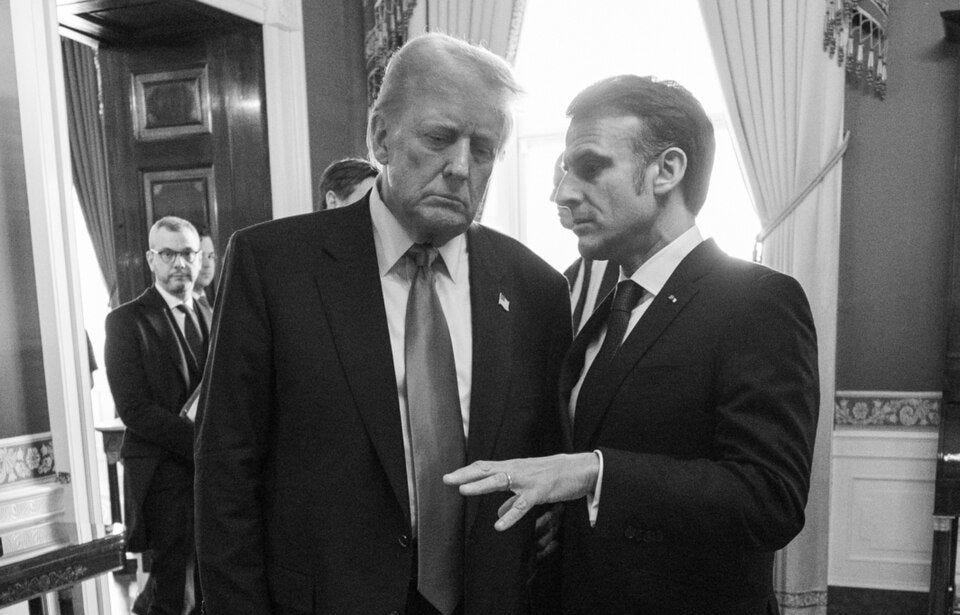
The old assumption has collapsed
For decades, Europe outsourced its security to Washington, calling this reliance a strategy. After the Cold War and NATO’s expansion, dependence on the U.S. deepened. Few called it what it was: a generational bet that the worst would never happen. Careers and defence budgets were shaped by this shared premise. The decision makers are mostly retired. Those paying the price now are a new generation that is inheriting this burden.
Administrations changed in Washington. Priorities shifted. The commitment held, or seemed to. Then, with Trump, continuity broke down.
Trump did more than change the tone. He broke the assumption. The EU’s own foreign policy chief, Kaja Kallas, admitted the bloc is now “adapting to U.S. unpredictability.” That is a failure buried under policy language. Europe’s security foundation is gone.
A continent protected by another country’s politics
Europe did not stumble into this. It was led here by leaders who found it easier to outsource defence, and who knew that as long as Washington held the umbrella, nobody would ask why Europe had stopped carrying one.
The guarantee was never unconditional. It was untested. Trump tested it and said plainly he would not defend allies if they did not pay enough. That was not a bargaining tactic. It was a confession. A guarantee with conditions is just a transaction. Europe was living on credit. Europe banked on U.S. protection and kept its defence budgets thin, betting the bill would never arrive.
Iran is where Europe started saying no
Then came Iran.
When U.S.-Israeli strikes hit Iran, Madrid refused to let the bases at Rota and Morón be used. Reuters confirmed U.S. aircraft had already left. Foreign Minister Albares said the bases exist under the U.N. Charter and Spain’s bilateral agreements. That was final.
Spain was not alone. Macron did not hedge. France would “never” get involved in reopening the Strait of Hormuz. Several European governments outright rejected Trump’s plea for help. Kallas said the EU had “no appetite” to expand its naval mission. Nobody waited for a summit. For the first time in a generation, several European governments showed they were willing to stand their ground.
The Iran episode was more than a disagreement. It was a turning point. These governments, acting independently, drew the same line—showing a shared instinct had replaced summits and statements. When instinct changes for multiple partners, old patterns rarely return. Europe is starting to act on a shared instinct.
Brussels has stopped pretending
For years, Brussels used words to manage security anxiety. Ambiguous language and broad ambitions left room to avoid tough choices. March 2025 changed this. The European Council called for fewer dependencies, the closure of capability gaps, and a stronger industrial base. Three months later, EU leaders repeated the call with a five-year deadline.
From rhetoric to capability
Words have now been followed by money.
In May 2025, the Council adopted SAFE, a €150 billion joint plan. It is part of ReArm Europe / Readiness 2030, which could mobilise over €800 billion for defence. The Commission’s Readiness 2030 sets out clear priorities: building capabilities, improving military mobility, and working more closely with NATO.
Here is what nobody wants to say out loud. The money is not the problem. The sovereignty is. Every government sitting at that table will tell you they want a stronger Europe. Every single one. Then the contracts come up. Then the commands. Then the vetoes. And suddenly, everyone is protecting their own corner. France has pushed for stricter “Buy European” rules, while Germany has been sceptical of broader common borrowing unless it is tied to specific joint projects. The same two countries that had spent months calling for more European defence ambition. The moment it got real, they blinked. Pump €800 billion into that, and you do not get a defence union. You get 27 better-funded national programmes with an EU logo on the door. Europe has been here before. It is called the Common Foreign and Security Policy. Ask anyone how that went.
Ukraine is where the bill arrived. And it arrived all at once.
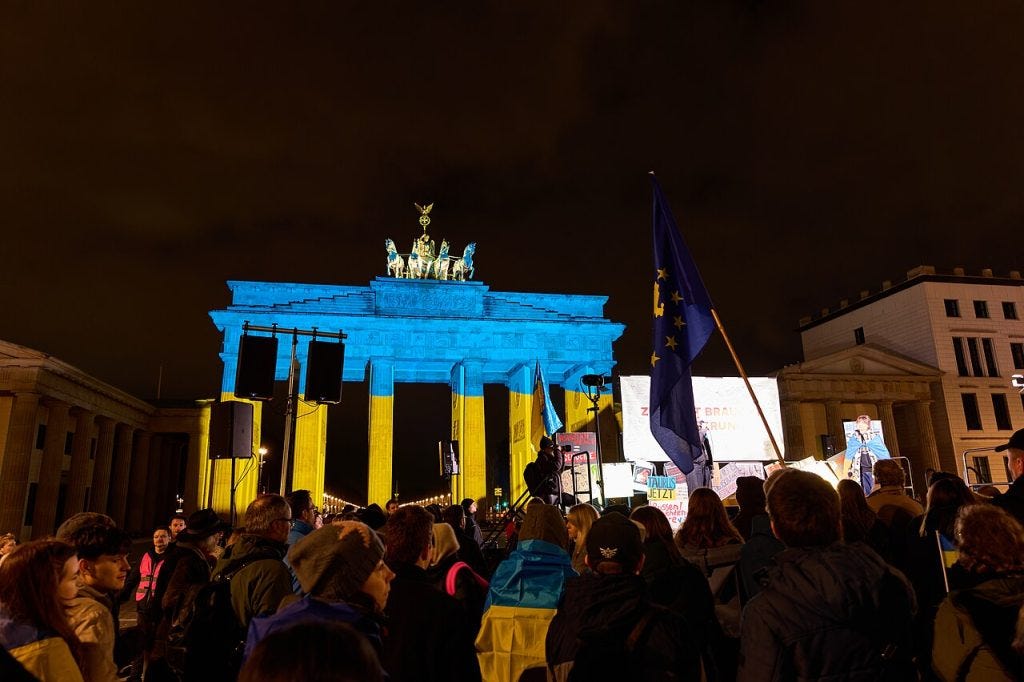
By June 2025, the EU and its member states had put €158.6 billion into Ukraine, including €59.6 billion in military support. The Council promised to keep it coming.
But the numbers reveal a story Europe would rather ignore. Between the first and the hundred-fiftieth billion, Europe fooled itself: writing cheques is not the same as making decisions. Kyiv needs Europe’s courage, not just sympathy.
Support that depends on another country’s election cycle is wishful thinking dressed up as policy.
The cost of that delay is concrete: lives, territory, and time.
Dependence was a choice
Trump ended the postponement. Delay is no longer neutral. Europe must choose.
Capability, not confrontation
A stronger European defence pillar advances NATO. Capable partners carry their weight; dependent ones create vulnerability. Europe’s aim is to earn its seat at the table through action. The test remains: can Europe act independently of Washington?
Europe has taken similar paths before: urgency during crisis, summits, and conclusions, then waiting for external action. This time, the United States and Russia have shown no hesitation. The issue is no longer Europe’s awareness of the moment, but whether understanding will drive genuine action. Building true capability now is essential — otherwise, the next crisis will bring consequences, not warnings.
Constructing real capability requires collective decisions with no room for delay. It demands honouring procurement agreements that truly surpass national interests, establishing command structures for rapid, unified European response, and investing in deployment forces unconstrained by external approval. Europe can define clear shared benchmarks: joint stockpiles, logistics, routine multinational exercises, and synchronised command integration. These steps turn ambition into action, and intent into genuine, collective capability.
This article was first published on The Hungary Report.
Your article is very clear. Agreements are important to maintain world peace. But…trump is a grifter that is only interested in beneficial transactions that benefit him and his family.
Sobering