

I Knew It Was Wrong Before I Had the Courage to Say So
On boyhood, silence, and how the far right turns male insecurity into politics.

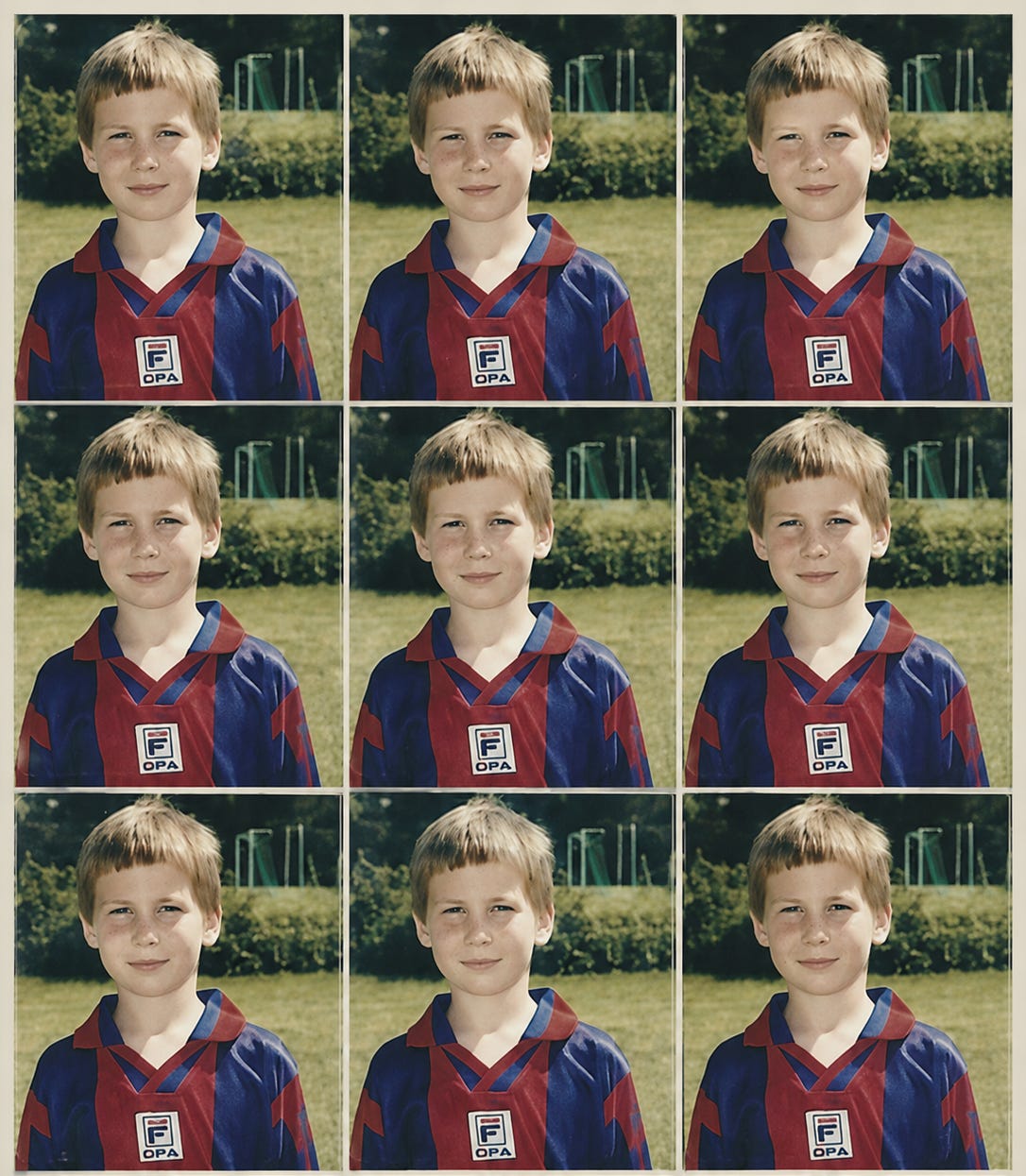
On the playground, I watched boys perform, and I performed alongside them.
Some boys got louder around other boys, rougher, harder, more certain of themselves, or at least more determined to look certain. From early on, I understood that boyhood, at least in the Ireland around me, came with rules nobody admitted were rules.
I grew up in an Ireland where the Catholic Church was no longer untouchable, but it was still everywhere in the afterlife of its power. Its scandals were not sealed away in the past. I had friends whose fathers had been abused in Catholic schools. Clerical abuse, shame, silence and authority were not abstract national history; they lived in families, in conversations, in what people said and what they could not say. Nobody gave me a lecture on masculinity. You absorbed it from faces, jokes, glances and pauses. You learned who was allowed to be soft, and who paid for it.
Be tough. Don’t be too sensitive. Don’t have too many girls as friends, but make sure you could attract girls if you wanted to be taken seriously. Don’t move differently. Don’t speak too softly. Don’t stand out. Masculinity meant caution. Never let your guard down. Never give the boys around you material.
Years later, I would recognise the same fear in politics. The far right saw lonely, angry, humiliated men and treated them like an audience waiting to be sold a script. It told them their shame did not need to be understood; it only needed a target. Someone else had stolen their place. Someone else had made them small. Someone else had to pay. The small humiliations I knew from the playground, the bench before a match and the group chat were given better lighting, louder microphones and a list of people to blame.
Long before I saw it in politics, I saw it close up. Cold tiles before a match. Corridors where everyone measured one another. Playground circles where a joke could tell you whether you were safe. I cannot point to one day when I realised I did not fit the version of boyhood everyone else seemed to know by heart. It was more like carrying a quiet suspicion that I had missed an instruction everybody else had received.
I arrived in Ireland as an outsider, learning English while also learning the older divisions of the place. Boys with boys. Girls with girls. Anything else treated as suspicious, childish, flirtatious or weak. My closest friendships often crossed those lines, and that alone confused people.
With girls and women, I could breathe more easily. I was not constantly proving the same dull things about myself. Around many boys, every gesture felt available for inspection. A look. A laugh. A pause. A friendship. You had to be straight enough, hard enough, casual enough, never too soft, never too emotional, never too close to the wrong person.
Boys were already policing one another before we had the language to know what we were enforcing.
People quizzed me more times than I can count, usually over things that should have meant nothing and somehow meant everything. My voice. My clothes. The way I stood. The fact that most of my friends were girls. That alone became evidence. Evidence of what, I was never quite sure, which was part of the point.
Boys and men would ask what I was getting out of those friendships, or whether I had some hidden motive, as if friendship with a woman had to be a long con, a romantic strategy, or a waiting room for sex. The possibility that I simply liked their company seemed to break something in their imagination. Even now, some men treat genuine friendship with women as if it needs an explanation. It doesn’t. Their confusion is the explanation.
I did not move the way they expected, and I did not wear the armour they recognised, so I learned to notice everything. Who looked too long. Who laughed too quickly. Who repeated a word in a tone that meant it would follow you for the rest of the day. The message arrived long before anyone said it aloud. Stay inside the lines, or others will draw conclusions for you.
That kind of attention gets under your skin. You start hearing yourself through someone else’s ears. You check your voice, your clothes, your posture, the way you laugh, the people you stand beside. You become your own little censor, which is a ridiculous thing to ask of a child and a very efficient way to produce men who fear themselves.
That was the strangest part. So many boys seemed miserable inside the very thing they were defending. I remember the set of their jaws, the glances before a joke landed, the relief when someone else became the target. Everyone knew the laughter could turn, and everyone behaved accordingly. So they got there first, laughing first, hardening first, joining in first, anything to avoid becoming next.
I used to love football. I loved the game itself: the rhythm, the movement, the physical belonging, the feeling of being part of something alive. Then came everything around it. The pre-match cruelty. The need to be one of the lads. The jokes about girls. The casual homophobia. The emotional poverty dressed up as camaraderie.
The sport still mattered to me, but staying inside the culture around it became harder and harder. That is one of the quieter losses of this kind of masculinity. It drives boys away from things they love, not because they are too fragile for those spaces, but because the spaces become too narrow for honesty.
I saw how boys and men spoke about women when women were absent. I saw how quickly a person could become a body, a rumour, a screenshot, a joke. Boys performed cruelty for each other and called it friendship. What unsettled me most was the normality: the easy tone, the familiar rhythm, the sense that everyone already knew their part.
One scene has stayed with me.
Before a football match, when I was a young teenager in Dublin, I remember boys talking horribly about girls we knew, classmates, sometimes even teachers. A name would be thrown into the air and suddenly a whole person became material. A rumour, a body, a joke, a story to be bent into something uglier before we walked onto the pitch.
No one paused. No one said, wait, this is cruel. That almost shook me more than any single comment, how easily the meanness became ordinary.
I remember my body more than the exact words. The knot in my stomach. The hot, useless discomfort. The sudden awareness that a girl we knew had been dragged into the middle of the group without ever being allowed to answer. I kept thinking of her finding out. Of knowing that boys she recognised had spoken about her like that, and nobody had stopped it.
The comments came easily. The laughter did too. There was a dreadful smoothness to it, as if everyone already knew this was part of the ritual before the whistle.
I wish I could give my younger self a braver role in that memory. I can’t. Maybe my face gave me away, and maybe I said something privately afterwards, but I did not break the circle. I did not make the moment stop. I was not brave enough, quickly enough.
That is what stays.
She was nowhere near the bench, but everything bent around her absence. Her humiliation became a way for boys to recognise each other. I understood something then that I still struggle with now: misogyny survives through cruel people being loud and uncomfortable people staying quiet.
It begins there, before manifestos, before politics, before anyone admits what they are learning. A laugh. A rumour. A boy looking away. You learn the rules by watching what nobody challenges. Contempt begins to sound like confidence, silence begins to pass for consent, and the trick is old, pathetic and brutally effective.
Platforms turned what was once a passing moment of cruelty into a permanent, unscrollable feed.
I know what happens when you challenge it in public. I have been called a soy boy, a lefty, a radical leftist, whatever phrase was circulating that week among men who seem to think politics is a personality transplant. When I called out Andrew Tate, some of his supporters sent death threats. That did not make me quieter. If anything, it clarified the point. A movement that answers criticism of misogyny with threats is telling on itself.
This is close to my heart because the people I love most are not theoretical entries in a culture-war. For me they are women. They are members of the LGBTQ+ community. They are people who have had to measure their safety, soften their truth, or wonder whether the room, the family, the street or the comment section would turn on them.
Even as a child, I could not understand the cruelty around sexuality. I had friends who could not come out to their parents. I had friends whose parents withdrew from them after they did. That always seemed obscene to me in the simplest possible way. Why did anyone care who someone loved? Love was love. I never needed a more sophisticated argument, and I still don’t.
I had no clean distance from any of this. I performed too. I made mistakes. I stood by when jokes about women were said aloud. Sometimes I stayed quiet because I did not want to become the problem in the group, and sometimes I wanted belonging more than confrontation.
That sadness has stayed with me. For a long time, I treated discomfort like proof that I was innocent. I thought knowing something was wrong, feeling it in my body, meant I had somehow escaped responsibility. I had not. Silence has a function. It cushions the joke. It protects the boys laughing around it. It tells the target that no one is coming.
I knew it was wrong before I had the courage to say so.
That is one of the things I am trying to understand as I write this. Why do men become cruel? Why do boys who know better stay quiet? Why does the fear of losing your place in a group overpower the thing in you that already knows the truth?
By sixteen or seventeen, I started pushing back more, imperfectly and awkwardly, but more often. Around male groups, when lads passed around pictures of girls and made comments, I would try to interrupt the ritual: why are we doing this? That is a person, not an image. Imagine hearing this as her father, her brother, her friend. Imagine hearing it as her.
It was late and awkward, and it probably made me unwelcome among those who preferred the comfort of everyone laughing along, but it mattered. I started to understand that feeling bad in silence did not make me brave. Knowing better privately was not enough. I had to become the kind of person who could make cruelty less comfortable, even if it made me less comfortable too.
As I got older, I found myself closer to women, gay men, liberal-leaning men, people who did not treat softness as a crime scene. No group is morally pure. Spare us that little bedtime story. Around them, I could usually stop performing.
I could be funny without proving I was hard, soft without being treated as suspicious, political without being dragged into a contest of dominance. I could wear pink, wear jewellery, be expressive, be open, be myself without constantly managing the temperature of my masculinity.
There is a particular relief in finding people around whom your body stops bracing for the joke. You feel it in ordinary places: a kitchen, a pub booth, a dinner table, a friend’s flat. Your shoulders drop. Your voice comes back. You stop measuring every gesture before it leaves you. Tenderness no longer feels like evidence against you.
That is how I learned to separate men from the performance men inherit. One of my oldest friends is a straight man I met in my first days in Ireland. Twenty years later, he is a father I admire deeply. His masculinity has never felt like a warning. It is gentle, loyal, funny, responsible and present. He listens, apologises and cares openly without treating care as a form of humiliation.
Men like him made it impossible for me to mistake the performance for the whole story. The far right makes the opposite move.
It understands something ugly and intimate about masculinity. It understands that many men were raised inside a test they were terrified of failing. It understands male shame, male loneliness, male humiliation, male sexual insecurity and male fear of irrelevance. It keeps men trapped inside the performance and hands them enemies to blame.
In recent years, that script has only become louder. Influencers who sell hatred as self-improvement are treated as guides for lost boys. Men with enormous political power model grievance and domination, and boys around the world are expected to call it strength. There is no mystery here, just a very old sickness with a new face.
Women became too free. Feminism made you weak. Gay men made masculinity ridiculous. Migrants took your place. Liberals humiliated you. The modern world stole what was yours.
The lie is perfectly timed, and that is why it works. The far right gives men a villain before anyone else gives them a language for their pain. It takes the boy who was told not to be soft and tells him softness is the enemy. It takes the man who feels lonely and tells him women are to blame. It takes the man who feels economically powerless and tells him migrants stole his future. It takes the man who feels ashamed and gives him permission to feel angry instead.
Anger replaces grief. Resentment replaces self-knowledge. Domination replaces vulnerability.
I also do not want to let men off the hook. Too many men talk as if feminism, liberalism or modern life suddenly arrived and ruined everything. As if the world was built by some mysterious committee of women, queer people and migrants while men were innocently out for a walk. Men built much of this system. Men benefited from it. Men defended it. Men still teach boys, directly or indirectly, that shame can be escaped by putting someone else beneath them.
Women have more choices now than they once did, and even that remains a fight. The backlash to those choices reveals something ugly. A lot of male power depended on women having fewer exits.
The far right offers men a fake rescue mission. It tells them they can recover themselves by controlling others. Control women. Mock queer people. Worship strength. Despise weakness. Return to an imagined past where men knew who they were because everyone else knew their place. A masculinity that needs enemies to survive is panic in costume.
The tragedy is that many democratic, liberal and progressive spaces have still not answered this properly. Too often, they are excellent at naming what is wrong with men and much worse at offering boys something better to become.
Telling boys to avoid toxicity solves too little. Shame is not a politics. Another performance with better vocabulary will not save anyone. Boys who are told masculinity is poison and then left alone with the shame become easy prey, and that vacuum is where the far right waits.
The alternative has to be stronger than that. It has to tell boys that strength is not cruelty, protection is not ownership, friendship does not need humiliation, desire does not mean entitlement, humour does not require a victim, and fatherhood is not authority theatre but care. Courage means feeling fear and still risking status on the bench, in the corridor, at the table, because someone else’s dignity matters more.
Empathy has to be practised until it becomes stronger than the fear of losing face.
When I think about the boys I grew up around, anger is mixed with sadness. So many were trapped inside the same script. So many had no idea what to do with tenderness except mock it. So many were taught that women were mysterious, threatening, desirable and inferior all at once. So many were handed emotional illiteracy and told it was manhood.
Some became cruel, some became silent, and some became easy prey for politics that told them their pain was someone else’s fault. That is why this matters far beyond personal memory. A man taught to see equality as humiliation is easy to radicalise. A man taught to treat compromise as weakness is easy to recruit into authoritarian politics. A man convinced that women’s freedom caused his loneliness will never ask who actually profited from his isolation.
Private insecurity, organised at scale, becomes public danger.
Still, men are not doomed. More men have to speak up, not as saviours, not for applause, and not because doing the bare minimum deserves a parade. They have to speak because silence is part of the system that trained us. The boys watching now deserve better than another generation of men who notice the cruelty and look away.
I know too many good ones to believe that. I have seen male friendship be gentle. I have seen fatherhood be beautiful. I have seen men love their families without needing applause for basic decency. I have seen gay men build forms of courage that should shame half the men who call themselves strong. I have seen women carry emotional weight men refused to touch, and still insist on better for the boys coming after them.
The alternatives exist. They just rarely have the loudest microphones.
I am writing this mostly to understand it for myself: to understand the boy who knew something was wrong but did not always speak, the men who seemed so terrified of softness that they turned cruelty into a social language, and the far right that has become so fluent in that fear.
I cannot go back and be braver on every bench before a football match, in every school corridor, in every circle where laughter asked for my silence. I cannot undo every silence or rewrite the moments when I knew better and still said nothing. I can refuse to romanticise them.
The alternative begins much earlier than politics. It begins with your mates, in the school corridor, around the lunch table, in the group chat, wherever someone decides whether cruelty will be allowed to pass as humour. It begins when the girl is mocked, when the gay friend becomes a warning, when the easy laugh is waiting, and the boy who knows better feels that small, awful second before he either speaks or disappears into the group.
I know that second. I have lived inside it. I chose silence too many times, and I still carry the shame of that. But I also know this: the world does not change because men privately feel bad about the things they let happen. It changes when they finally speak up.
I stayed quiet too often. I am trying not to anymore.
Superb essay. Thanks for the long, meaningful read.
You explain a lot with behaviors we are all familiar with. Men are raised to be cruel, to fight, to conquer. But not to rule wisely or well