

Closure Is Not Revenge
A country cannot repair what it refuses to examine.

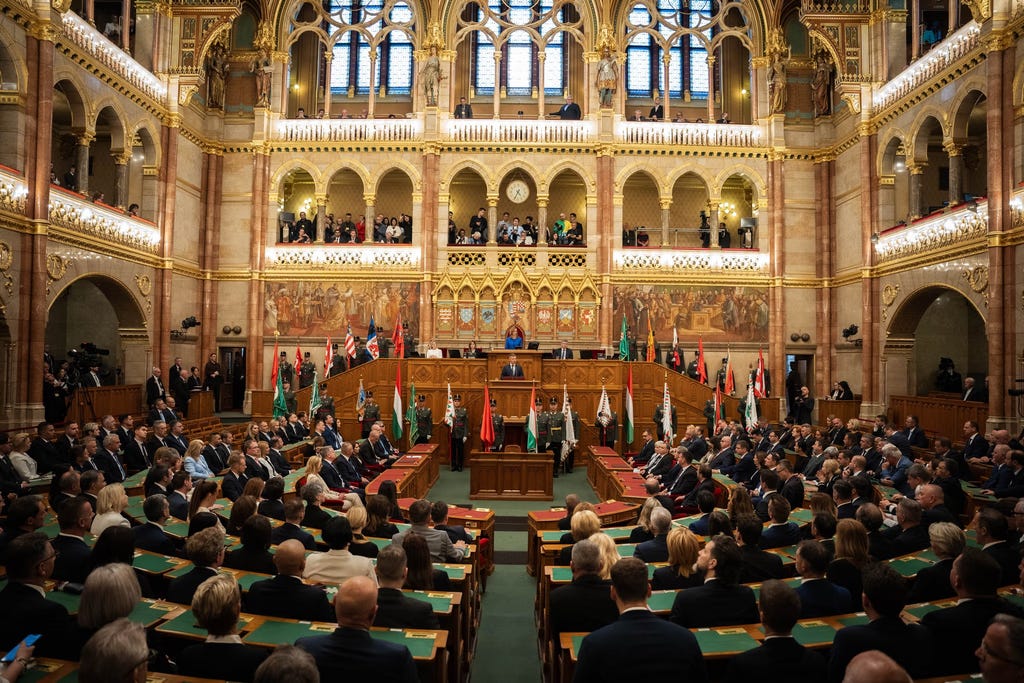
Hungary cannot simply step past Viktor Orbán. Behind him is a state trained in his syntax. Ministries learned delay as a form of loyalty; prosecutors learned that stillness could speak; editors and business owners learned the cost of misunderstanding a hint. Power did not always need to give orders. Often, it only had to create a climate in which everyone knew what obedience sounded like.
That is harder to vote out than a prime minister.
After every rupture, the same script waits nearby. Citizens are urged to let go, rebuild, and show restraint. The language comes dressed as maturity, sometimes even as kindness. Do not reopen old quarrels. Do not divide the country. There are hospitals to fix, schools to rescue, prices to tame, wages to protect, and bills to pay.
There is truth in that exhaustion. Hungarians have every right to want ordinary life again: hospitals that heal, schools that teach, wages that survive the month, and a state that no longer sorts citizens by loyalty, usefulness, or threat. After sixteen years of politics, the hunger for quiet is human, entering the room before the person does.
But quiet can also be a hiding place.
Hungary cannot build normality over sealed files and call it a repair. Orbánism was never confined to Orbán’s office, his speeches, or the theatrical cruelty of his campaigns. It seeped into appointments, media ownership, prosecutors’ calendars, advertising budgets, emergency decrees, regulatory bodies, public assets, and the professional instinct to ask what power expected before asking what the law allowed.
Explaining that requires evidence. Without it, the old system will begin its second life, not as government, but as a story.
Orbánism Was Built to Survive
Give the Orbán years enough silence, and they will return with more energy. Their afterlife will not begin with EU funds, public contracts, captured outlets, obedient boards, or the prosecutor’s empty desk. It will begin with a sigh. Things worked then. There was order. Hungary was respected. Families were protected. Brussels feared us. Nostalgia rarely asks for audited accounts. It only needs to feel useful.
This is how defeated systems preserve themselves. They leave the office and take up residence in memory. Their worst habits shrink into anecdotes, their crimes into excesses, their corruption into folklore. The longer the record remains incomplete, the easier it becomes to sell the myth.
Magyar’s first constitutional moves matter for that reason. The proposed eight-year limit for prime ministers is not simply a lock placed on Orbán’s personal return. It is a recognition that Hungary allowed power to settle too comfortably in the hands of one individual. The planned dissolution of the Sovereignty Protection Office and the recovery of assets transferred into public-interest foundations point to the same buried fact: Orbánism was not only electoral dominance but also possession disguised as governance.
Treating these measures as routine housekeeping after a long occupation of the state would miss their real significance. Hungary needs a public reconstruction of how the system protected itself. Not one grand confession. Not one theatrical day of televised catharsis. The country has to follow money until it stops moving, read minutes no one expected to matter, restore meaning to signatures, appointments, tenders, legal opinions, media deals, university transfers, and the administrative details that made capture look respectable.
This is the work of repair when a state has been bent without formally breaking. Courts will have their role, but courts alone cannot rebuild the factual world. The deeper task is civic: to make the old methods visible enough that they lose their innocence. What happened has to become knowable, teachable, searchable, and impossible to deny.
Orbán’s system was the kind of capture Europe spent years telling itself it would recognise: legalistic, procedural, almost boring until one looked at the outcomes. The language of law remained. Offices kept their brass plates. Forms were filed. Votes were counted. The danger lay precisely there. The shell stayed familiar while the animal inside changed.
Orbánism’s most important innovation was making the theft of democracy look like mundane bureaucracy.
The Press Became Infrastructure
The media system shows the method. Outlets were pressured, bought, starved, merged, intimidated, or surrounded until the old forms of pluralism remained visible long after the market had been bent.
Reuters recently described Orbán’s media empire as one of the pillars of his sixteen years in power, with state media under increasing government control and private outlets shut down or taken over by pro-government businessmen. KESMA, the Central European Press and Media Foundation, was created by Orbán’s allies in 2018 and gathered nearly 500 outlets under a pro-government umbrella. Magyar has pledged to cut state advertising flows to the group and review its creation.
The damage went beyond the daily lie. A captured media environment changes how people relate to reality. Facts become weapons. Investigations become conspiracies. Journalists become agents. Questions arrive already suspected. Over time, cynicism starts to feel like sophistication, when in fact it is one of authoritarianism’s cheapest forms of protection.
The human part matters. People do not enter politics as clean instruments waiting for better information. They bring identity, fear, pride, resentment, memory, and a sense of belonging. News reassures as much as it informs. It tells people who is on their side, who threatens them, and which facts can be ignored without feeling dishonest.
That is why the record matters even when many people will refuse it. Some Orbán voters will reject the evidence before it is printed. Some will blame Brussels, Soros, the new government, foreign journalists, and revenge. A public record is not built to win every argument in the present. It is built so that future lies have to work harder.
Ten years from now, when someone says things worked, there should be ledgers to prove it. When someone says the theft was minor, there should be procurement records to back it up. When someone says the media was free, there should be ownership files and advertising flows. When someone says the foundations were private, there should be a paper trail of asset transfers. When someone says prosecutors did their job, there should be a public account of the cases that never moved.
Without a record, rumour becomes the archive.
Nostalgia Is Not Innocent
The Fidesz response will be familiar. It will avoid the contracts that are hardest to defend, the foundations that are hardest to explain, and the audits that cannot be answered cleanly. The argument will move to safer ground: patriots persecuted, sovereignty under attack, enemies at the gate, accountability recast as vengeance.
When evidence threatens belonging, belonging often wins. Hungarians know the street version of this long before anyone gives it a theoretical name. “Us” must be defended. “Them” must be suspected. Evidence from “them” arrives contaminated before anyone reads the first page.
Orbán industrialised this reflex.
He understood that people are more willing to excuse corruption when the corrupt are presented as protectors of the community. Cruelty becomes tolerable when sold as a defence. Failure becomes survivable when blame can be redirected. Over the years, the targets changed according to need: Brussels, George Soros, migrants, independent journalists, NGOs, teachers, judges, opposition figures, while the emotional mechanism stayed steady. The country was kept inside a permanent bubble of threat.
Hungary cannot answer that atmosphere with a few cathartic hearings and a press conference arranged for maximum solemnity. The record has to be colder than that and more durable. It will be built from the unglamorous materials of power: contracts, ownership maps, procurement records, legal opinions, ministerial signatures, foundation documents, media spending trails, and testimony from people who saw how decisions were made. The truth will not arrive as one grand revelation. It will gather, page by page, until denial has less room to breathe.
The old system will be waiting for the first sloppy accusation, the first performative hearing, the first unnecessary cruelty that can be turned into martyrdom. Orbánism knows how to survive inside grievance. It has been practising for years.
The Danger of Doing It Badly
There is risk here, and it should be taken seriously. Accountability can curdle if it becomes a performance of victory. A captured state cannot be answered with another captured state facing the other direction. Files have to be opened as evidence, not trophies. Public hearings need law, documentation, and procedural discipline. Fidesz voters are citizens, not defendants. Former officials have rights. Courts cannot become stages.
A vindictive process would hand Orbánism the story it wants: the new Hungary as the old Hungary with different enemies.
Silence will not solve that danger. Seriousness might.
The work begins with the paper trail, followed wherever it leads and not merely where it is politically convenient. Public money has to be traced through the channels where influence travelled: tenders, foundations, advertising contracts, emergency decrees, media bodies, and prosecutors’ offices. Whistleblowers need protection before they become martyrs. The public broadcaster and Media Council need reform because a captured microphone remains a captured institution, even when the voice behind it changes. Cooperation with European anti-corruption bodies should not be treated as a favour to Brussels, but as a way to make Hungarian accountability harder to sabotage at home.
The record has to survive hostile readers. That is the test. Not whether it satisfies the angriest voters, not whether it produces the best headline, but whether it still stands when every comma is attacked.
The aim is to place the Orbán years where they belong: not inside national nostalgia, but inside the public record.
The European Union’s own rule-of-law concerns show why this matters. Its 2025 report on Hungary raised issues around party financing, surveillance, media pluralism, emergency powers, judicial independence, and pressure on civil society. Around €18 billion in EU funds remain inaccessible due to unresolved rule-of-law issues.
Two Warnings From Elsewhere
Other democracies have already shown how incomplete victories can sour.
The US’s warning is about speed, narrative, and the terrible advantage of shamelessness. After January 6, the institutions spoke in the grammar of institutions: hearings, reports, referrals, indictments, motions, filings. Trump spoke in grievance, which travels faster. He converted each legal development into proof that the system feared him, turned courtrooms into campaign scenery, and fed every charge into a persecution story already waiting for evidence. By the time special counsel Jack Smith moved to abandon the federal election-interference and classified-documents cases after Trump’s 2024 victory, the law had not pierced the myth. It had been swallowed by it. Judge Tanya Chutkan dismissed the election case without prejudice; prosecutors stressed that the decision said nothing about the merits. Politically, the essential damage had already been done.
Hungary should not borrow the US’s legal drama, but it should study the timing. Truth can arrive with documents, hearings, and procedural care, and still lose the room if myth has already moved into people’s identity. A reckoning that moves too slowly, speaks too cautiously, or fails to explain itself can become raw material for the forces it is meant to contain.
Britain offers a quieter warning about the seductions of a large majority. Labour’s 2024 victory looked overwhelming from inside Parliament, where Keir Starmer’s party won more than 400 seats. Outside Westminster, the mandate was thinner: just over a third of voters chose Labour, while Reform UK converted a substantial national vote share into only a few seats. The electoral system produced authority, but authority is not the same as deep consent. For a moment, the result looked like a clean break. Less than two years later, Reuters reported Labour polling at 17 per cent, Starmer’s future under scrutiny, and cost-of-living anger still dominating public life.
The point is not to turn Britain into Hungary or the Conservatives into Fidesz. The point is narrower and more useful: elections can remove governments without curing the vulnerabilities that made old poisons attractive. A landslide can appear to close while leaving the deeper story unresolved.
Hungary’s victory over Orbánism cannot become grand, emotional, historic, and then strangely unfinished.
The Country Knew the Line
Orbánism was never only about Orbán, which is exactly why closure becomes so uncomfortable.
If this were only about one man, the country could remove him, rename a few offices, change the locks, and move on. The real story lives in the etiquette of power that formed around him. A mayor could understand which company was favoured without needing written instructions. An editor could learn which story would make life expensive. A civil servant could discover that a missing document sometimes served power better than a signed order. A businessman could hear patriotism and profit begin to rhyme. A minister could learn that loyalty outlived competence. A voter could sense something was wrong and also sense the cost of saying so.
This is how a system becomes ordinary. Power stops needing to shout. Norms harden. People begin to anticipate the wish before it is spoken. Sometimes the most efficient authoritarian instruction is atmosphere.
Fidesz created a country where many people knew the line without needing to see it written down.
The reckoning, therefore, has to examine crimes and habits together. Theft matters, and so does obedience. Propaganda matters, and so does the emotional economy that made it useful. Signatures matter, and so does the silence around them.
Hungarians deserve that memory. They deserve to know what was done with their taxes, institutions, EU funds, universities, courts, media, flag, fears, and history. They deserve to know how much was hollowed out, how much was sold, how much was captured, and what can still be repaired.
They deserve that knowledge without a new lie painted over the old one.
A Reckoning Without Humiliation
The post-Orbán reckoning has to be cleaner than the system it examines. It needs to resist the cheap pleasure of humiliation. It has to be precise when precision is less dramatic, and honest when evidence runs thin. It must distinguish corruption from bad policy, criminality from complicity, complicity from cowardice, and cowardice from ordinary fear.
That distinction is the point. A democratic reckoning proves itself by telling the truth without becoming addicted to power.
If Hungary gets this wrong, Orbánism returns as grievance. If Hungary gets this right, Orbánism becomes evidence.
The danger is selective memory: triumphs loudly celebrated, shame kept private, useful myths printed on billboards, inconvenient facts buried in footnotes. Polite forgetting means rushing past the files in the name of unity, mistaking exhaustion for wisdom, and letting old networks survive because exposure would be uncomfortable.
Democracy is protected by structure.
Closure is the inventory, the inspection, the public record, without which every reform becomes guesswork, and every future crisis becomes an opening for return.
Hungary cannot build a cleaner future by stepping politely around the wreckage. It has to examine it honestly enough that the next generation knows what was assembled here, how it functioned, who maintained it, who profited from it, and which screws must never be tightened again.
The country does not need to stare at Viktor Orbán forever. It does need to understand how a state was trained to move around him: how courts adjusted, how media bent, how money travelled, how loyalty was rewarded, how fear became professional common sense, how silence became a career strategy, and how public life was taught to doubt its own eyes.
Only then can Hungary move on.
Not by forgetting.
By finishing the record.
Both the U.K and the U.S. have the added albatross of the enormous sexual, financial and scientific ethics scandal that is personified by Jeffrey Epstein and goes far beyond him. It has entrapped all the major political parties of both countries, as well as prominent people, from Noam Chomsky to Ariane de Rothschild. Our President is involved, and probably PM Starmer, as well. How much anyone in Hungary is tied up in this, is a good question.
This is what we are facing in the U.S.as well.