

Beyond Beating Orbán
A Tisza victory could break Orbán’s grip on government. Breaking his grip on the system is another matter.

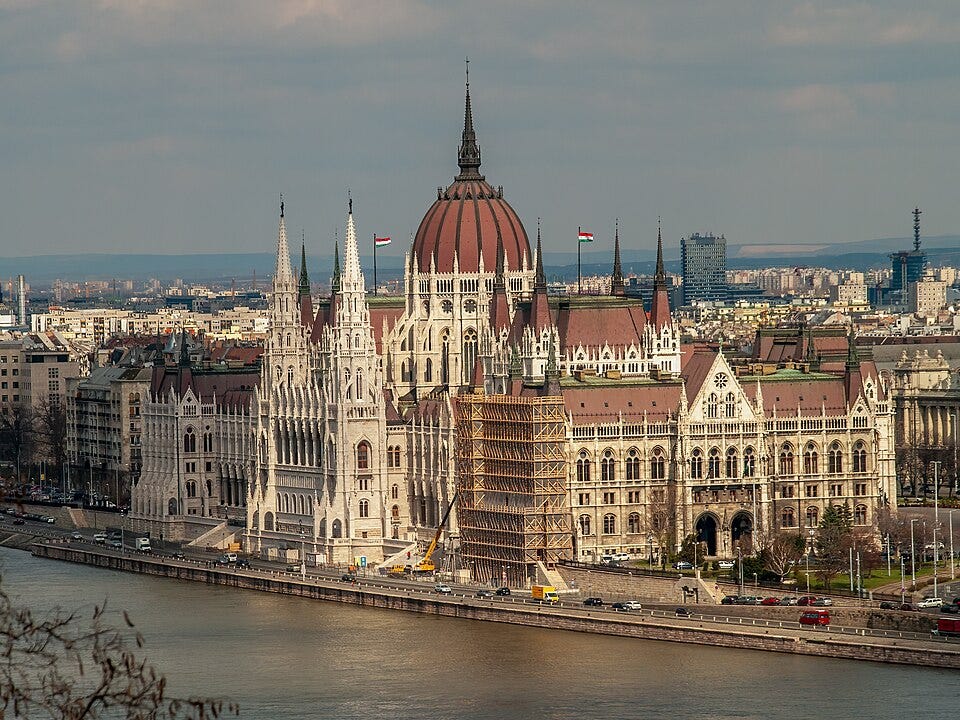
On 12 April, Hungary votes. The date is circled in offices across the capitals of Brussels, Warsaw, and Washington. Not because Hungary is large. Not because it is powerful. Because what Orbán built here is a model, and the model is on the ballot. It is not only about whether he can be beaten. It is about what kind of defeat his system is designed to allow. And what it means for the rest of Europe and the world if the answer is simply: not much.
The same questions keep surfacing. Does Tisza need a two-thirds majority to actually change anything? Will Orbán cheat rather than accept defeat? Will he refuse to leave? Will he flee? And is Péter Magyar the real thing, or just another product of the same machine in a different suit?
These are not separate questions. They are the same question. Remove the man. What remains? That is what is actually at stake on 12 April. And the answer will echo well beyond Budapest.
Right now, that question is not theoretical. Independent polling has put Tisza ahead of Fidesz among decided voters. Large numbers remain undecided. And Hungary’s electoral system does not make this simple. The 199-seat parliament is chosen through a mixed system. 106 single-member constituencies. 93 list seats. A polling lead is not a majority. Not here. Not in this system.
That matters because in Hungary, winning the government and taking back the state are no longer the same thing.
A majority of all MPs can elect a prime minister. But that is not the same as gaining control over the state. The Fundamental Law, many cardinal laws, and even constituency boundaries are underpinned by entrenched two-thirds rules. Orbán put them there deliberately. He prepared for this. A new government can win the election and still find itself governing inside a cage its predecessor built and locked, from the inside.
Why two-thirds changes everything
A lot of people outside Hungary hear “two-thirds” and assume it is just a nice bonus. It is not. In Orbán’s Hungary, two-thirds is the line between replacing a government and dismantling a regime.
A governing majority can take office. Two-thirds gives you a far greater chance of changing the state’s entrenched rules.
With two-thirds, Tisza could amend the Fundamental Law and begin rewriting the cardinal legislation Orbán spent years using to entrench his political order below the waterline, where normal majorities struggle to reach it. The Venice Commission warned that placing constituency boundaries in a cardinal law makes necessary updates dependent on political will and undermines an effective way to preserve the equality of voting rights. It also noted that further reform after the 2026 election will be necessary to ensure proportionality, equal voting power, and equality of opportunity. Even winning does not undo what was done. It only gives you the tools to start.
Orbán knew exactly what he was doing.
A Tisza victory without two-thirds would still be historic. But it would not end the story. It would begin a second, harder one.
The constitution is only part of it. The deeper problem is the people locked in place behind it. Constitutional Court members are elected for twelve years. The Prosecutor General for nine. The President of the Curia (Supreme Court) for nine years. The State Audit Office for twelve. The Fiscal Council’s prior consent is required for the adoption of the central budget. Each one placed, each one protected, each one still there on the morning after.
Scenario 1: Orbán wins again
Do not rule it out. Tisza’s lead is real. The size of the undecided bloc is also real. Fidesz still runs deep in rural Hungary and among older voters. It benefits from an electoral system that international observers have repeatedly found tilted in the incumbent’s favour. The field has not been level for many years now.
If Orbán wins again, the lesson will not simply be that he survived a scare. The lesson will be permanent. Rewire the state thoroughly enough, and you can lose the argument completely and still win the vote. Every European government with authoritarian instincts will take note. Some already have their pens out.
Scenario 2: Orbán loses his majority, but Fidesz still clings on
This scenario is often overlooked. In Hungary, coming first is not enough. Power gets assembled from the pieces.
Reuters reported this week that Mi Hazánk could become the kingmaker if it crosses the threshold. Analysts see a possible path in which it informally props up a minority Fidesz government without entering a formal coalition. That means Orbán could lose clean parliamentary dominance but still remain central to what comes next.
This is where Hungary’s constitutional mechanics begin to matter even more. The president proposes the prime minister, and if a post-election deadlock follows, parliament has forty days to elect that nominee. If it fails, the president can dissolve the National Assembly. Separately, the constitution also allows dissolution if parliament fails to adopt the budget by 31 March in the relevant year. A messy result does not just produce uncertainty. It turns the constitution into the battlefield.
Scenario 3: Tisza wins a simple majority
This is the scenario that would thrill opposition voters on election night and sober them by morning.
A Tisza majority removes Orbán from government. A new prime minister takes office. Hungary stops being the bloc’s most reliable saboteur. For a Europe still navigating a war on its eastern border, still trying to hold its own internal architecture together, that is not nothing. EU officials, Reuters reported, hope it will unlock a more cooperative Hungary within the EU and NATO. Years of obstruction ended. A seat at the table, restored.
Do not underestimate that. Do not oversell it either.
Here is what a simple majority actually buys. The office. Not the state. The institutions remain. The veto points remain. The officeholders remain, dug in behind mandates that run for years and were designed to survive exactly this moment. The 2025 European Commission Rule of Law report names them. A Prosecutor General elected in June 2025. Nine-year term. The prosecution’s structure untouched. The Ministry of Justice can still access prosecutorial decisions relating to criminal procedures, a setup stakeholders say allows political influence in individual cases. Each one a lock. Each one still locked. Orbán built the house to outlast the landlord. A simple majority gets you the keys. It does not get you the walls.
A Tisza win without two-thirds changes the government. The state remains. Orbán-era structures intact, Orbán-era officeholders in place, the legal architecture undisturbed.
Scenario 4: Tisza wins a supermajority
With two-thirds, the picture changes entirely. Tisza could amend the Fundamental Law and rewrite cardinal legislation. It could begin dismantling the legal architecture that has made ordinary democratic rotation so difficult. Long mandates and institutional culture will not vanish overnight. But for the first time in sixteen years, the tools for structural reconstruction would be available.
That is why the supermajority matters. Not because a government without it would be meaningless, but because it would still be governing on Orbán’s terrain. And governing on someone else’s terrain, with their rules, their judges, and their prosecutors, is not governing with much to go on.
How Orbán would try to survive defeat
Orbán will go very far. Just not in the cinematic way people tend to imagine.
The most serious risk is not a cartoon coup. Forget the image of Orbán barricaded inside the parliament, refusing to leave. That was never his style. He is elected by parliament, not by decree. The mechanisms for removal are visible, legible, and documented. Too many cameras. Too much paperwork. Too many people watching.
The danger is something colder. Something more Hungarian.
Legalistic obstruction. Institutional trench warfare. A state machine weaponised to make defeat painful, unstable, and reversible. Not a coup. A slow bleed.
The evidence is already in. ODIHR’s interim report on this campaign documents fear-mongering messaging, state resources flowing into ruling-party activity, uneven media access, and no meaningful provision for domestic non-partisan observation. Its 2022 assessment found the same thing. No level playing field. Government and party messaging fused into one. Media coverage that systematically favoured the incumbent.
That was four years ago. Nothing was fixed. Nothing was meant to be fixed.
Reuters has also reported on an alleged intelligence-linked operation targeting IT staff linked to Tisza. The campaign is unequal. There are also serious signs of active interference.
So when readers ask whether Orbán will “cheat,” the most honest answer is that the field is already skewed. That does not mean ballot-box fraud on a scale large enough to erase a clear defeat. It means the election is taking place within a system where state power and party power have long since ceased to be separate.
Would Orbán go quietly?
Orbán does not need to declare himself the winner and refuse to leave. That is a different country, a different playbook, a different kind of authoritarian. His power was never built on spectacle. It was built on paperwork, patience, and the slow capture of every institution that might one day be used against him.
The more plausible scenario is entrenchment. He still commands a large party. He still has aligned officeholders in key posts, serving under mandates that run for years. He can benefit from parliamentary deadlock, from constitutional choke points, and from a state machine built to serve him that continues to serve him even after he loses an election. Exile is not just unlikely. For a man whose entire identity is Hungary, it is almost incoherent.
If Orbán loses, the problem will not be his disappearance. It will be his continued presence.
Is Péter Magyar a Trojan horse?
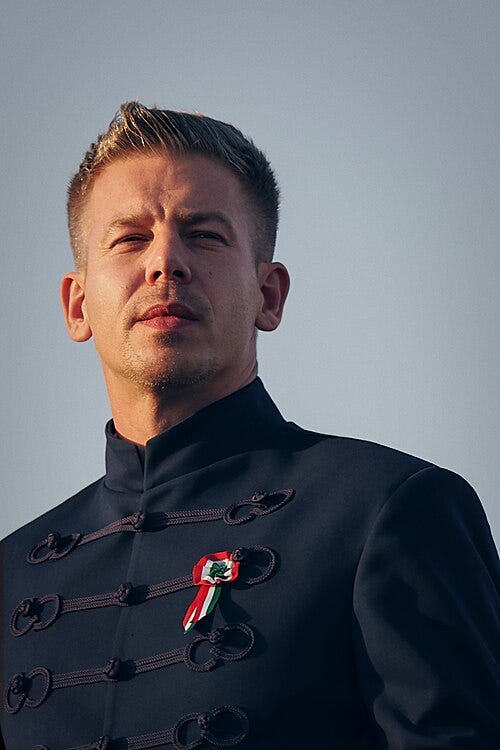
This one deserves a serious answer, because it comes from a real instinct. Péter Magyar did emerge from the wider Fidesz world. He is not a liberal outsider dropped into Hungarian politics from nowhere. Even Reuters’ reporting from Brussels makes clear that many diplomats do not expect a total ideological revolution under him. They expect shifts in alignment and tone rather than a wholesale change in worldview. In fact, the stronger reading runs in the opposite direction. What makes Magyar genuinely threatening to Orbán is that he understands the language, reflexes, and emotional grammar of the system from the inside. A controlled decoy would not need to be fought this hard. The scale of political and institutional pressure directed at Tisza during this campaign is itself evidence.
He may not be the liberal fantasy some want. That is different from being fake.
What this election is really about
The biggest mistake made constantly in international coverage is treating this as an ordinary contest between two parties in a functioning democracy.
It is not. Not even close.
This is a test of whether ballots alone are enough to produce real democratic power inside a state deliberately re-engineered to resist them. And the people watching know exactly what is at stake. In Warsaw. In Bucharest. In Tbilisi. In Brussels. Governments that have their own Orbáns waiting. Institutions that need to know whether democratic backsliding can actually be reversed, or whether the lesson of Hungary is that once you have captured the state, you keep it forever.
The question is no longer only whether Orbán can lose. It is whether the system he built is capable of losing with him.
On 12 April, that is the only question that matters. Not just for Hungary.
Transition, stalemate, or a regime that outlives its founder.
It would be quite funny if Orbán lost and his party dumped him because he ran one of the worst campaigns in history. (Slogan: "We won't be a Ukrainian colony" - Really?)
The analysis is correct with all its complexities, but the more than 50% chance, that Orbán actually remains strong even if he loses is false.
Last night I saw Dr. József Kajdi the former Sate Secretaty of prime minister Jozsef Antall (an old friend of mine) on television discussing the chances of the elections. He made absolutely clear, that today influential Fidesz apparatchiks, bastions of NER will not try to defend the Orbán Castle, but run and do everything to save their own skin. 16 years of criminal activities are behind them. They have been appointed for 9 or whatever number of years. Over the years already served, they committed crimes, and if justice is done, which does not need two thirds majority, they can not stay in office for the remaining years. I see people trying to escape, instead of undermining the works of the Magyar government. Who did not commit crimes, can and must continue and serve in the new regime.