

Why the Kremlin Cannot Afford to Lose Its Man in the EU
Viktor Orbán is too valuable to Russia to be left to the voters.

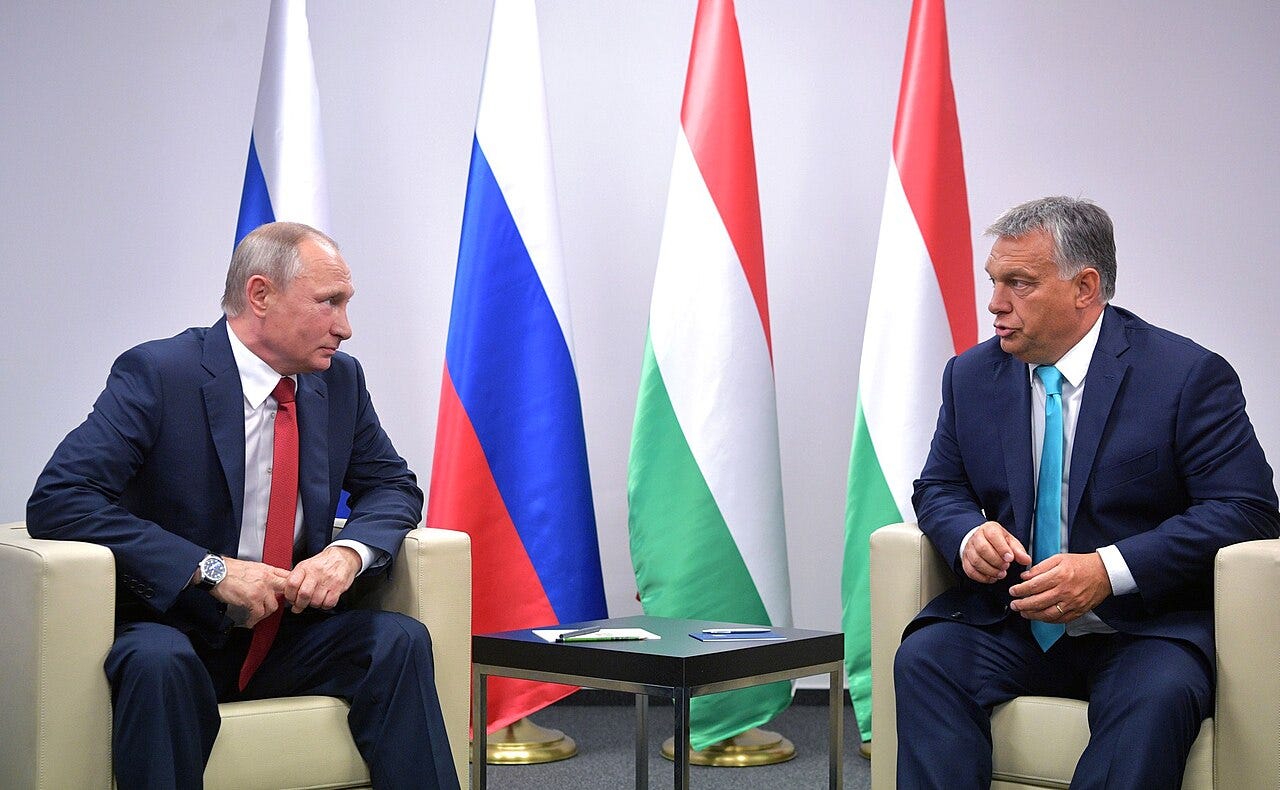
Somewhere in Moscow, a decision appears to have been made. Not the obvious one. Supporting Viktor Orbán had long been settled. This was something more precise, more urgent, more revealing. If recent reporting is accurate, the aim was to protect a political asset whose loss would undermine Russia’s power in Europe. Supporting a friendly leader is standard foreign policy. Treating his electoral survival as a problem to be managed is something else entirely.
The plot
Most elections are won with slogans. Hungary’s 2026 contest may have attracted something far darker. According to the Washington Post, a leaked intelligence document described Russian operatives considering whether to stage a fake assassination attempt on Orbán. The goal was not his death. It was his resurrection as a symbol. A losing election was reframed as a nation under siege. A politician recast as a man fighting for his life.
Moscow denies the allegation. Budapest calls it a smear. Both denials were inevitable. What matters is not whether the report is true in every detail. It is the logic that makes sense. States do not workshop political martyrdom for leaders they consider expendable.
And that is the key to understanding Orbán’s value. He is not important to Moscow because he likes Putin, or because he enjoys antagonising Brussels, or because he is part of some vague illiberal fraternity. His value to Moscow is structural. He sits inside the EU and NATO, and he has spent years demonstrating that membership in an alliance does not require fidelity to its purpose. Institutions built on consensus can be slowed, bent and drained of momentum by a single member willing to treat every decision as a negotiation. That is not an accident of Orbán’s personality. It is a capability. And capabilities, in geopolitics, are what get protected. And with this election closer than anything Fidesz has faced in years, that asset is suddenly at risk. For Moscow, an asset at risk is a problem worth solving.
The value of friction
Putin’s interests in Europe do not require winning arguments. They require delaying decisions. A sanctions package held up for a week. A loan blocked at a key moment.. A summit that ends in ambiguity. Hungary cannot redirect the European project on its own, but it can obstruct it at precisely the moments when speed matters most. Hungary’s blocking of the EU’s €90 billion loan to Ukraine forced Brussels to look for workarounds rather than move as one. That is not diplomacy as an inconvenience. It is leverage as a strategy.
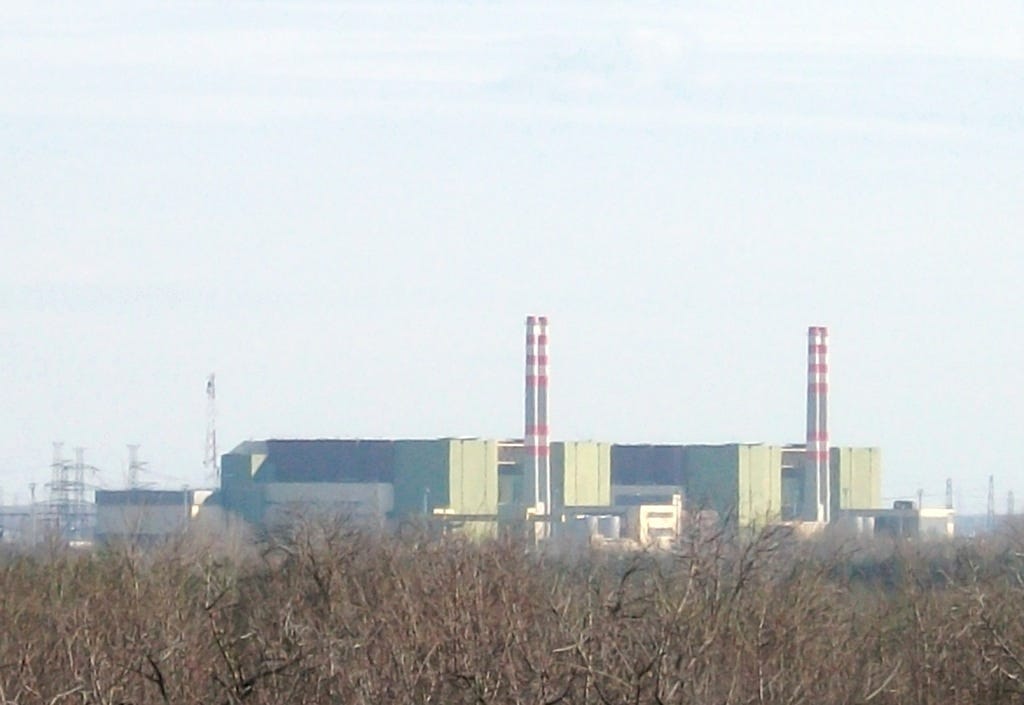
The relationship is not only political. It is physical. Hungary’s dependence on Russia is embedded in Hungary’s infrastructure.. Paks generated 47.1% of Hungary’s domestic electricity production in 2024. The first concrete for Paks II was poured in February 2026, locking Rosatom into Hungary’s energy future for decades. In early March, Szijjártó was back in Moscow, seeking guarantees on oil and gas. These are not the movements of a sovereign state managing a relationship. They are the movements of a dependent state managing a dependency. Orbán’s language of sovereignty has always floated above this reality, never quite touching it.
Orbán’s potential loss would impact Putin not just by removing a friendly voice, but by stripping Moscow of a leader within the Western alliance who can reliably translate Russia’s interests into institutional delay. It would mean severing deep ties to Hungary’s energy and nuclear sectors. Most importantly, it would destroy the demonstration that the EU’s unity can be disrupted from within by a member state’s strategic use of the system.
What has been reported
The evidence trail around this election is now thick enough that dismissing it requires more effort than following it. VSquare, citing multiple European national security sources, reported that Kremlin-linked operatives tied to Sergei Kiriyenko’s influence apparatus had been sent to Budapest to help keep Orbán in power, using a Moldova-style playbook. Then Telex reported that Hungary’s parliamentary national security committee had been warned by a foreign partner service that Russians had come to influence the election, even though Hungarian counterintelligence later said the named individuals were not in the country. That contradiction sounds reassuring only if you have never seriously considered how covert operations are designed to appear.
Then came the Financial Times reporting, relayed in Hungary by 444, that the Kremlin had approved a covert campaign to keep Orbán in office. Pro-Fidesz messaging designed in Russia, distributed through Hungarian influencers. The alleged vehicle was the Social Design Agency, which the U.S. Treasury has already sanctioned for running Kremlin-directed influence operations that used fake websites, staged content and deceptive media identities. That is the important point. The name attached to the Hungary story is not random. It already exists in Western sanctions files.
And this is not the only sign that Russian-style influence has already entered Hungary’s information space. Telex reported in February on a Russian-backed smear campaign tied by researchers to Storm-1516, a network with links to Russian military intelligence. The same reporting showed how fake investigative branding, fabricated claims and social amplification can be used to contaminate the public sphere without ever looking officially Russian. That is the point. The best interference is the kind that looks like it came from inside the house.
The groundwork was already done
This is what makes the story genuinely sinister. Russia does not need to build Hungary’s election narrative from scratch. Orbán has already built it. Brussels wants war. Ukraine is a threat. The opposition is not an alternative government but a foreign instrument. That is no longer fringe rhetoric. It is official campaign grammar. Reuters has reported that Fidesz is mobilising digital fighters, influencers and AI-assisted content. Russia has already arrived. The furniture was already in place.
That is why the most effective Russian interference in Hungary may not look Russian at all. It may look domestic. Telex reported that a Russian Matryoshka bot network was already working the Hungarian-Ukrainian conflict, pushing fake videos dressed up with Reuters and Institute for the Study of War branding, built to make fabricated claims about Ukrainian hostility look credible. Modern interference doesn’t announce itself. It doesn’t need a single spectacular lie. It needs a fog thick enough that people stop asking what’s real and start just feeling afraid. That is what synthetic panic is for. Not to convince. To corrode.
Átlátszó documented Russian state television at a Fidesz campaign event led by János Lázár and argued elsewhere that the atmosphere around the campaign is beginning to resemble Moldova-style information warfare. That comparison matters because Moldova is not the point. The method is. Saturate the space. Use local proxies. Exploit existing fractures. Make everything deniable. Make truth itself feel partisan.
What Russia could do
This is the part Europe prefers not to think about clearly enough. Between now and election day, Moscow does not need a coup. It does not need hacked voting machines. It does not need a Hollywood plot. It needs noise. The right kind, at the right moment, in the right place.
It could keep feeding Orbán’s core line that Hungary is under siege from Brussels and Ukraine. Bot networks. Fake local outlets. Cloned media branding. Deniable content farms. The infrastructure of modern manipulation is already in place. It could intensify kompromat-style smears against Péter Magyar and the Tisza Party. It could seed forged leaks, edited videos and contamination campaigns designed not to persuade but to exhaust. To leave voters feeling that everything is dirty, everyone is compromised, and the only rational response is to cling to the incumbent. The EEAS has documented how Russian state and pro-Kremlin actors use diplomatic networks, security services, state media, social channels, private companies and local proxies in an integrated way, each layer multiplying and amplifying the others.
And it could escalate the security atmosphere through deniable shocks that alter the emotional weather of an election. Fake threat videos. Invented plots. Anonymous bombast. Cross-border panic. Synthetic evidence of Ukrainian hostility. Incidents designed to make Orbán’s language of siege feel less like propaganda than foresight. That is exactly why the reported staged-assassination idea matters, even if it remains unproven. It captures the logic. Move the campaign off inflation, corruption and fatigue, and back onto fear, security and loyalty.
And yes, the ugliest possibilities should be taken seriously, not because there is public proof they are planned in Hungary, but because Russia’s state record is what it is. The UK government found the Russian state highly likely responsible for the Salisbury Novichok attack. Western governments sanctioned Russian operatives over the poisoning of Alexei Navalny. These are not analyst assessments. They are formal government findings, arrived at through intelligence processes and backed by legal consequences. That does not prove Moscow is preparing physical attacks in Hungary. It means that when the word violence appears in discussions of Russian statecraft, it is not a rhetorical escalation. It is a reference to the record.
That is what makes Hungary such a dangerous case study. Russia does not need to override the domestic political script. It only needs to locate it and amplify it. The point at which outside interference becomes indistinguishable from inside politics is not a threshold to be crossed. It is a condition to be reached, quietly, and then maintained. What Hungary may already be living through is not a country being attacked. It is a country being occupied by a narrative it believes it wrote itself.
What Putin would lose
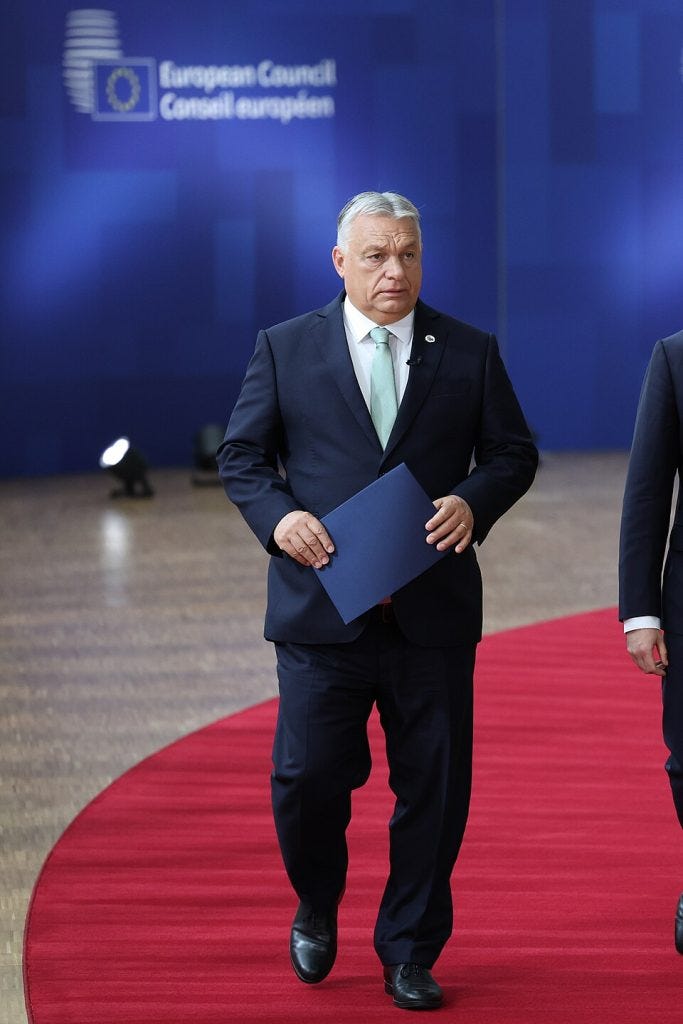
Lose Orbán and Putin loses more than a friendly voice in Brussels. He would lose a pressure point. He would lose a government that has repeatedly turned EU debates on Ukraine into bargaining exercises. He would lose a state deeply enmeshed in Russian energy and nuclear infrastructure. He would lose one of the last leaders inside the EU and NATO willing to argue, with a straight face, that Europe’s problem is not Russian aggression but European overreaction to it.
And he might lose something even more valuable. A government that other European capitals no longer trust. AP reported that Donald Tusk said Poland had long suspected Hungary of passing sensitive EU Council information to Moscow. Hungary denies it. The damage is already visible. This is no longer about Orbán being soft on Russia. It is about whether Hungary is now viewed as a structural hole in the alliance itself.
That is why this election matters beyond Budapest. Orbán is not just a politician. He is a demonstration that the Western alliance can be corroded from within, quietly, legally, one blocked vote and one energy contract at a time. If he wins, that demonstration continues. If he loses, Moscow loses its proof of concept. And in geopolitics, proof of concept is almost as valuable as the thing itself.
This article was first published on The Hungary Report.
Orbán is not Moscow’s voice in Europe. He is Moscow’s brake.
Peter, this is a strong piece — and you’re circling something important. But I’d sharpen the core claim slightly, because what you’re describing is not just influence. It’s something more structural.
Orbán is not valuable to Moscow because he is “pro-Russian.” He is valuable because he changes how the system behaves from the inside.
That distinction matters.
Orbán is not an ally. He is a mechanism.
Russia does not need Hungary to support its strategy. It needs Hungary to slow everyone else’s.
That’s the real function you’re pointing to with the loan blockage, the sanctions delays, the constant renegotiation of consensus. This isn’t ideological alignment — it’s time dilation inside decision-making systems.
And in this war, time is not neutral.
For Ukraine, time is survival under pressure
For Europe, time is coordination under stress
For Russia, time is leverage
Orbán sits exactly at the junction where European time can be stretched.
This is why the “assassination plot” logic — real or not — makes sense.
Not because it is proven. But because it fits the value of the asset.
You don’t protect Orbán because he might win. You protect him because:
If he loses, the system speeds up.
And that is what Moscow cannot afford.
The deeper point: friction is now a strategic resource
You describe this well, but it can be pushed one step further.
Russia’s objective in Europe is not victory. It is managed incoherence.
Not breaking the EU → but slowing it
Not exiting NATO → but hollowing coordination
Not winning arguments → but preventing decisions
Orbán is effective because he converts:
institutional rules → strategic friction
And he does it legally.
That’s the uncomfortable part.
Where I’d go even harder is here:
Hungary is not just “influenced.” It is becoming a delivery system for external pressure.
Not through occupation. Not through control.
But through alignment between domestic political incentives and external strategic goals.
That’s a much more modern — and much more dangerous — condition.
Because at that point, interference doesn’t need to enter.
It’s already endogenous.
And that leads to your most important insight — which I would make explicit:
If Orbán falls, Russia does not just lose a partner.
It loses:
A veto point
A delay engine
A proof that the West can be divided from within without breaking it
That last part is critical.
Because as long as Orbán exists politically, he demonstrates that:
The system can be used against itself.
So the real stakes of the election are not Hungarian.
They are systemic.
If Orbán wins → friction remains embedded
If Orbán loses → Europe regains tempo
And in a war defined by endurance and coordination, tempo is power.
Good piece, Péter. This is exactly the point: Orbán’s value to the Kremlin is not ideological theater alone, but the practical damage he can do from inside Europe’s institutions. Putin does not need unanimity in his favor — he just needs enough obstruction to weaken it. It's the same story wherever the Kremlin leaves its fingerprints.