

What Hungary Taught the World
How independent media, civic courage, and a country that refused to go numb made Orbán’s defeat possible.

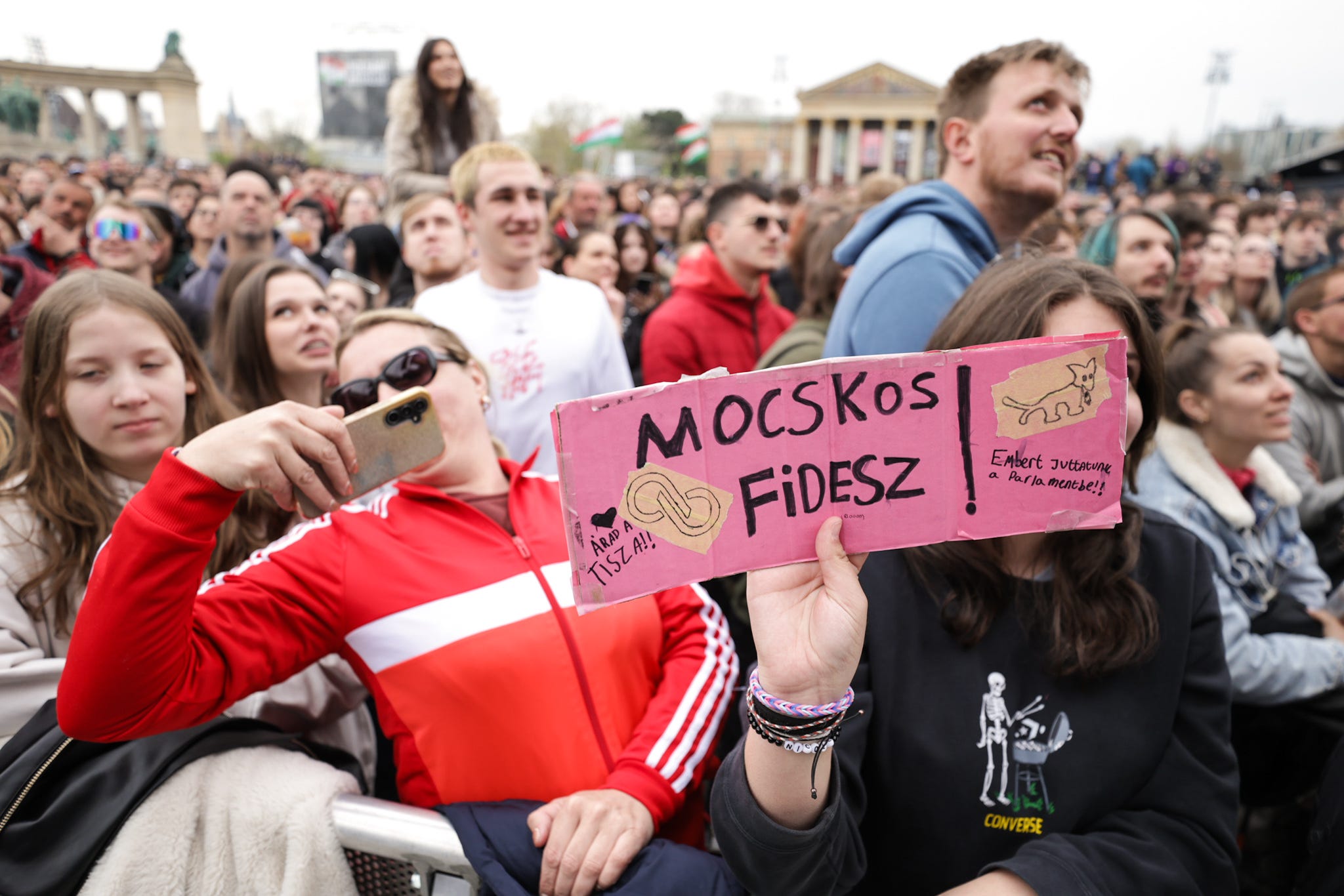
There are moments in political life when a country seems to remember something it had been forced to forget. Hungary’s came in the days after Orbán’s defeat, arriving as a series of small recalibrations, each one almost too quiet to notice. A journalist wrote without looking over her shoulder. A teacher mentioned something in class that she would not have mentioned the week before. A conversation that had been conducted in code was conducted plainly. The air, as someone put it to me, had changed.
For years, Hungary had served as democracy’s most instructive wound, a place where the erosion had gone so far, and been so carefully engineered, that recovery seemed to require something closer to a civilisational act of will. Foreign observers arrived, took notes, and left with the same conclusion: the system was built to last. Self-reinforcing. The opposition outgunned. The media captured. A fair contest is structurally impossible. They were right about the damage. They missed what the damage had failed to reach. Underneath the captured institutions and the managed elections, something had survived: stubborn, unglamorous, and patient enough to wait for its moment.
Then came the election, and the questions changed.
In conversations with people who know far more than I do, who have lived closer to this and experienced dimensions of it I can only try to understand, I watched that shift unfold in real time. Hungary was no longer a warning label. It had become a case study. What had survived inside it? What should other democracies do before they end up asking the same questions about themselves?
Hungary’s lesson was never really about Hungary. It was about the method. Orbán showed the world that you do not need to cancel elections to control them. You do not need to ban the press to silence it. You do not need to tear up the Constitution to hollow it out. You need patience, a parliamentary majority, and the willingness to move faster than your opponents can organise. Court by court. Newsroom by newsroom. University by university. The scaffolding stays up. The building empties.
That is the export: method, not ideology. Orbán gave the global right a manual, not a manifesto. Illiberalism repackaged as competence. Democratic erosion dressed up as prudent governance. National decline announced as national sovereignty. It was a certain kind of brilliance, and it travelled.
Yet the most important lesson Hungary offers is not about Orbán’s foreign admirers. It is about what Hungarians themselves managed to preserve while much of the outside world was busy writing the country off.
Once enough institutions have been bent, it is tempting to imagine the country itself has been swallowed whole. But that was never true of Hungary. The state expanded its reach. Propaganda thickened. Public life grew coarser, more tired, more cynical. Yet something stubborn persisted. Journalists still published what mattered. Readers still paid to keep them alive. Civic groups still organised. Students still showed up. Artists still mocked power. Teachers still spoke when silence would have been safer. Ordinary people kept a running internal record of what had been done to them—and what had been stolen from the country they loved.
Any account that casts Péter Magyar as the sole explanation does him—and Hungary—a disservice. He gave language to something that had been waiting for it. But he arrived in a country where many others had already done the harder, slower work.
That is why independent media belongs near the centre of this story.
Outlets like Telex, Átlátszó, VSquare, and Direkt36 did not just simply report on Orbánism. They stopped it from becoming total. In a semi-authoritarian system, journalism is about preserving a usable relationship to truth when power wants truth to feel optional, partisan, or faintly absurd. It is about keeping facts alive long enough for a political opening to appear.
That kind of work rarely looks dramatic in the moment. A story is published. A scandal is exposed. The regime continues. To outsiders, journalism can look noble but ineffective. It is neither. Its effect accumulates quietly. It keeps a record. It names names. It prevents theft from dissolving into rumour. It stops abuse from becoming something everyone senses, but nobody can prove. It builds a public memory that power cannot fully erase.
Two episodes in the final stretch before the vote made those stakes brutally clear.
The first was The Price of a Vote, a documentary by the civic group De! Akcióközösség. It travelled through Hungary’s poorest regions and documented something far larger than isolated local abuses. It exposed a system of dependency, coercion, and electoral manipulation aimed at the country’s most vulnerable communities. What made the film devastating was the clarity of its argument. This was about something I found harder to sit with: the deliberate cultivation of the conditions that make people buyable. Corruption as a design principle, poverty engineered to be just deep enough to keep people dependent on the very system that had impoverished them. I had read about this kind of thing. Seeing it documented, face by face, village by village, was different. The film’s makers also helped recruit polling station observers for the areas at greatest risk. Civil society was entering the electoral machinery and trying to defend it.
The second was the treatment of Szabolcs Panyi. For years, Panyi reported on national security, Russian and Chinese influence, and the deepening intimacy between Budapest and Moscow, and in 2021, he was identified as one of the Hungarian journalists targeted with Pegasus spyware. He kept working. Then, in the weeks before the election, he published a report that Foreign Minister Péter Szijjártó had allegedly briefed Sergei Lavrov on confidential EU deliberations; later, leaked audio also appeared to show Szijjártó offering to send Russia an EU document. European leaders reacted immediately. As VSquare’s follow-up reporting noted, Donald Tusk said one could hardly imagine anything “more repulsive,” while Micheál Martin called the development “sinister” and “unacceptable,” citing the “alarming deferential tone” of the conversations. The regime faced a choice: respond to the substance or attack the source. On 26 March, Orbán’s chief of staff announced that the government had filed a criminal complaint accusing Panyi of espionage, a charge that carries up to eight years in prison, or up to fifteen if strictly confidential secrets are involved.
Around the same time, the Sovereignty Protection Office described him as “financed and directed by principals with Democratic affiliations in the European Commission and the United States.” Panyi’s response was unequivocal: “Accusing investigative journalists of espionage is virtually unprecedented in the 21st century for an EU Member State. This is typical of Putin’s Russia, Belarus, and similar regimes.” The journalism could not be rebutted because the regime never tried to. It was a tell.
The same is true of civic and cultural life, which brings us to the Friday concert.
That night will be remembered for turning a private suspicion into a public fact. People living inside systems like this carry a particular kind of isolation. They suspect the country is exhausted, that it is more lucid than it appears. But suspicion remains fragile until it becomes visible. A square full of people can do what years of private endurance cannot.
The Rendszerbontó Nagykoncert (System-Breaking Grand Concert) gave exhaustion a shape that politics alone could not have. A crowd is a visceral argument, the kind that settles something in the body before the mind has caught up. What it settled, for the people there, was the question of whether they were alone. They were not. The disappointment was collective, the frustration shared. And once a feeling that large becomes visible, it becomes very difficult for a regime to govern as though it does not exist.
Politics is usually described as beginning with parties, campaigns, and candidates. But a society has to be ready for politics before any of that can work. It has to have recovered the ability to see itself clearly, to know what it thinks, to trust that others think it too, and to believe that the gap between the present and something better is worth the effort of crossing.
Then someone has to turn that atmosphere into power.
That was Magyar’s achievement.
He did not invent anger at Orbán, discover corruption, or create the fatigue and humiliation that had been building for years. What he did was harder. He made opposition feel credible. He made victory seem imaginable. He took sentiments that were widespread but politically shapeless and gave them a vehicle.
One of the deepest achievements of long-ruling systems is their colonisation of expectation. They teach people that change is unrealistic, that outrage is self-indulgence, that disappointment is maturity, and that endurance is the closest thing to citizenship. A system like Orbán’s settles into a country’s nervous system. It trains people to lower their imaginative horizons until smaller, sadder possibilities start to feel like wisdom.
Magyar broke into that space.
He did it by reopening comparisons. Strongmen survive by making decline feel natural, teaching citizens to accept shabby public life as the normal background of national existence. Magyar kept asking the questions Orbánism depended on silencing: Why should Hungarians accept public services in this condition? Why accept this exhaustion, this drift, this corruption, this sense of a country underachieving itself? Why should a government that speaks incessantly about national greatness leave behind a nation so palpably diminished in daily life?
What made his campaign structurally different from the opposition efforts that failed before him was the way he carried those questions into the country itself.
He went to village squares, community halls, and small towns that had grown accustomed to political attention that arrives before elections and evaporates after them. He did not arrive with answers. He arrived with questions, and he stayed long enough to hear the responses. The hospital that had lost its surgeon. The school was haemorrhaging teachers. The road had not been repaired in years. The jobs that had left, taking something harder to name along with them. He was building a map of what Orbánism had actually cost, measured not in macroeconomic indicators but in the specific, daily diminishments of people who had been told they were living through a national renaissance.
The contrast with Orbán was not incidental. It was the point. Magyar’s presence in those places was not a campaign tactic. It was an argument about what politics could look like.
Out of those thousands of conversations came a picture of a country whose problems were intensely local but whose grievances were strikingly universal. People in different counties name roads, schools, and clinics differently. Yet they were all describing the same condition: being unseen, watching resources flow upward to the connected, and living in a national story that bore less and less resemblance to the country they actually inhabited.
What those conversations revealed, Magyar translated into a national argument. Corruption was not an abstraction. It was the hospital without a surgeon, the school without teachers, the stagnant wage, the young person who had left and not returned. That line of attack worked because it moved beyond ideology and into lived experience.
He also benefited from something generational. Many younger Hungarians had spent their entire formative years under a single dominant system and a narrowing horizon. Orbán was the atmosphere, not just the leader. For that generation, the vote carried extra force: a refusal to inherit the emotional terms of the world into which they had been born.
That matters enormously.
A country changes when enough people stop mistaking exhaustion for destiny.
My conversations after the election kept circling back to that truth from different angles. I came to them as someone who had spent years thinking and writing about democratic backsliding, which is not the same thing as having lived through it. The people I spoke with had. They had worked inside institutions that were quietly dismantled around them. They had made compromises I hope I never have to make, or refused to make compromises and paid for it. They had watched from neighbouring countries as something they recognised began to take root in a new place. I learned from all of them, and I left every conversation aware of the gap between understanding something and knowing it. Some pushed toward the international implications: Orbán’s fall weakens a whole symbolic architecture of authoritarian confidence. Others pushed into the inner story, the question of how people live for years in a state of capture and still preserve enough moral clarity to recognise an opening when it comes. Still others asked what their own countries should learn from this before their institutions bend further.
Many of my readers are in the United States, and part of what has made them so engaged with Hungary’s story is how little it has ever felt like a foreign story. They recognised something in it early: contempt for institutional restraint, pressure on independent media, a culture of permanent grievance, and the insistence that only one political camp embodies the real nation. They were not watching Hungary as spectators. They were reading it as a warning, and now, perhaps, as a source of instruction. Orbán’s closeness to the MAGA world and the wider far right was part of what made that recognition so immediate.
Some readers and observers have also drawn parallels between Hungary’s democratic comeback and Hong Kong’s long democratic struggle under tightening Chinese control. The comparison is not exact, and that is not the point. Hong Kong faced the coercive pressure of a sovereign superpower willing to close political space directly. Hungary endured a domestic system of capture that hollowed out institutions from within while preserving the outer forms of democratic life. The mechanisms were different. So were the risks. But the resonance lies elsewhere. In both cases, people were asked to accept that the meaningful part of politics was over, that the system had already settled, that resistance had become ceremonial. In both cases, what survived under pressure mattered more than outsiders often knew how to see: civic instinct, moral memory, habits of truth-telling, and the refusal to let official reality become the only reality available. The differences are real. So is the kinship.
My answer, increasingly, is this: let’s stop thinking about democracy as something that either holds or collapses, and start thinking about it as something that requires constant, unglamorous tending, that erodes long before it breaks.
The lesson is to defend the conditions that make democratic renewal possible before the crisis peaks. When Direkt36 uncovered how state contracts were funnelled to Fidesz allies, or when Telex exposed the manipulation of state advertising, they preserved a public record the regime could not rewrite. The grassroots group aHang organised local forums and digital campaigns that connected citizens in places built to feel isolated. Teachers’ unions led walkouts and petitions in defence of schools. The makers of The Price of a Vote recruited citizen observers to stand watch at polling stations in Hungary’s poorest constituencies. Tisza built local support networks before they needed them. A concert two nights before an election drew more than a hundred thousand people into a public square. Political breakthroughs are prepared long before they appear in polling data. They are prepared in newsrooms, in conversations, in local acts of stubbornness, and in the slow accumulation of a public mood that has finally decided it has had enough.
That is the Hungarian lesson I would want others to understand.
There is a particular kind of exhaustion that sets in after a democratic breakthrough, and it is worth naming. The fight to win felt urgent, legible, and shared. What comes next is none of those things. Orbánism does not disappear because Orbán lost. The people who built it are still there. The institutions they reshaped are still bent. The habits of self-censorship, deference, and lowered expectations do not lift with a change of government. They have to be worked out of a system slowly, imperfectly, and without the clarity that opposition provides. I say it because what Hungary achieved deserves to be protected, and protection means understanding that the election was not the end of something. It was the beginning of something harder.
Hungary has taught us that democracies do not survive only in constitutions, courts, and elections. They survive in habits of attention and moral memory. They survive in people who keep describing reality accurately when power insists on replacing it with spectacle. They survive in readers who pay for journalism that tells the truth. They survive in crowded squares where strangers recognise themselves in one another. They survive in journalists who keep working after spyware is found on their phones. They survive in generations that decide the future cannot be handed back to those who exhausted it.
That is what independent media did. That is what civic life did. That is what so many Hungarians did long before the final vote made the change legible to the world.
Hungary was not saved from the outside. It was carried to this point by a country that refused to surrender its mind.
Change is always a process, not an event. Peter Magyar, and Tisza, would do well to encourage the independent journalists who paved the way for their taking the reins of power. They must be willing to accept constructive criticism.
The people in the United States have not been fooled in perpetuity. They have begun to elect public servants, who like Peter Magyar, realize the power of true engagement and are committed to civic empowerment.
Brilliant essay. Thanks so much for being able to see the parallels to and offering hope for us in the U.S.