

The Special Military Operation Is Over. The War Has Begun.
Since February 2022, Vladimir Putin has kept the invasion at a distance from much of Russian life. Ukraine’s long-range campaign is carrying its consequences across the country.

Earlier this month, Press Secretary of the President of the Russian Federation, Dmitry Peskov, used a word with a bluntness that would once have been dangerous in an ordinary Russian mouth.
“There is a war going on, this is a real war.”
Vladimir Putin’s spokesman told state television that Russia had begun with a “special military operation.” The support given to Ukraine by Western governments had since transformed it, he claimed, into something larger.
Russian citizens were imprisoned for using precisely that language. Alexei Gorinov, a municipal deputy in Moscow, received a prison sentence after calling the invasion a war during a council meeting. Thousands of others learned to speak through the Kremlin’s vocabulary, a political dialect designed to make conquest sound technical, controlled and geographically remote.
The abbreviation survives in decrees and broadcasts even as the shelter it provided begins to fail. “Special military operation” placed the invasion beyond ordinary law and daily experience. It suggested a limited undertaking conducted by professionals somewhere beyond the horizon, requiring little from the civilian majority except silence and a periodic display of loyalty.
The other night, my partner was showing me videos from Russia. Most of her family still lives there, scattered across a country large enough for the same invasion to exist as several different realities.
Recruitment notices and military funerals reached Tuva and Buryatia early. Belgorod lived beneath shelling. Poor villages watched young men leave for wages that civilian employment could never match. Moscow carried on beneath illuminated towers and crowded restaurants, while millions of Russians encountered Ukraine through television maps, presidential speeches and the distant phenomenon of cities being destroyed.
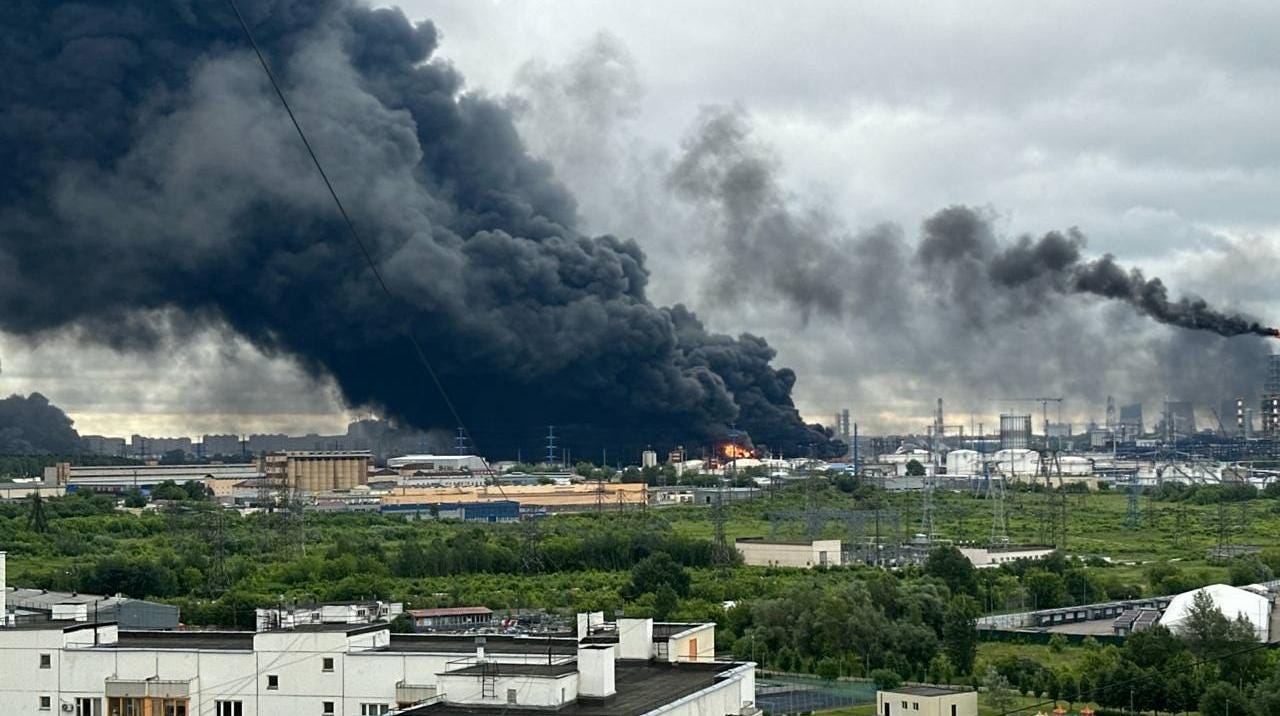
The videos my partner showed me came from places that had once appeared safely removed from the fighting. People waited for petrol, watched warehouses burn and stared at damaged industrial sites whose distance from Ukraine had seemed a form of protection. In one clip, an elderly woman, looking at the confusion around her, spoke as though the war had only just started.
For her, the distinction may have felt real. Russia’s full-scale invasion was already in its fifth year, although the burden had entered Russian communities according to a cruel and unequal timetable.
Mediazona and BBC Russian had verified 200,000 Russian military deaths by February 2026. Their map contained 27,000 cities, towns and villages, tracing a cartography of sacrifice that grew darkest far from the political centre.
Tuva had recorded 476 confirmed deaths for every 100,000 residents, while Buryatia had recorded 400. In the Buryat village of Chikoy, ten men had died from a population of 525. Komsomolskoye, a village of similar size, had lost nine. In places this small, death passes through schoolrooms, apartment blocks and family tables until absence becomes part of the local landscape.
Bashkortostan has since become the first Russian region to exceed 10,000 confirmed military deaths, followed by neighbouring Tatarstan with around 9,000. The dead came disproportionately from villages and small towns where military wages could alter the fortunes of an entire household.
Their graves formed the first domestic map of the invasion. Putin’s achievement was geographical: grief remained scattered across remote republics, border districts and provincial settlements, where funerals stayed local, and compensation payments entered household budgets. Distance became political infrastructure, allowing responsibility to dissolve into the immensity of the country.
The arrangement demanded acquiescence more than conviction. Citizens could praise the army, repeat the approved vocabulary and continue with their routines while the invasion extracted its heaviest price from people they would never meet.
Propaganda maintained the haze by renewing the explanation whenever the previous one wore thin. Ukraine contained Nazis, secret laboratories, Western mercenaries and threats to Russia’s historical existence. The operation would defend the Donbas, restrain NATO, reunite the Russian people and protect the motherland from destruction. The stated objectives drifted until the Kremlin simply invoked the “goals of the SVO” without explaining them.
The haze served its purpose. Each new version renewed the public’s permission to surrender judgment to the state and retreat into private life.
Ukraine’s long-range campaign is narrowing that retreat. Its drones and missiles are reaching refineries, factories, warehouses and transport systems deep inside Russia. The damage spans through the commercial and administrative networks that allowed millions of people to live beside the invasion without feeling surrounded by it.
Wildberries is an online marketplace commonly described as Russia’s Amazon, although its reach through provincial Russia gives it a more intimate place in the country’s economic life. It accounts for approximately 52 per cent of Russian online orders and serves between 500,000 and 800,000 sellers. Small manufacturers, craftspeople, clothing companies and electronics traders rely on its warehouses to reach customers across eleven time zones.
In July, Ukrainian drones struck Wildberries facilities near Moscow, in Tambov, Krasnodar, Stavropol, St Petersburg, the surrounding Leningrad region and occupied Crimea. At least nine people were killed, and scores were injured. Ukraine said that some of the facilities supplied equipment and components to Russia’s military. An Associated Press search of the marketplace found body armour, helmets, radios and electronics promoted as suitable for the “SVO,” all moving through the same system as clothes, toys, cosmetics and household goods.
The fires consumed the inventories of thousands of small businesses.
Alexey, an electronics seller, drove to the Wildberries warehouse in Elektrostal after a friend called to say that drones were striking the site. Police had sealed the area by the time he arrived.
“All I could do was watch my merchandise burn.”
Inside the warehouse were around 210 PlayStation 5 consoles, worth between 10 million and 12 million roubles at retail prices. Alexey put his car up for sale to finance replacement stock. A clothing manufacturer lost more than 600,000 roubles of merchandise. Another producer estimated that 2 million roubles of stock had burned, taking another 4 million in expected revenue with it.
Olga, who sold children’s craft kits, described the financial afterlife of the attack in six words: “None of our obligations have gone away.” The merchandise had vanished while taxes, salaries, rent, supplier invoices and loan repayments remained.
Wildberries had added drone attacks to the force majeure provisions of its seller contract, transferring much of the risk to merchants. The company later announced support and compensation measures, though sellers remained uncertain about how much they would receive or when they might receive it.
For these businesses, the invasion joined daily life through a loading bay. It came as burning inventory, unpaid obligations and the sudden erasure of work that had taken years to build.
The attacks reveal how deeply civilian commerce has become entangled with Russia’s military economy. Warehouses, railways, ports and marketplaces move civilian and military goods through the same arteries. A logistics hub can contain craft kits, game consoles, and components intended for drone production, all stacked under one roof.
The people killed in those warehouses were workers, and many of the sellers whose livelihoods were burned had no influence over the invasion. Russia has imposed this fusion of military logistics and civilian danger across Ukraine on an incomparably greater scale.
The reliability of Wildberries kept the rites of normal life turning across Russia’s immense interior. Small businesses went on trading, customers waited for their parcels, and ordinary consumption endured while Russian forces laid waste to Ukrainian cities. When the warehouses went up in flame, the invasion seemed to travel through the country’s commercial bloodstream.
The same pressure is spreading through petrol stations.
Ukraine carried out more than 50 attacks against Russian refineries, depots and other energy infrastructure between March and late June. Some facilities were struck repeatedly. By June, crude processing had fallen by 25 per cent from the previous year, reaching its lowest level in more than two decades. Petrol production had declined by 17 per cent, while analysts estimated that around one-third of Russia’s refining capacity was offline.
Fuel restrictions reached 56 Russian regions. Filling stations limited the amount sold to each driver, banned sales in cans or suspended operations entirely. Cars waited along roadsides as prices rose and supplies tightened. In Irkutsk, queues lasted long enough for the mayor to order portable toilets near petrol stations.
The war reached people who never saw the drone, moving through channels, delivery schedules and the illuminated signs above empty pumps.
In Bashkortostan, refineries surrounding Ufa have repeatedly come under attack. The region already carries Russia’s highest confirmed absolute military death toll. Families have buried more than 10,000 soldiers, while nearby industrial facilities supplied the economy that sent them to war. Refinery fires, airport closures and petrol shortages now join the funerals in the same landscape.
Ufa once appeared safely removed from Ukraine. Its remoteness has become another asset the Russian state must defend, repair and finance.
The state’s response spreads the disruption further. Russian authorities routinely restrict mobile internet during drone alerts, hoping to interfere with navigation systems and protect potential targets. The policy can disable payments, transport and communications across entire cities.
Around 80 per cent of respondents in an ExtremeScan survey had experienced mobile internet shutdowns, while 70 per cent had encountered restrictions on messaging services. Nearly half described limits on online services as the most painful measures affecting them.
The shutdowns reached Siberia and the Far East, far beyond the regions most exposed to Ukrainian drones. Payments failed at the point of sale, taxi drivers lost navigation, and patients struggled to contact doctors and carers. A defensive measure aimed at the sky felt through every transaction conducted beneath it.
Five days of mobile internet restrictions in Moscow were estimated to have cost businesses between three billion and five billion roubles. Cafés could not accept card payments, taxis operated without reliable applications, and parking systems ceased to function. Demand rose for cash, landlines, pagers and portable radios as the digital skin of a modern capital flickered under wartime pressure.
The Kremlin describes these failures as the consequences of attacks upon Russia, and the disruption is real. The political damage grows from an older promise: the state claimed it could wage a vast war while preserving order at home.
Every cancelled flight, failed payment, and petrol queue makes that promise harder to sustain.
Public opinion reflects a society holding several loyalties and desires at once. Levada Centre’s June survey found that 67 per cent supported the actions of the Russian armed forces, while 64 per cent favoured peace negotiations. Among respondents under 25, support for negotiations reached 78 per cent. But such figures should be treated cautiously as in a political environment shaped by repression, state media and fear of speaking openly; poll results may understate hesitation or dissent.
Concurrently, those figures portray a public capable of affirming the army while longing for an end. Loyalty can survive beside exhaustion, especially in a country where the wrong answer may carry professional, social or legal consequences.
Chronicles applies a stricter measure of wartime commitment. It defines a consistent supporter as someone who backs the invasion, opposes withdrawing troops before its declared objectives have been achieved and wants military spending prioritised over healthcare, education and pensions.
Only 14 per cent met all three conditions in its latest published survey. 42% would support withdrawing troops and beginning negotiations without achieving the invasion’s original objectives. 47% wanted scarce government funds directed towards social spending.
The same survey found that 87 per cent of respondents had experienced war-related consequences in their town or district. Seventy-two per cent had encountered mobile internet outages, 47 per cent had experienced shelling or drone attacks, and 21 per cent had faced fuel shortages. Sixty per cent reported financial decline, job loss or another personal consequence connected to the war.
Chronicles found higher declared support among people exposed directly to shelling and drone strikes. It found lower support where mobile service and electricity failed repeatedly. Fear may drive people towards the state during an attack, while the slow decay of services exposes how little protection the state can provide after the sirens fade.
Ukraine’s campaign will not, by itself, summon an organised anti-war movement. Russia has imprisoned critics, dismantled political opposition and trained millions of people to understand silence as a condition of survival. Private anger can remain sealed inside kitchens and family conversations long after public faith has withered.
The strikes already impose strategic costs. Russia must defend more facilities across an immense territory, repair specialised equipment under sanctions, reroute fuel and disperse air defences. The Kremlin must spend more while asking the population to endure declining services, rising prices and recurring disruption.
Ukraine is forcing Putin to decide which parts of Russia receive protection and which are left to absorb the consequences.
The campaign also cuts into his theory of victory. Putin believes that Russia can endure longer than the democracies supporting Ukraine. Elections, budget disputes and political fatigue will eventually weaken Kyiv’s allies. Russia will continue absorbing casualties, rebuilding equipment and waiting for Western governments to lose interest.
That strategy depends upon domestic costs remaining manageable and geographically dispersed. Grief in Buryatia must remain a local sorrow, attacks in Belgorod a border problem and shortages in Siberia a temporary inconvenience. Coffins can return to provincial towns as long as the civilian majority continues to receive parcels, fuel and mobile service.
The compartments are beginning to leak into one another.
At the end of June, Yandex searches for “when will the SVO end” reached their highest level since the full-scale invasion began. Russians entered the question more than 137,000 times in one week, with Moscow and St Petersburg accounting for nearly 13 per cent of searches during the month.
The language carries its own history. “SVO” remains the state-approved abbreviation for the “special military operation.” Russians continued to use the sanctioned vocabulary while, with growing urgency, searching for the moment it would release them.
Soon afterwards, Peskov appeared on state television and called it a real war. He blamed Western governments, described Ukrainian strikes as terrorism and presented Russia as the injured party. The old narrative persisted in the admission, though the euphemism had lost some of its power.
Political language creates the chamber in which a society understands events. “Special military operation” promised control, expertise and limited sacrifice. The word “war” carries darker cargo: mobilisation, danger, uncertainty and the knowledge that the horizon no longer offers shelter.
For my partner, the invasion often arrives through absence. There is a grandmother she cannot visit, relatives scattered across several countries, and calls that fail when communications are restricted. These losses belong to the long shadow cast by the war, though they do not approach the scale of what Ukraine has endured: the dead, the wounded, the occupied towns, the destroyed homes and the families driven from their country.
Her relatives and friends did not experience the war at the same time or in the same way. Some encountered it through military deaths, while others felt it through rising prices, isolation and the shrinking possibilities of travel. Some continued to discuss deteriorating businesses without connecting them to an invasion consuming Russia’s labour, money and industrial capacity. Their dislocation is real, but it exists on the outer edge of a catastrophe inflicted upon Ukrainians.
Distance allowed these realities to coexist inside one country. They are now pressing against one another.
A seller watches his merchandise burn outside Moscow. A motorist in Omsk discovers that Siberia’s largest refinery cannot protect him from a national fuel crisis. A family in Buryatia buries another young man. A shopkeeper in Moscow loses the ability to accept payment. An elderly woman hears an explosion and speaks as though the war has only just begun.
The invasion has crossed the space between the television and the street.
Western governments should continue helping Ukraine apply pressure across Russia’s military and industrial systems. Predictable financing, air defence, long-range capabilities and tighter restrictions on the equipment Russia needs for repairs can deny Putin the pause he expects.
Sustained pressure makes the invasion harder to finance, supply, repair and conceal. It limits the Kremlin’s ability to restore the appearance of normality while Russian forces continue destroying another country.
Russia can absorb immense suffering. Repression may contain anger, propaganda may turn attacks into demands for escalation, and the state may transfer more of the burden towards regions with little political power. Putin’s system can survive conditions that would destabilise a freer society because endurance has become one of its principal instruments of rule.
Its survival has also depended upon a fiction whose maintenance grows more expensive with every burning warehouse, empty pump and silent phone.
The special military operation is over, and the war has entered the country that was told it would always remain somewhere else.
I want to like this post because as usual it's well written and emotionally connected, but honestly the energy here explaining how ordinary Russians are suffering is wasted. Zelensky and the Ukrainian military is doing whatever it can to stop Ukrainian cities and citizens from being bombed every night. Wildberries is a critical part of the modern Russian economy of which ~50% of the taxes is going to military spending to manufacturer ballistic missiles, drones and artillery to rain down on Ukrainians every damn night. Peter Magyar blocking the fast tracking Ukraine into the EU is going to backfire for Hungary. If your goal with these posts is to truly help Hungary then couple it with helping the Ukrainians as they are definitely interlinked.