

The Patriotism Hungary Must Rebuild
After Orbán, Hungary is beginning to recover a form of national pride rooted in education, cultural confidence and the freedom to create.

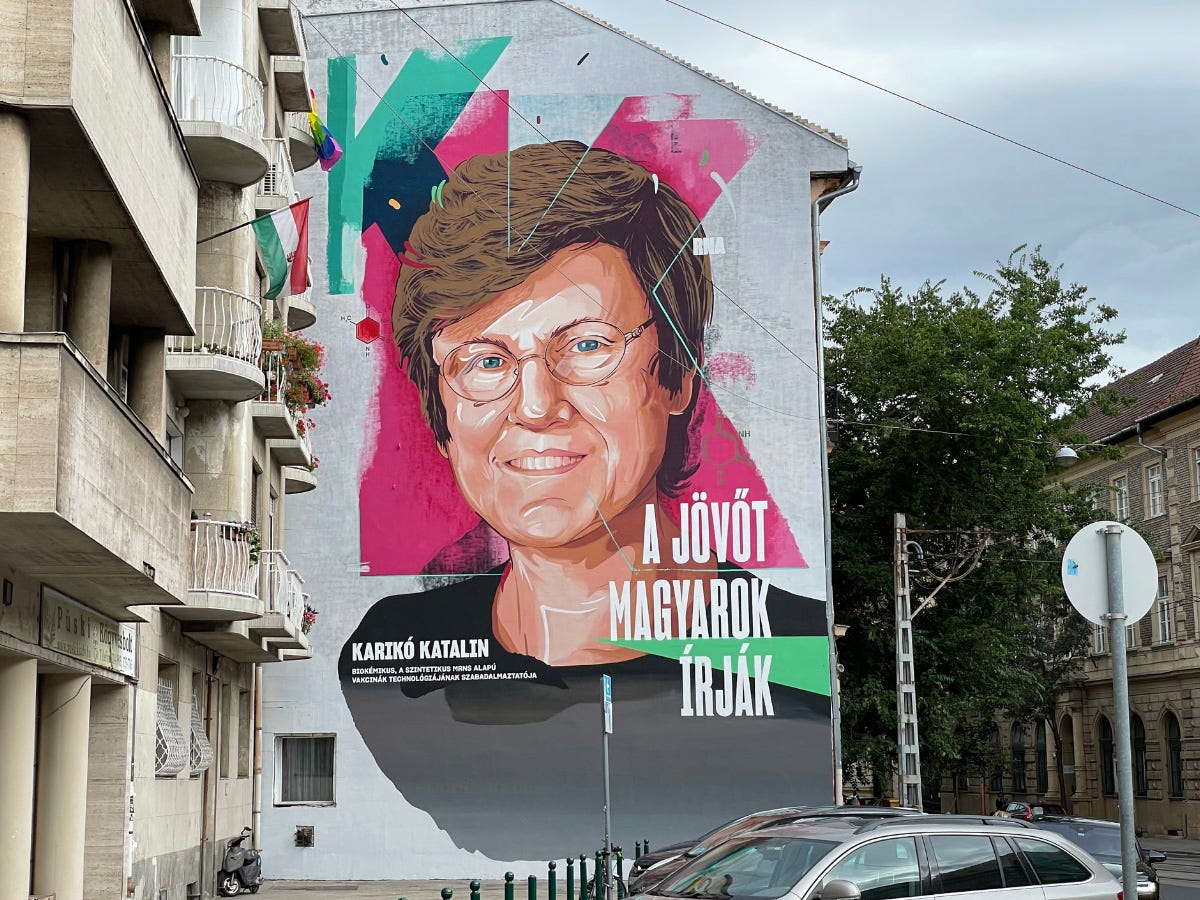
When I moved from Budapest to Ireland as a child, Hungary became something I had to explain.
Until then, it had simply been the world around me. In Ireland, I met people who knew little about the country, and some could not even place it on a map. I did not mind, though. I was proud to say that I came from Budapest, and I enjoyed telling people about my city, my language and the rich, complicated history that seemed to run beneath everything I remembered.
Distance gave Hungary an outline. Each time I described it, I entered it again.
That pride became harder to sustain as I grew older. Conversations with friends and relatives increasingly focused on what had stopped working, who had left, where they had gone, and what those who remained had learned to tolerate. People I knew reorganised their lives around compromises they should never have been asked to make. Consequently, politics entered family conversations and divided people who had once seemed to inhabit the same country.
Hungary was shrinking around the ambitions of its people.
For a long time, life abroad allowed me to keep some distance from this decline. Hungary could remain a country preserved in childhood memory while its political reality drifted further from anything I wanted to defend. During Viktor Orbán’s final year in power, that distance began to collapse.
In June 2025, around one hundred thousand people joined Budapest Pride after Parliament passed a law targeting the event, and the police prohibited the march. Participants faced possible fines and identification through facial-recognition technology. They came anyway, filling the streets in the largest Pride event in Hungary’s history.
Two days before the April 2026 election, more than one hundred thousand people gathered in Heroes’ Square and the surrounding avenues for the Rendszerbontó Nagykoncert, the System-Breaking Grand Concert. More than fifty Hungarian acts performed during a seven-hour event organised by the Civic Resistance Movement, independently of Péter Magyar’s party. The images showed a heavily young crowd, drawn together by music, humour and the growing conviction that fear had lost much of its authority.
Many of those present had spent their entire political lives under Orbán. They had grown up in a country where public institutions, national symbols and the language of loyalty had been drawn into the orbit of a single government. That evening, the square seemed to belong to these very people.
For the first time in many years, my pride in Hungary belonged to the present.
Magyar’s campaign also changed my response to Hungarian symbols. I had come to find patriotic performances sort of embarrassing. Orbán had bound the flag, folk traditions, family rhetoric and familiar historical references so tightly to his government that each seemed to carry his political meaning. That never felt right with me, even as a child.
On the other hand, when Magyar travelled through rural Hungary, carrying the flag, singing national songs, and reciting poems generations had learned at school, those gestures awakened memories of a home I had missed so gradually that I had barely noticed its absence.
The songs had outlived the government that claimed them.
A few weeks ago, I joined the constitutional scholar Kim Lane Scheppele and the political scientist Rory Truex for a conversation about Orbán’s defeat. Kim made a brilliant point that much of Hungary’s liberal and urban opposition had surrendered the language of patriotism. National symbols became associated with Fidesz, and many of Orbán’s opponents withdrew from them. Magyar understood the cost of leaving that territory uncontested.
He carried those symbols into neglected towns and villages while speaking about the condition of the local hospital, school, railway, and road. Corruption acquired a material form. European funds lost to political favouritism became operating theatres where staff worked in temperatures approaching forty degrees. They became delayed trains, exhausted teachers and public services worn thin through years of neglect.
Hungarian history became a demand placed upon the present.
The recovery of national symbols was meaningful because Magyar attached them to an obligation. Pride in the country would now depend on the conditions in which its people live. The flag carried an argument about competence, dignity and the responsibilities of the state.
The exact argument appeared in ceremonial form when the new Parliament convened on May 9.
The European Union flag returned to the Parliament building after an absence of more than twelve years. Inside the chamber, the ceremony included the Hungarian anthem, Beethoven’s European anthem, the Szekler anthem and Zöld az erdő, widely regarded as the unofficial anthem of Hungary’s Roma. Several representatives took their oaths in Lovari, Beás and Croatian.
Among those watching outside was Károly Baranyi, a Roma former restaurateur. He cried when he heard the song from inside Parliament.
“I love this country,” he told Le Monde.
His words harboured years of exclusion, attachment and frustrated loyalty. They expressed a form of Hungarian identity that public life had long struggled to accommodate. The ceremony enabled more citizens to hear their own histories recognised by the state and suggested that Hungarian belonging could encompass multiple memories and voices while retaining its coherence.
Though, since the election, I’ve been thinking about a question: what kind of country should such patriotism build?
Hungary’s most admired achievements present part of the answer. Its scientific, artistic and intellectual successes were seldom acts of solitary brilliance appearing from an empty landscape. Rather, they emerged from institutions that recognised ability and provided a place for it to develop.
A Pew Research Center survey conducted in 2025 found a country divided between attachment and disappointment. When asked what made them proud of Hungary, 23% of respondents said they felt little pride or offered criticism. History was mentioned by 21 per cent, the Hungarian people by 20 per cent, and innovation by 11 per cent. Hungary was among the few surveyed countries where expressions of dissatisfaction appeared as frequently as the leading sources of pride.
The generational difference was especially revealing. Thirty-one per cent of Hungarians under thirty-five mentioned arts and culture, compared with twelve per cent of those aged fifty and above.
Younger Hungarians already possess the beginnings of a more comprehensive national vocabulary. Their pride reaches towards culture, invention and creativity. Their disappointment often concerns the country’s failure to offer them a future worthy of their abilities.
I recognise myself in that fracture.
As a football-obsessed child, Hungarian greatness commenced with Ferenc Puskás. His name travelled easily, even among people who knew little else about Hungary. Later, my understanding widened to include the mathematicians, physicians, composers, and inventors whose work had infiltrated the lives of people far beyond the country’s borders.
John von Neumann helped design the architecture of modern computing, shaping the logic that now runs almost every digital system on Earth. Eugene Wigner pushed the boundaries of twentieth-century physics so far that they still define how we understand matter itself. Zoltán Kodály reimagined musical education in a way that traversed across continents, teaching children everywhere to hear music not as privilege but as possibility. And Katalin Karikó’s persistence in the face of doubt helped unlock the science behind mRNA vaccines, a breakthrough that changed how the world responds to disease.
The familiar names remain extraordinary; what explains them is not exceptionality itself, but the quiet system that first noticed it in a classroom.
László Rátz taught mathematics at Budapest’s Fasori Lutheran Gymnasium. He recognised von Neumann’s unusual ability while the future mathematician was still a schoolboy and helped arrange advanced tuition for him. He also taught Wigner, who later described Rátz as the greatest among the exceptional teachers at Fasori.
Rátz’s influence extended far beyond his classroom. He edited the High School Mathematics Journal, later known as KöMaL. The journal presented secondary school students with difficult problems, invited them to submit solutions, and published the strongest work with the students’ names. It connected ambitious pupils to a larger mathematical community and gave them demanding standards against which they could measure themselves.
KöMaL first appeared in 1893 and subsequently survived two world wars and successive political systems, with interruptions during the wars, and continues to publish nine issues each year. Its archive contains more than thirty-five thousand pages.
A teacher noticed something rare in a child and chose to take it seriously. A journal turned curiosity into real problems worth wrestling with, not just exercises to be completed. Competitions bridged classrooms with a wider world of mathematicians who could already see what those pupils might become.
The achievements that later appeared miraculous had been prepared in classrooms.
Hungarian musical education developed through a similar culture of cultivation. Kodály joined folk-music research with teacher training, school choirs, composition and musical literacy. The Hungarian Academy of Sciences supported the systematic collection and preservation of folk music from 1933. The educational philosophy that grew from this work remained rooted in Hungarian culture and proved adaptable to other countries and musical traditions.
Kodály’s project contained the kind of patriotism Hungary urgently needs. It treated inheritance as material to be studied, practised and shared. A child could learn where a song came from while developing the confidence to enter a wider world.
Hungary’s most enduring achievements grew through this culture of attention. It lived in classrooms, journals, laboratories, archives, choirs and sporting clubs. Its success depended on adults who considered the discovery of ability a public responsibility.
That history also contains exclusion, departure, and squandered human promise.
Many of the figures later claimed as Hungarian intellectual treasures were Jewish, multilingual or born in territories beyond the country’s present borders. Several completed their most important work abroad. Hungarian institutions helped educate them while Hungarian governments restricted the lives and careers of the communities from which they came.
The numerus clausus law of 1920 introduced nationality quotas into Hungarian higher education and was used to reduce Jewish enrolment to roughly the Jewish share of the population. It pushed students towards universities abroad and contributed to the dispersal of an intellectual generation that Hungary would later claim with pride.
Hungary’s Jewish scientists are inseparable from this history. Their careers reflect both the strength of Hungarian education and the ways in which exclusion shaped its limits. They belonged to a tradition that extended beyond the country’s borders and, in many cases, had to endure or outlast the decisions of Hungarian governments.
The country cultivated minds whose departure it then hastened.
Karikó’s life points to a more recent version of recognition, opportunity and departure.
She grew up in Kisújszállás in a working-class family and had never met a scientist. A high-school teacher repeatedly told her that she could become one. She later recalled that she eventually came to believe him and began to imagine such a life for herself.
She studied at the University of Szeged and continued her RNA research at the Biological Research Centre of the Hungarian Academy of Sciences. When funding for her work ended, she left Hungary in 1985 and continued her career in the United States. In 2023, Karikó and Drew Weissman received the Nobel Prize in Physiology or Medicine for discoveries that enabled the development of effective mRNA vaccines against Covid-19.
Her biography begins with a Hungarian teacher recognising ability in a small-town girl. It continues through a Hungarian university and research institute. Its decisive scientific chapters unfolded in American and German institutions after Hungary could no longer sustain her work.
Pride in her achievement creates an obligation. It should compel Hungary to consider how many children with similar potential currently attend schools where such recognition never occurs.
Hungarian education still produces capable students and survives through the labour of committed teachers. Opportunity, however, remains distributed with severe inequality. The European Commission found that differences connected to socioeconomic background are among the starkest in the European Union. In 2023, early school leaving among Roma students was estimated at 58.7 per cent, compared with 9.3 per cent among non-Roma students. Teacher shortages are most severe in rural areas, while disadvantaged schools employ unqualified teachers at rates 2 to 3 times those found elsewhere.
These figures reveal how strongly a child’s prospects remain governed by postcode, family income and ethnicity. They determine whether unusual ability is recognised, neglected or extinguished so gradually that nobody records its disappearance.
I find it difficult to grasp the reality that many important encounters never take place at all.
Orbán built his national story from genuine wounds. The Treaty of Trianon separated communities and left millions of Hungarians outside the country’s borders. Soviet occupation and communist dictatorship created further experiences of coercion, loss and humiliation. These memories remained within family life long after the governments responsible had disappeared.
Orbán compiled them into a permanent ambience of siege.
His kind of politics answered a genuine emotional need. It gave people a language for loss and historical recognition, while grievance became one of the state’s principal forms of belonging.
Orbán’s governments also celebrated Hungarian scientists, engineers, athletes and economic achievements. But these accomplishments fit into a larger story about endurance, national unity, and the protective authority of the state. The National Core Curriculum emphasised common national values, the preservation of traditions and the development of national identity.
Within that culture, curiosity and dissent became increasingly difficult to accommodate whenever they disturbed the government’s account of Hungary. A country capable of extraordinary creativity was encouraged to understand itself through obedience, injury and the repeated discovery of enemies.
Magyar retained the language of patriotism and attached it to the condition of public life. During the campaign, national pride became tied to whether hospitals could function safely, whether trains arrived, whether teachers could remain in their profession, and whether young people could imagine their future within the country.
That standard now applies to Magyar’s own government.
Hungary’s expenditure on research and development fell from 1.63 per cent of gross domestic product in 2021 to 1.31 per cent in 2024. The national figure conceals deep regional inequalities. Budapest spent 2.21 per cent of its economic output on research in 2024, while several counties remained below 0.5 per cent.
The new government has announced changes to the highly centralised school-district system. The Klebelsberg Centre is due to lose its intermediary management role and become a research and professional-support institution. District leaders are to be selected through open competitions. The government and the Hungarian Academy of Sciences are also preparing legislation that could reunify the national research network under the Academy.
These announcements suggest that the government understands the scale of the institutional damage.
A government that invokes von Neumann inherits a responsibility towards mathematics teaching. A country proud of Karikó owes its scientists autonomy, time and reliable support.
Hungary’s intellectual flowering unfolded alongside poverty, class hierarchy and antisemitism. Its most celebrated institutions reached only a fraction of the population. Recovering their seriousness now solicits enlarging their reach and carrying their standards into places where talent has too often been abandoned to chance.
Hungary already possesses the prizes, monuments and famous names. Those achievements leave a debt to the institutions that remain and to the generations still waiting to enter them.
Hungarian patriotism should now be judged by the lives and work the country makes possible.
Hungary knows the names it celebrates; its future rests with those it has yet to know.
A note to readers
The Hungary Report exists because readers have chosen to give this work a home. Each article requires time to follow the history beneath the news, speak with people who understand the country closely and build an argument that can survive beyond the day it is published.
If this writing meant something to you, please consider becoming a paid subscriber. Your support gives me the independence and time to keep reporting on Hungary with the sincerity it deserves, while keeping as much of this work as possible open to everyone. Every subscription helps this publication grow into the kind of institution it argues Hungary needs: curious, demanding and sustained by people who still believe that careful attention has value.
Thank you for reading, sharing and helping The Hungary Report continue.
Source: Pew Research Center; European Commission; Hungarian Central Statistical Office; Hungarian Academy of Sciences; Nobel Prize; KöMaL; Budapest-Fasori Lutheran Gymnasium; MacTutor History of Mathematics; UNESCO; Associated Press; Telex; Le Monde; Civic Forum transcript; research on Hungary’s numerus clausus and memory politics.