

The Mayor Who Kept Budapest Open
While Orbán tried to shrink Hungarian public life, Gergely Karácsony made the capital harder to break.

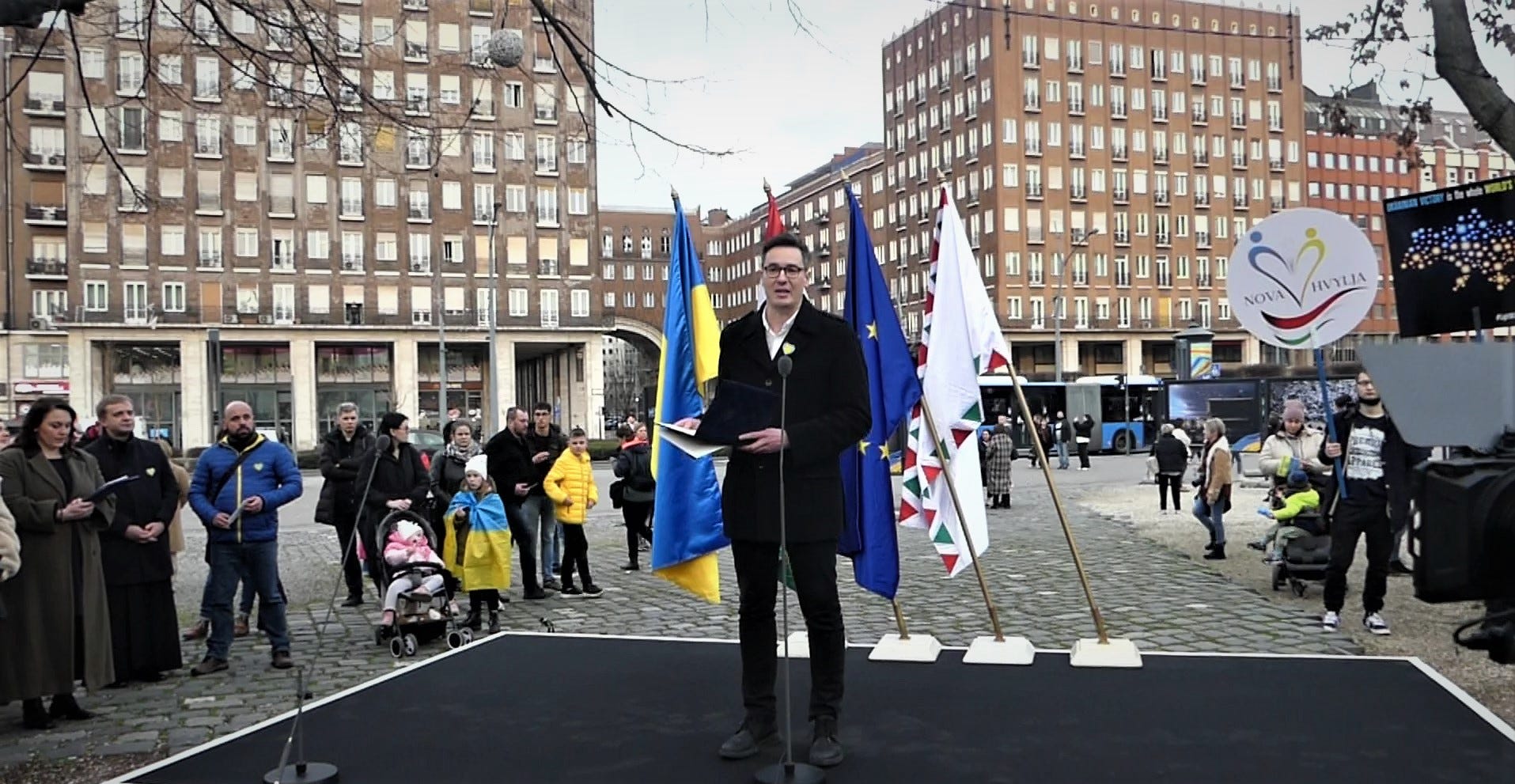
In June 2025, Budapest Pride marched. The ban did not stop it. Nor did the legal threats, nor the new law allowing authorities to use facial recognition in the crowd. The procession moved through the city anyway. I am writing here about Budapest and its mayor, but the story is larger than one place. None of this forgets the rest of Hungary, especially the voters in rural towns and small cities who were essential to toppling Orbán. Across the country, others kept doors open in quieter ways. They deserve recognition, too. Still, this is a story about a city and its mayor, because Budapest’s defiance showed the limits of a system built to appear limitless. Orbán’s state could still menace, prosecute, and bluster. What it could no longer do, at least in the capital, was dictate the boundaries of public life on its own terms. Karácsony saw that early. He declared Pride a municipal celebration of freedom, not as a flourish but as a legal and political shield. It was one of the shrewdest acts of opposition in Orbán’s Hungary.
Karácsony is not a disruptor in the usual sense. He does not dominate a room or wield power as a threat. He does not turn every disagreement into a personal saga. What he did was less cinematic and more consequential. He spent years keeping Budapest open: structurally, morally, and emotionally. Orbánism worked to make that kind of public life seem aberrant. Labour like that rarely looks heroic. It looks procedural, administrative, and even boring to the inattentive. But in a country where the state is busy making freedom feel unnatural, boredom itself can become resistance.
It was not a grand gesture that first caught my attention. I had seen him for years, read his comments, watched his steady, lucid updates about Budapest, democracy, and the latest Fidesz effort to make daily life harder. He was always there, quietly making sense. Pride changed that. That was when he stopped being just another opposition figure and became someone willing to risk himself so that others could remain visible, dignified, and free.
This was never theoretical for me. Too many people I love live under this cloud: friends who map every route home, who check over their shoulder before reaching for a hand, who conduct a silent calculus with every word and gesture. Their fear, and the vigilance forced on them by abusers, have long since become part of my own nervous system. At Pride, the simple act of being visible could mean being photographed, identified, and exposed. When the Hungarian state made Pride a target for legal and political assault, it was an attack on the very possibility of public dignity.
I watched the march for hours, unable to look away. For the first time in years, hope stirred that Orbán might actually be defeated. For a moment, I felt proud to be Hungarian.
Perhaps that is why Karácsony’s story speaks to me in a way it does not to others. Before becoming mayor, he was a sociologist and lecturer who came into politics through LMP and later Párbeszéd. He arrived not as a party functionary but as someone trained to recognise how power hardens, how language stiffens, how public life distorts. Eventually, observation was no longer enough for him. I know that threshold. I watched Hungary spiral downward, too. My response was to write, not to seek office. The risks were different, but the refusal was the same: a rejection of standing by while the country shrank into something crueller and less honest.
That background shaped the politician he became. He emerged not from the exhausted Hungarian left, but from a green-left tradition that valued justice, democracy, clean government, and the city as a living civic organism rather than a trophy. Long before Orbánism became a familiar export, Karácsony recognised the deeper challenge. He was not reacting to a style but to a system. Orbán was not simply governing badly or conservatively. He was constructing a harsher grammar of public life, built on force, possession, and fear. In response, Karácsony understood something strategically vital. Orbán’s system forced every opponent toward the same choice: irrelevance or imitation. Become a weaker version of the same swaggering theatre, or accept life on the margins. Karácsony chose a third path. He tried to make the city itself a form of counter-power. Not a shadow state. Not a romantic commune. Something more practical, more subversive: a functioning democratic capital the regime could not fully digest.
His 2019 victory was the first major proof that this could work. He won the Budapest mayoralty with 50.86 per cent of the vote, against Fidesz´István Tarlós’s 44.10 per cent, taking 353,595 votes and handing the opposition its most important municipal breakthrough in years. As he told supporters that night, “we have destroyed the myth that Fidesz is unbeatable.” It was a perfect line because it was diagnostic rather than triumphant. Budapest was the first place where Orbán’s inevitability cracked in public. It showed that the regime was not the country, however hard it had tried to make those two things appear identical.
Budapest never became a magically protected island, tempting as that image is. Under Karácsony, the city was not free in any absolute sense. Orbán’s power still pressed in. Still, it felt more breathable, more normal, less paranoid. That difference was not theoretical. It lived in the city’s texture, in the fact that public life still retained some capacity for looseness, plurality, and dissent. Budapest was not outside Orbán’s Hungary. It was what Hungary looked like when the system failed to completely shut down a place.
The real test began after the win. Winning a symbolic election is one thing. Governing a city that the national government now treats as hostile territory is another. Karácsony was never the mayor of a safe liberal enclave. He was the mayor of the one place in Hungary that had to be made to fail, or at least to appear to fail. The financial siege tells the story better than any slogan. In 2020, Orbán’s government cut the local business tax, one of the capital’s core revenue streams. By 2025, Budapest said the so-called solidarity contribution had risen to roughly 89 billion forints, and Moody’s said it was projected to consume 21 per cent of the city’s revenue. That kind of targeting is never accidental. It is a way of disciplining a city without conquering it outright.
Karácsony's speaking is frequently read as softness. It is nothing of the kind. It is a conscious refusal to borrow the bully’s grammar. When Budapest challenged the solidarity tax, Orbán answered with the method he trusted most: decree over process, command over law. In February 2026, he used emergency powers to shut down the city’s case. Karácsony called it an attack on the rule of law, and for once the phrase retained its full weight. One party attempted to make the dispute disappear by fiat. This was not toughness. It was the reflex of a political order built to confuse power with entitlement.
The 2024 election offered a similar warning. Anyone tempted to treat Budapest’s openness as settled was quickly disabused. Two days before the vote, Alexandra Szentkirályi, the Fidesz candidate, withdrew and told her supporters to back Dávid Vitézy. Karácsony called the manoeuvre cynical, and the margin spoke with brutal economy: 324 votes, then 41 after the recount. A city can remain open for years and still find itself balanced on a knife-edge.
Karácsony is sometimes flattened into the figure of a mild administrator. He is that only in the most superficial sense. He is also a strategist with a strong instinct for political scale. He understood that if Orbán held the state, Budapest would need relationships and legitimacy beyond it. That instinct shaped the Pact of Free Cities, which he helped establish in 2019 with the mayors of Warsaw, Prague, and Bratislava. The alliance bound Budapest to a broader democratic municipal project rooted in pluralism, openness, and direct European ties. He recognised early that if Hungary was contracting, Budapest could not afford to do the same.
He was just as astute on symbolic ground. In 2021, during the fight over the planned Fudan University campus, Budapest renamed nearby streets after the Dalai Lama, Uyghur martyrs, Hong Kong freedom, and Bishop Xie Shiguang. Karácsony said that if the project went ahead, it would “have to put up with these names.” Mild tone, sharp edge.
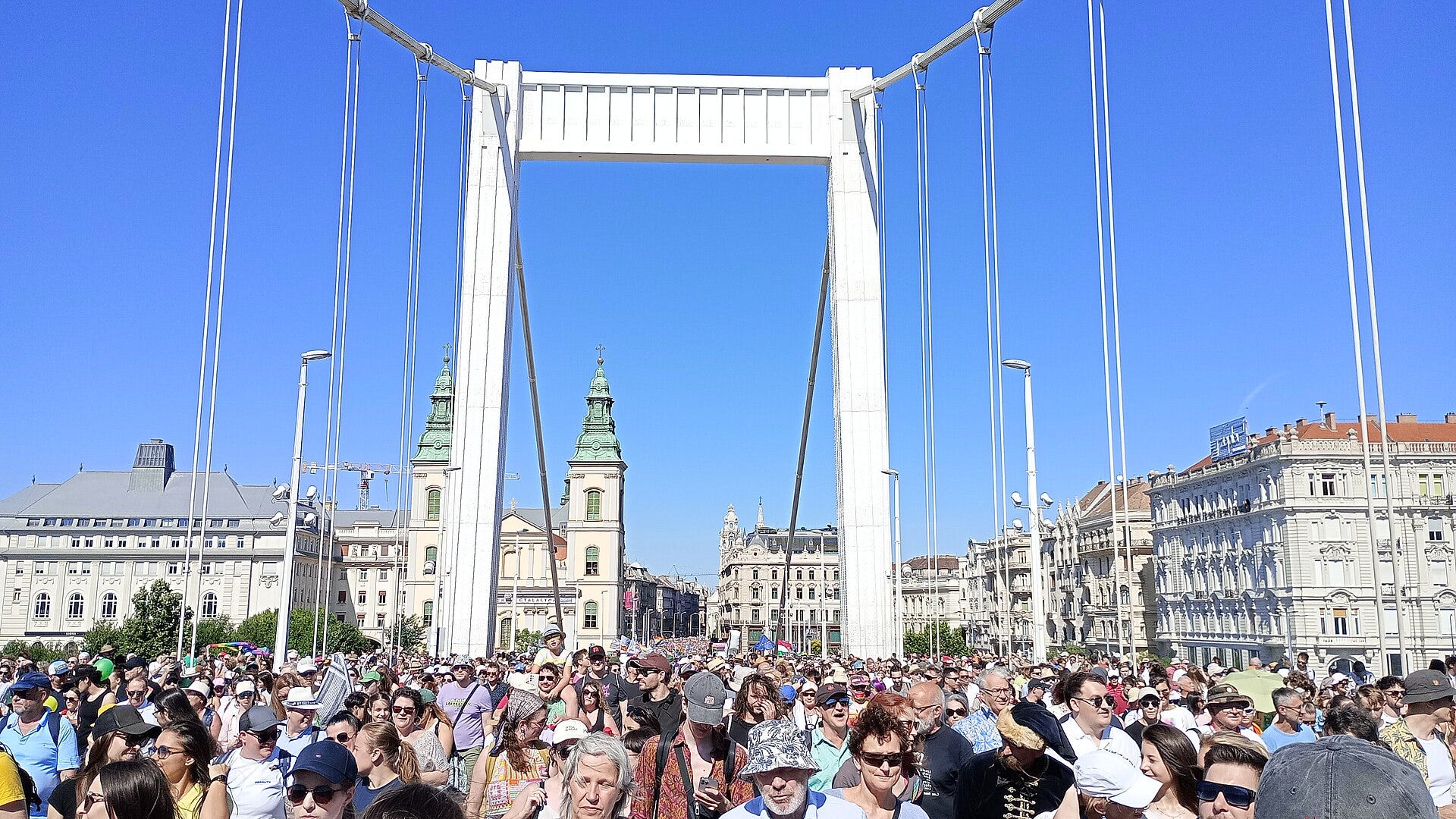
The Pride battle distilled that method. When Orbán’s government rewrote the law in 2025 to make Pride bannable and enable facial recognition against marchers, Karácsony refused both symbolic protest and passive retreat. He declared Pride a municipal celebration of freedom, not as a flourish but as a legal and political shield. By framing it as a city event, he challenged the national authority's approval. Police still tried to ban it, but the march went ahead, drawing hundreds of thousands and support from more than thirty embassies and about seventy MEPs. Pride’s message was unmistakable: freedom and love cannot be banned. Karácsony matched that resolve. Budapest would not surrender its freedom or its pride. This was a witty strategy, legal and political jiu-jitsu, turning the city’s democratic legitimacy against national illiberalism.
Then came the speech “Good evening, Pride, good evening, love,” Karácsony began, before deflating the state’s attempted grandeur with a single deadpan line: “You don’t look like you’ve been banned.” Later, he told the crowd to show that “they have no power over us,” and then delivered the sentence closest to a political creed: “Either we are free together, or none of us is.” He refused to let Pride become a niche issue or a liberal morality play. He framed it as a question of shared public freedom. For a few hours, the state looked smaller than the crowd.
What followed completed the arc. Prosecutors charged Karácsony in January 2026 over organising the event and sought to fine him without a full trial. He answered with the line that fit him perfectly: from a proud suspect to a proud defendant. What counted most was the refusal beneath it. No martyrdom, no panic, no attempt to become the star of the drama. Only a refusal to let the state recast him morally.
What I admire most about his fight with Fidesz is that he never let them drag him fully onto their ground. He did not go down and dirty as they wanted. He kept his integrity and his values, including the green politics that shaped him from the start. Even when he backed Péter Magyar as the necessary vehicle for ending Orbán’s rule, he did so without pretending total agreement or surrendering his own judgment. For him, Magyar was a beginning, not a saviour.
People often see Karácsony as just another politician. That misses what is most distinctive about him. You can still see the sociologist in him. More than that, you can see he cares about people in a way that does not feel staged. He acts not like someone who believes Budapest exists to serve him, but like someone who knows he serves the city.
There is an irony here, and it is part of why I find him so legible. Karácsony was once the hope of a different style of opposition: green, social, urban, less tribal, more humane. He did not become the national challenger who finally broke Orbán’s system. In that narrow sense, he fell short of what some projected onto him. But that is too small a reading. His historical function may have been different. He was not the man to finish the job on a national scale. He was one of those who kept a large part of the country from being spiritually annexed, while others prepared to do the rest. Sometimes, the most important work is to keep the ground open for what comes next.
Perhaps that is why I have always found him easier to understand than many of his critics do. I know what it is to feel Hungary becoming smaller, meaner, more airless, and to realise that observation alone is no longer enough.
That, in the end, is why Gergely Karácsony matters. Not because he is flawless. He can be frustrating, hesitant, too managerial for those who want fire. Not because he toppled Orbán single-handedly. He did not. And not because he is easy to cast as a hero. He is not. He understood that as the country above him grew narrower and more afraid, the capital had to become broader, freer, and harder to break. He was shrewd enough to use bureaucracy, law, symbolism, alliances, and the city’s stubborn legitimacy to make that real.
History may spend less time on the person who kept one of the country’s most important spaces from being spiritually annexed while the system still stood. But that is often how democracy survives: not through permanent climax, but through custody, through someone keeping the doors open, the institutions functioning, the city connected, public life breathable.
Before Hungary could change, some part of it had to remain open enough to imagine change.
For years, Budapest was that place.
Karácsony was one of the main reasons why.
Powerful commentary. Already being employed about an update to a comment I made about Hungary on Robert Hubbell's Daily Edition a few hours ago. Thank you Péter!
Much appreciated this. He fits well with Rafal Trzaskowski, the mayor of Warsaw, and would have with Pawel Adamowicz, the martyred mayor of Gdansk, when he was alive. I'm glad to see such leaders stand together. It gives hope. Again, thanks for pointing mayor Karacsony's example out to us.