

The Long Way Back to Hungary
How leaving, illness, love, and language became a way of returning

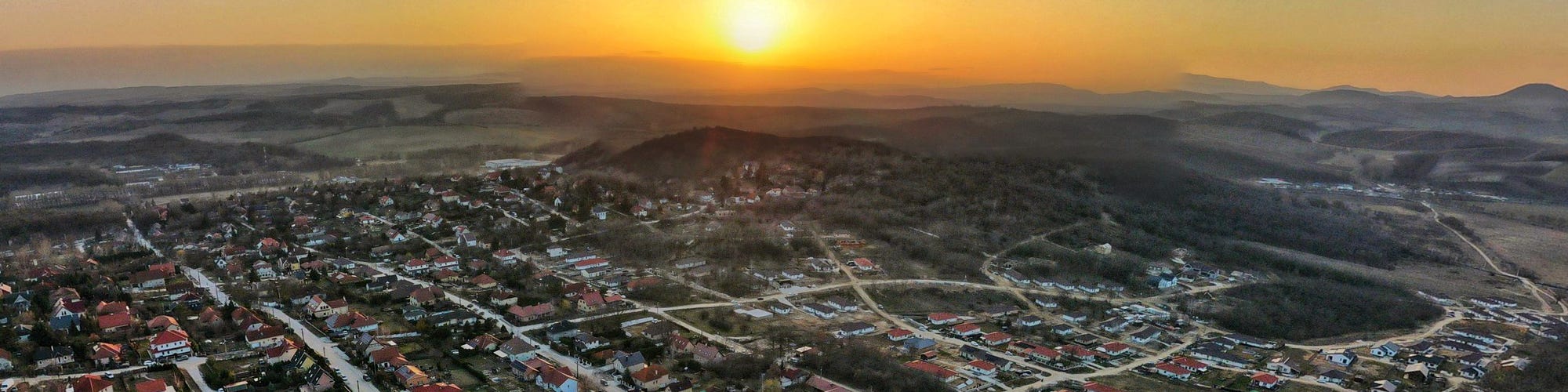
People often ask how I became this kind of writer.
Sometimes they phrase it as a question about language. How does someone write about Hungary with this much feeling, in English, from Barcelona, with an accent that sounds Irish in places and Hungarian somewhere underneath? Where did this way of seeing begin?
Language is what people detect first. This is a story of everything that happened before it.
This story is about a child leaving Hungary, landing in Ireland, unable to understand what anyone was saying, spending years trying to work out where he belonged, carrying around a brain that sometimes turned against him, falling in love, becoming gripped with politics, and learning, again and again, how to adapt to different people, different countries, different versions of himself. All of that shaped how I see the world long before I called myself a writer.
I was born in Budapest in 1998. My earliest years were spent in Pilisjászfalu, a small village outside the capital. When I think about where I come from, flags and borders do not come first. A serene childhood does.
I think about forests, hills, family lunches, friends knocking on the door, my grandmothers, dogs barking somewhere in the distance, and long summer evenings that felt as if they would never end. Back then, Hungary was not an argument, a culture war, Viktor Orbán, or something I had to explain or defend. It was home.
Budapest was nearby, but my world was small enough to fit inside familiar faces, familiar roads, and the belief that tomorrow would look much like today.
Hungary, before politics, felt like childhood.
Childhood lies to you in beautiful habits. It makes ordinary things feel endless. It persuades you that the people around you will always be there, that the places you love will stay the same, and that belonging is natural rather than fragile.
Near our house stood an old mine where my brother, my sister and I used to wander around with our dogs. We spent hours playing around abandoned mineshafts. Looking back, it was completely unsafe. One wrong step and one of us could probably have disappeared into a hole in the ground. At the time, nobody thought much about it.
What I remember is the freedom: the dust, the open space, the feeling of having an entire world to explore without adults constantly hovering over us. Whole afternoons vanished out there.
Countries arrive in your life long before politics does.
A country begins as people, places, smells, jokes, routines, and memories. It begins as your grandmother’s kitchen, your best friend’s laugh, the road you walked a thousand times without thinking about it. Only later do politicians arrive and start telling you what the nation represents. By then, most people already know, or at least they think they do.
A few years ago, my childhood best friend came to visit me in Barcelona. We met when we were about five or six years old, then spent almost twenty years living separate lives.
When he stepped into my flat in Poble Sec, the years seemed to fold in on themselves. We sat there talking late into the night about school, family, Hungary, relationships, mistakes, and all the strange directions our lives had taken. What struck me was how much had endured: the same humour, the same references, the same instincts, the same shared understanding that did not need explaining. Twenty years had passed. Underneath everything else, we were still two kids from the same village talking shit together.
That visit brought Hungary back as a person sitting across from me at the table. It reminded me that a country is never exclusively the government that disfigures it. It is also the people who carry its humour, damage, tenderness, memory, and stubbornness through the years, when public life becomes unbearable.
At around eight years old, my life packed itself into a suitcase and flew to wet and windy Ireland.
My father had gone a year earlier, and then the rest of us followed. At first, we lived in Wicklow, south of Dublin. It was beautiful, though my first memories of school are mostly centred around nerves. English was not yet a language I could use at all. It rolled under me, fast and strange, while I stood inside it with almost nothing.
There was yes. There was no. Everything else felt out of reach.
I remember sitting in classrooms listening to streams of sound that clearly meant something to everyone except me. I watched faces, gestures, reactions. Most days felt like guesswork. Every interaction carried a small knot of anxiety because I wanted to belong and had no idea how.
For reasons still unclear to me, Britney Spears became an early survival strategy. One of my first social scripts in Ireland was: “Hi, my name is Peter, and I like Britney Spears.” That was more or less the full range of my public personality. Somehow, it worked. Around school, a small reputation formed: the Hungarian boy who liked Britney Spears.
It is funny now. Underneath it was fear. English now feels precise to me, but there was a time when it was little more than noise passing around me. Moving to Ireland meant waking up in a world where almost everything familiar had slipped out of reach. No single loss hurt the most. The hardest part was being cut off from a life I understood and dropped into one I could not yet read.
There was kindness too. In those early days, one of my oldest friends, someone I have now known for nearly twenty years, helped make the unfamiliar less frightening. Other children reached out. Teachers paid attention. Ireland could be hard, but it was also full of people willing to make space for a child who could hardly summon the courage to walk into school in a strange new world.
Ireland showed me a future.
It presented my family with more stability than Hungary would have. It provided me with a solid education, native-level English, lifelong friends, and difficult lessons. It also showed me a way of surviving discomfort through humour. Irish humour is sharp, often dark, and allergic to self-importance. People joke sideways. They understate everything. They take the piss before anything gets too grand. I picked that up pretty quickly. Maybe the weather helps. When the sky is grey for half the year, sarcasm becomes a public service and a coping mechanism.
That shaped more than my sentences. It shaped my suspicion of performance. Ireland taught me to listen for inflated language, for people trying to sound larger than they are, for authority wearing a costume. It gave me an ear for vanity. It gave me the pleasure of puncturing pomposity before it became dangerous.
Hungary left me with an ache. Ireland gave me some of the means to live with it.
Ireland also allowed me distance from the Hungary Viktor Orbán was building. Leaving hurt, but there was luck in spending those years outside the full and direct environment of his rule. That luck carries discomfort with it. Distance can protect you, but it can also leave you wondering what the cost of protection is.
Ireland saved me and eventually became a place I had to leave. There was no clean disdain in it. Some part of me knew that staying would be bad for my mind, and bad for the person trying to emerge underneath all that uncertainty.
Barcelona felt different.
The city entered my life gradually. First through holidays. Then through Erasmus. Later, through a master’s degree at Universitat Pompeu Fabra. Barcelona ceased being a place I visited and became the place I considered as home.
At Universitat Pompeu Fabra, I studied democracy, migration, multiculturalism, federalism, human rights, and political systems. I was not always the most disciplined student, but those years expanded my horizons significantly. What stays with me now is the people I met around the lectures: conversations over coffee, friendships that crossed continents, and familiar political questions seen through completely different cultural lenses.
Barcelona gave me permission to live without a clean category. Hungarian by birth. Irish in speech and humour. European through experience. Foreign and at home in the same city. A person does not have to resolve every contradiction to become real.
It also changed my ear. Living in Barcelona means moving constantly between languages and ways of speaking. A conversation in Spanish can be followed by work in English, then an evening listening to Russian across the dinner table. Over time, language stopped feeling fixed. Every interaction leaves a trace: a different rhythm, a new expression, a subtle shift in tone.
My partner is Russian, so another world is always nearby. I still do not speak Russian, despite occasionally convincing myself that I do. Every now and then, I overhear part of a conversation with her mother, recognise a word that sounds vaguely familiar, and immediately commence constructing elaborate theories about what is being discussed. These theories are usually delivered with complete confidence and virtually no accuracy.
Through her, Russia became something far more human than the version that appears in headlines. It entered my life through stories, traditions, films, humour, and family memories. One New Year’s Eve, she introduced me to The Irony of Fate. The film represented being invited into a cultural tradition shared by millions.
Barcelona has reinforced that lesson again and again. The closer you get to people, the harder it becomes to believe in neat categories. Real lives spill across borders. Families carry multiple histories at once. Languages overlap. Influences accumulate. The world people actually inhabit bears little resemblance to the tidy identities imagined by nationalist politics.
A life lived between Hungary, Ireland, and Spain leaves little tolerance for politicians who pretend belonging is straightforward.
After my master’s, Barcelona became a gamble. Other cities and other jobs might have led more directly toward politics, writing, or the life I once imagined. But the city had already taken hold of me, and so had the person who became the centre of my life here. So I stayed.
For several years, work meant digital marketing. It paid the bills and taught me a great deal about communication, but over time, I became more interested in the stories behind people’s attention than in capturing that attention itself.
Then the drift began.
Not as a judgment on people who find meaning in corporate work. Some do. I did not. My routines became efficient and practical, but life started to feel muted. The curious child who loved stories, politics, languages, arguments, and the world in all its mess went quiet.
It affected my health. It changed how I looked at Hungary from a distance. The things that once made me feel awake began to fade. From the outside, my life looked stable. Inside, each year seemed to move me further away from the person who was supposed to be living it.
That frightened me.
OCD has always been one of the hardest things to explain because most people imagine something very different from reality.
People think of visible habits: cleaning, checking, and arranging things. Sometimes those are part of it. Often they are not.
For me, OCD feels like getting trapped inside a question that refuses to accept any answer. A thought appears, usually attached to fear, guilt, doubt, or responsibility. I examine it. I answer it. I reason with it. Then it comes back demanding another answer.
At three in the morning, a conversation from earlier in the day can suddenly return. Did I sound rude? Did I interrupt someone? Did I miss something important? What begins as a question quickly becomes an investigation.
The frustrating part is that I usually know what is happening. I know the thought is irrational. I know I have been here before. Yet OCD has a way of making uncertainty feel urgent. Logic arrives with sensible explanations, but fear keeps asking for one more review. One more check. One more attempt at certainty.
There were periods when it consumed enormous amounts of energy. From the outside, life looked normal enough. I went to work. I answered messages. I met friends. Inside, huge amounts of attention were being spent fighting battles nobody else could see.
I would never romanticise OCD. It has caused suffering, frustration, and exhaustion. But it has also forced me into a level of self-observation I probably would not have developed otherwise. When your own mind constantly demands scrutiny, you become attentive to details, contradictions, emotional shifts, and hidden assumptions.
Writing is one of the few places where that restless attention becomes useful.
My first drafts often resemble the inside of my head. Ideas overlap. Questions compete for space. Connections appear before the structure does. The challenge is not generating thoughts but organising them into something coherent.
That is why revision matters so much to me. It feels less like polishing and more like excavation. Each draft gets a little closer to what I was actually trying to say. The process can be obsessive in its own way, but unlike OCD, it moves somewhere, periodically toward clarity.
OCD has not made writing easy. Nothing about it is easy. But it has made me extremely aware of how fragile and complicated our inner lives can be, and how much of what shapes us remains invisible to everyone else.
For a long time, there was no clear use for that intensity.
Then Hungary returned to the centre of things, and subsequently, my life.
A few things converged. My health was difficult. My family and I were going through one of the hardest periods of our lives. At the same time, from a distance, fellow Hungarians seemed trapped under a political order that had spent years teaching people that nothing could change.
For 16 years, hope in Hungary felt almost reckless. Viktor Orbán’s Hungary became expert at exhaustion. It restricted the imagination. It made resistance look naive, solidarity look dangerous, and decency look weak.
Then came Budapest Pride last year.
I watched the livestream for hours. Six, maybe seven. People moved through Budapest with flags, signs, faces, voices, and the simple refusal to disappear. For the first time in years, being proud of Hungary felt conceivable again. The courage on display was ordinary and therefore more moving: people showing up, walking together, becoming visible in a country where power had worked so hard to make visibility feel hazardous.
For the first time in a long time, Hungary’s story did not feel concluded.
It was also the beginning of writing about it seriously.
There was no ideal strategy. Writing by itself will not restore a democracy or undo political damage. Still, silence became impossible for me. The Hungary that shaped me was being explained to the outside world through Viktor Orbán’s language, Viktor Orbán’s myths, and Viktor Orbán’s lies. Someone had to speak about the damage beneath the slogans.
Authoritarian language concerns me because it prepares the ground. It teaches citizens whom to fear, whom to mock, whom to blame, and whom to exclude. It turns neighbours into symbols and minorities into warnings. It makes cruelty sound administrative, cowardice sound prudent, and obedience sound patriotic.
My partner is from Russia. Some of my closest friends come from Venezuela and other countries where politics has not remained confined to parliaments, elections, or television debates, but has seeped into everyday life. Through the people I love, I have seen how authoritarianism leaves traces long after the headlines move on. It lives in carefully recounted family stories, in relatives scattered across countries, in the instinct to lower your voice before discussing certain subjects, in the habit of measuring what can be said, and to whom.
The more personal these relationships became, the harder it was to think about politics as something detached from me. Authoritarianism stopped being a concept and became something human and direct. I began to recognise it in small moments: a joke that carries more caution than humour, a memory interrupted halfway through, a hesitation before expressing an opinion, a reflex of self-censorship so deeply learned that it no longer feels like fear. When people you care about have grown up around propaganda, repression, exile, or the gradual erosion of public truth, you start to see how political systems settle into private lives and shape people in ways that statistics never capture.
That is why political language that flattens identity provokes such a strong reaction in me. It reduces real lives into categories simple enough to be used against people. It asks citizens to forget what every honest life already proves: belonging is layered, memory is complicated, and no country can be reduced to the slogans shouted in its name.
The writing began from that recoil.
It is for Hungarians who feel alone. For people abroad who sense something is wrong but cannot name it. For those trying to understand how a country can be slowly trained to accept cruelty as normal. It is also for myself, because writing is how confusion becomes thought, how fear becomes argument, how the world, briefly, becomes less impossible to read.
Writing made the numbness harder to maintain.
It reawakened what had gone quiet in me: curiosity, anger, humour, and the urge to understand how people learn to live with things they should never have accepted. Most of all, it gave me a sense of community, something I had not known I was missing.
For a long time, politics felt distant, something unfolding far away while I watched, angry and alone. Then readers appeared, Hungarians abroad, expats in Hungary, people with no Hungarian background who still cared, people who understood that democracy, cruelty, propaganda, and fear are never only local stories.
That changed the work. It felt less like shouting into the dark and more like building a small place where people could keep paying attention together.
Some days, I write for twelve hours. It exhausts me, but it does not drain me as much as the work that came before. This exhaustion has meaning attached to it. It feels like an effort to move in the right direction.
So when people ask how I became this kind of writer, there is no single answer. There is only the life that made the question possible.
I write in English because that is the language in which I became precise.
I write about Hungary because that is the country that made precision necessary.
Writing about Hungary became a way of returning before return was possible. A way to stand closer to the place left behind as a child and say: I still see you. I still care. I am not looking away.
So glad you are here and so glad to have found your work. Your writing is beautiful.
And the grief for one’s country may be one of the most peculiar, intangible injuries anyone suffers, as many Americans (myself included) are just learning.
Péter,
A beautiful testimony on yourself. There is not one point in our life journeys identical, except being Hungarian. But it is an immensely important one.
During my long life, I have been always an optimist, and hoped Hungary to succeed sooner or later. The past sixteen years severely tried my optimism, but I persevered. I am not a writer, but my journey spanning over WW2 to our times, deserves to be written, by an old amateur scribbler. If I live to do it...