

The Cost of Corruption: Orbán’s Hungary and the EU
From public contracts to the Hatvanpuszta estate, how corruption debates are reshaping Hungary’s relationship with Europe.

This article was first featured on: https://thehungaryreport.com/
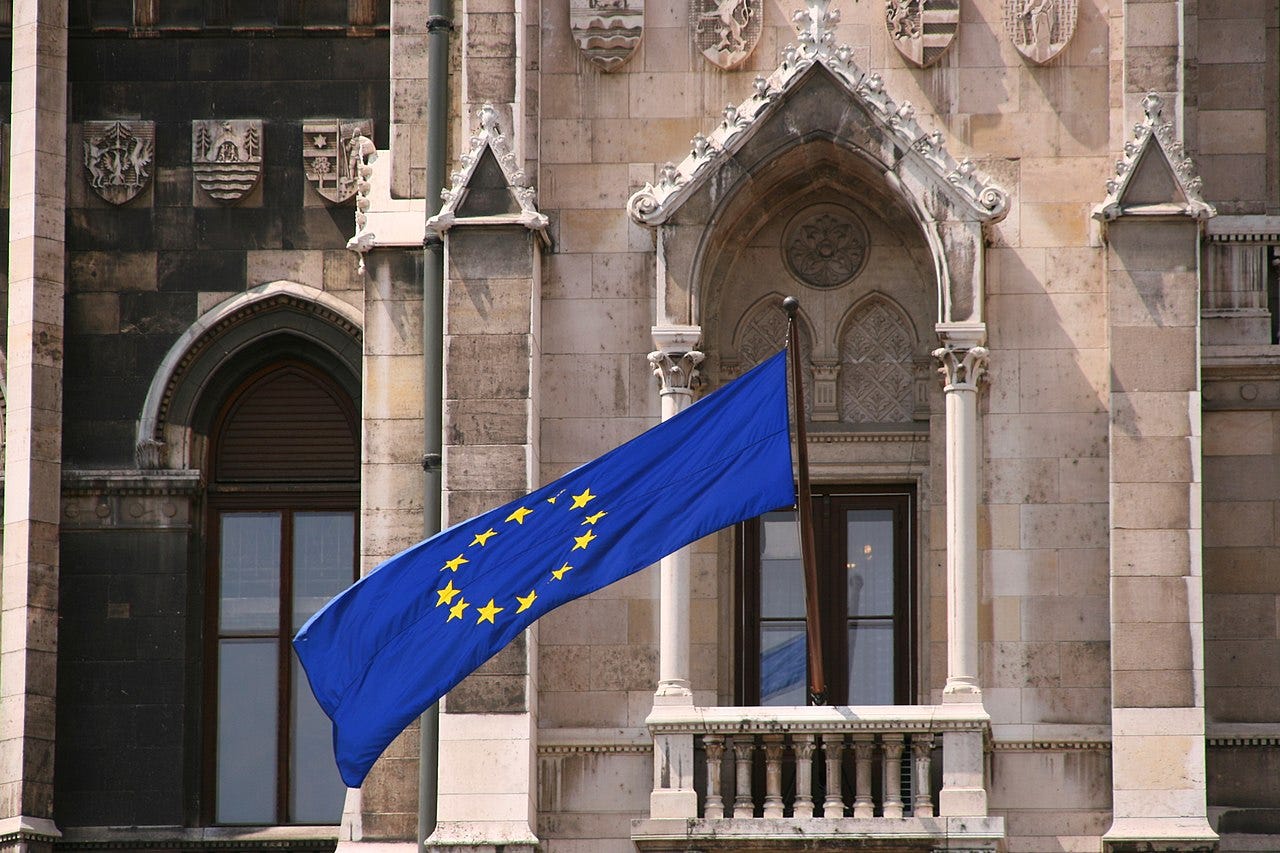
The European Union flag on the Hungarian Parliament building in Budapest. Photo: Marek Ślusarczyk (Tupungato) / CC BY 3.0
Written by Peter Dosa
Hungary’s growing corruption gap
In a Budapest grocery store, a shopper counts her Forints and stops. She cannot afford everything she needs. Bread, meat, and groceries now take up most of her paycheck. Ten years ago, corruption in Hungary was seen as a problem for politicians. Now, its effects reach within daily life, raising the cost of essentials and setting Hungary apart from EU standards.
This widening gap is changing Hungary’s place in the EU and how others see the country. Evidence tracking governance, citizen confidence, and Hungary’s adherence to EU rules shows the shift. Recent international and EU reports point to corruption in Hungary as a structural rather than a purely political problem.
Hungary sits at the bottom of the EU’s corruption rankings. It scored 42 out of 100 on Transparency International’s 2022 Corruption Perceptions Index. Zero means the worst corruption; 100 means clean governance. The EU average is 64, so Hungary trails by 22 points. This is not only about one number. It shows a steady decline over the past decade, while neighbours have moved in the other direction. Romania, once level with Hungary, is now catching up to the EU average. Poland, despite political upheaval, has not seen the same drop. Hungary’s decline is not inevitable. It reflects choices made at the top.
The same pattern appears in the handling of EU funds. Between 2015 and 2021, Hungary had more irregularities in EU spending than any other member state, about double the EU average. This is not just bad luck. It signals problems in how public money is managed, and these problems are not going away (Hungary at the Bottom report; Transparency International CPI 2022 summary). The trend has continued in recent years, with Transparency International Hungary warning that corruption risks remain entrenched in public institutions (CPI 2025 results).
Subscribe to The Hungary Report
Independent analysis of Hungarian politics, EU relations and democratic trends. Get new articles delivered directly to your inbox.
Power networks and state capture
Hungary’s corruption stands out in Europe, where corruption is usually seen as isolated incidents. In Hungary, political power and economic interests are closely linked (Hajnal, 2025). Political and business leaders exchange favours, maintain control, and protect their interests, forming a closed circle (Bartha, 2026). Knowing these networks shows how they shape governance and Hungary’s ties with the EU.
These networks shape how EU funds are used in Hungary and affect governance. A 2026 report found that 68 per cent of EU funds sent to Hungary stayed with state-controlled organisations (The Impact of EU Subsidies on the Performance of Hungarian Corporations). EU funding is central to Hungary’s public investment, so accountability is essential. If Hungary does not meet standards, Brussels can withhold money.
From 2011 to 2021, 10 companies linked to the ruling party won contracts for 40 per cent of major state projects (Transparency International Hungary report on corruption and rule of law). This shows a concentration in procurement. Transparency International Hungary notes that because Hungary has not met EU funding requirements, smaller organisations are unsure if they will receive future resources (Transparency International Hungary statement on EU funding conditions). These ongoing issues lead to certain examples of questionable practices.
One such example of questionable practice is the awarding of street lighting contracts to a company linked to Orbán’s son-in-law, István Tiborcz. The EU’s anti-fraud office found problems with how the contracts were given and suggested fines, but Hungarian prosecutors did not file charges. This demonstrates the enforcement gap—the difference between rules and actual consequences—and the limits of oversight for EU-funded projects.
Tiborcz-controlled firms won more than 15 per cent of all major Hungarian public contracts by value, about one in every seven large public projects (EU Taxpayers’ Contribution to Building the Orbán). Many of these contracts were partly funded by the EU. This reveals more than just problems with public procurement. It shows a wider trend of state capture, in which a small group of politically connected individuals gains major influence over the market. This concentration restricts competition, raises costs, and discourages honest businesses. The effects go beyond infrastructure. Innovation slows, consumer choices shrink, and these changes are felt in everyday life.
The Symbolism of Hatvanpuszta
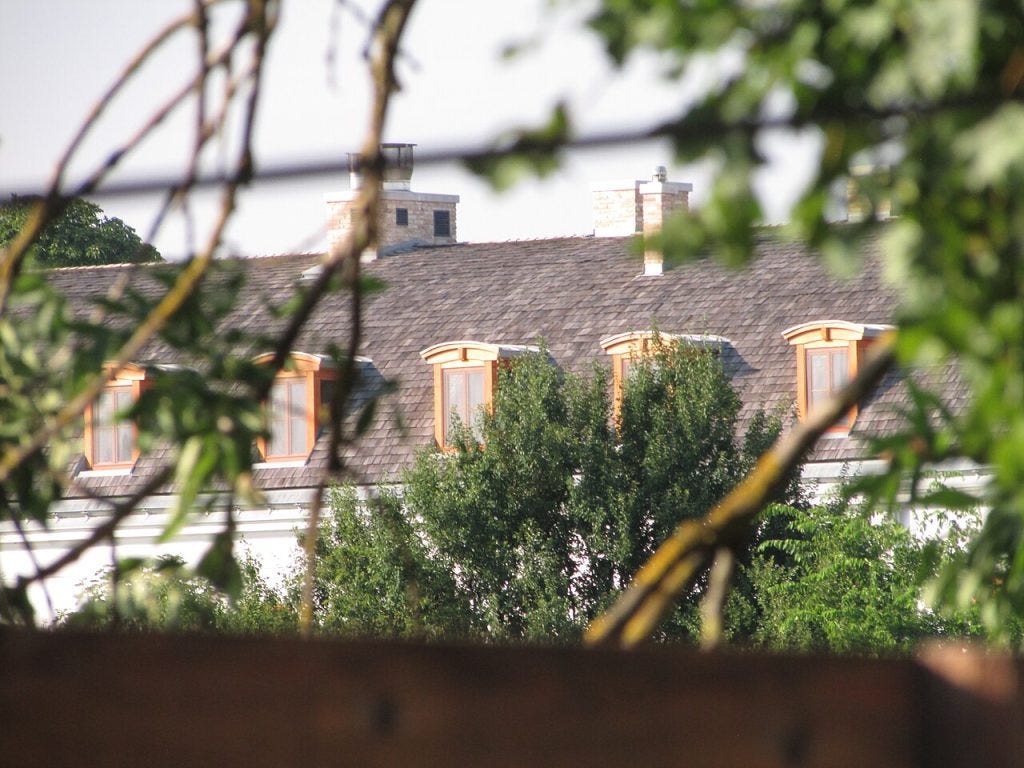
Procurement scandals are just one piece of the puzzle. If you want to see how deep the rabbit hole goes, look at the world of high-profile property deals—where governance gets murky and personal fortunes are quietly made, often behind a wall of hidden ownership and state involvement. In a country as reliant on EU funds as Hungary, these stories hit even harder.
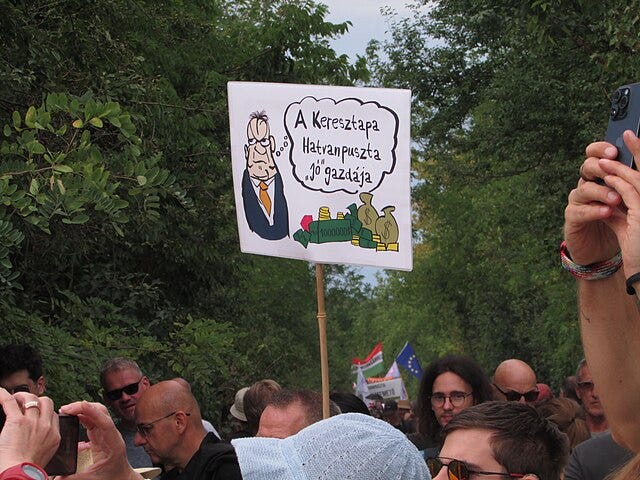
Take the Hatvanpuszta estate: it has become a symbol in the national debate over asset disclosure and whether those at the top are bending the rules for their own benefit. The facts are plain: when ownership is obscured, and the state has a hand in the deal, the risk of abuse skyrockets. And when Hungary is so dependent on EU funding, every questionable deal raises the stakes—not just for transparency, but for public trust and European solidarity.
Despite media coverage and fines, concerns about conflicts of interest and accountability continue. The EU’s Rule of Law Conditionality Mechanism has delayed €6.3 billion in cohesion funds, about 4 per cent of Hungary’s GDP (EU Council decision on suspending funds). Since EU funds made up 55 per cent of Hungary’s public investment from 2014 to 2020, these delays have reduced local budgets, stalled projects, and increased political tensions (Distribution of EU Funds in Hungary report).
The effects are concrete. Schools across the country show how funding freezes shape daily life. Parents deal with crowded classrooms, repairs are delayed, teachers modify schedules, and local businesses put plans on hold. A dispute over procurement standards quickly spreads to families and workers across the city.
Investor faith falls when projects are delayed. The Chain Bridge renovation in Budapest was postponed, another casualty of failed tenders. Elsewhere, towns have had to shelve or cancel plans for new schools, hospitals, and community centres.
These examples show how these failures ripple through society, affecting people’s welfare, livelihoods, and trust in the system. What starts as a local problem soon becomes a national and European issue. The EU’s response matters, and fixing these long-standing issues will not be quick for anyone involved.
The EU’s rule-of-law response
The growing effect of these issues has changed Brussels’ approach. For years, Brussels had few tools to address rule-of-law problems. Article 7, the main procedure for disciplining such breaches, was slow and ineffective.
The new conditionality mechanism now links EU funds to the fulfilment of governance standards. It also prompts questions about EU values and enforcement powers. Hungary has used its veto to block financial and sanctions proposals during disputes with Brussels.
Corruption and disputes in Hungary now affect decisions and stability across much of Europe. This is not only about a few scandals. It is about a system that causes ongoing problems for the EU. As small businesses close, trust fades, and costs rise, Hungary’s situation shows that unregulated corruption causes long-term harm (RFE/RL reporting on lost EU funding).
Without strong action, it will be hard to rebuild trust and good governance for both Hungary and the EU.
What Europe can do next
In this context, the EU must decide how to respond. One option is gradual sanctions. The EU could tie funding to clear governance goals to encourage progress without sudden financial shocks.
Another option is coalition-based funding to support provinces, towns, and civil society groups that meet EU standards. This would bypass compromised central institutions and promote local accountability.
Both choices involve risks and trade-offs, but they show that the EU has options beyond blanket penalties or inaction. For real progress, Brussels needs credible ways to protect its values and the everyday interests of Europeans.
Brave work by Peter Dosa —exposing corruption under Orbán takes real guts when the system punishes truth-tellers so harshly. Solidarity from afar; your integrity matters more than the regime’s intimidation tactics ever will