

Spain Draws a Line, and Europe’s Sovereignty Test Comes Into Focus
Why Spain’s stand against Trump’s pressure is a test of European sovereignty.

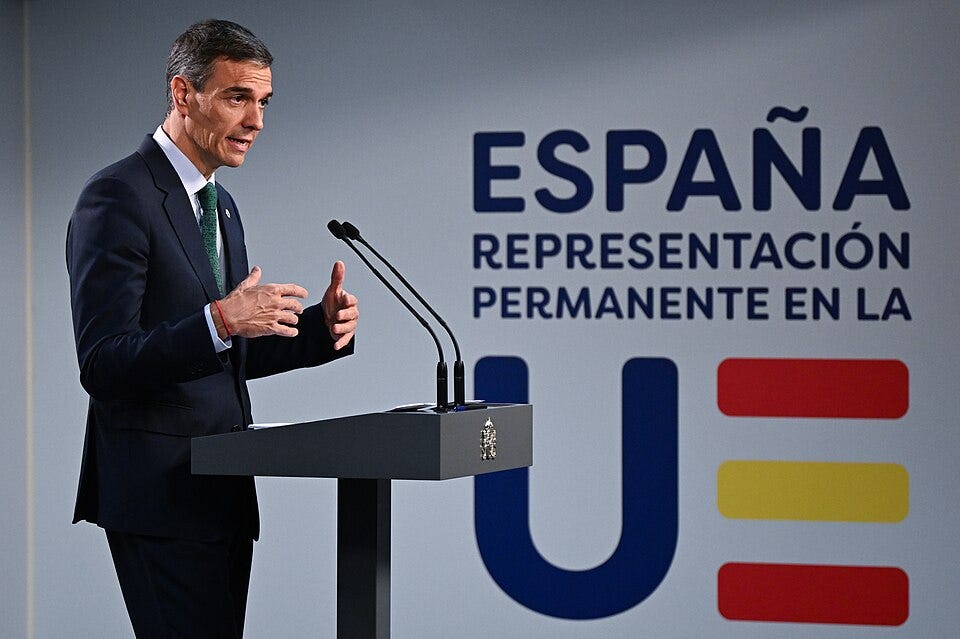
Pedro Sánchez, Prime Minister of Spain, at a European Council meeting. Photo: © European Union, 1998–2026.Originally published on The Hungary Report (full version with sources + images): https://thehungaryreport.com/spain-draws-line-europe-sovereignty-test/
By Peter Dosa
Europe faces its toughest test defending sovereignty in decades. External pressure from allies, especially the U.S., clashes with national decisions and EU unity. The result will show if Europe yields or sets boundaries when alliance demands conflict with domestic choices.
The significance of the 2026 basing dispute is heightened by its visibility. Unlike typical diplomatic conversations that occur behind closed doors, this dispute unfolded publicly for the world to see, fundamentally affecting its impact.
Previous article: Orbán’s Hungary: Cost of Corruption
The standoff began when the U.S. asked for more support for U.S.-Israeli strikes on Iran. Spain refused because of domestic politics and fear of escalation. The dispute became public. On 4 March, the White House claimed Spain agreed to cooperate after Trump threatened trade retaliation. Spain denied any policy change. It reinforced base use limits and framed the issue as sovereignty, not obedience. Associated Press: Spain denies cooperation, contradicting the White House.
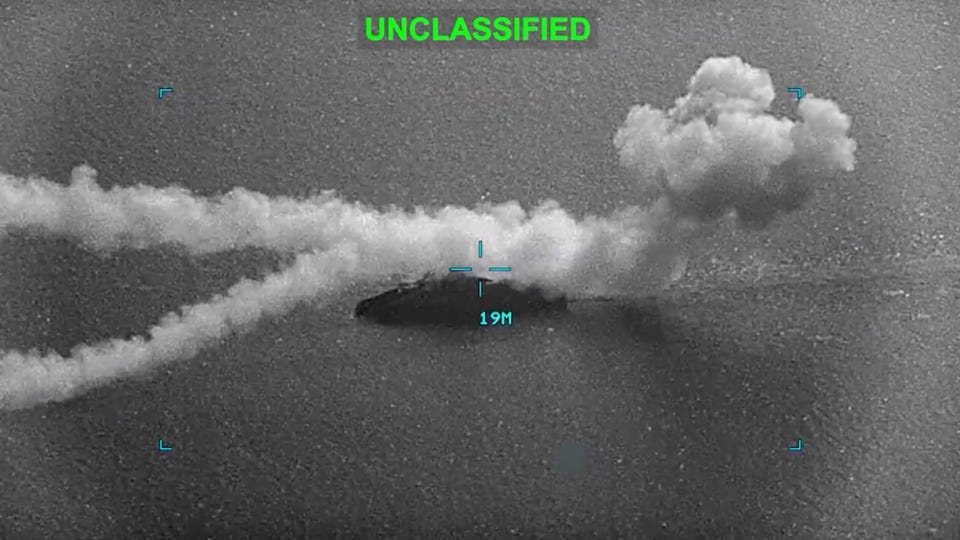
The essential lesson is this: power is being exercised in public now. When a U.S. president can threaten economic retaliation, then claim victory anyway, every European capital has to confront the same uncomfortable question: where do our obligations end—and where does our sovereignty begin?
This isn’t about personalities. It’s about incentives. If pressure reliably produces compliance, pressure becomes policy. So Europe has a choice: yield, or draw a line that makes coercion unprofitable.
The appeasement analogy
Appeasement in 2026 is not a carbon copy of 1938. But the mechanism rhymes. The form changes; the logic doesn’t.
So let’s define the term cleanly. Appeasement isn’t surrender. It’s the pattern that develops when coercion is met with predictable accommodation—teaching whoever applies pressure, ally or adversary, that it works and is worth repeating.
In the 1930s, the most famous concession was territorial: the Munich Agreement ceded the Sudetenland in exchange for a pledge not to make further demands. Today, the main concessions are procedural and infrastructural. They include permissions for overflight, logistics, refuelling, intelligence, political cover, and the discreet normalisation of exceptions made under pressure.
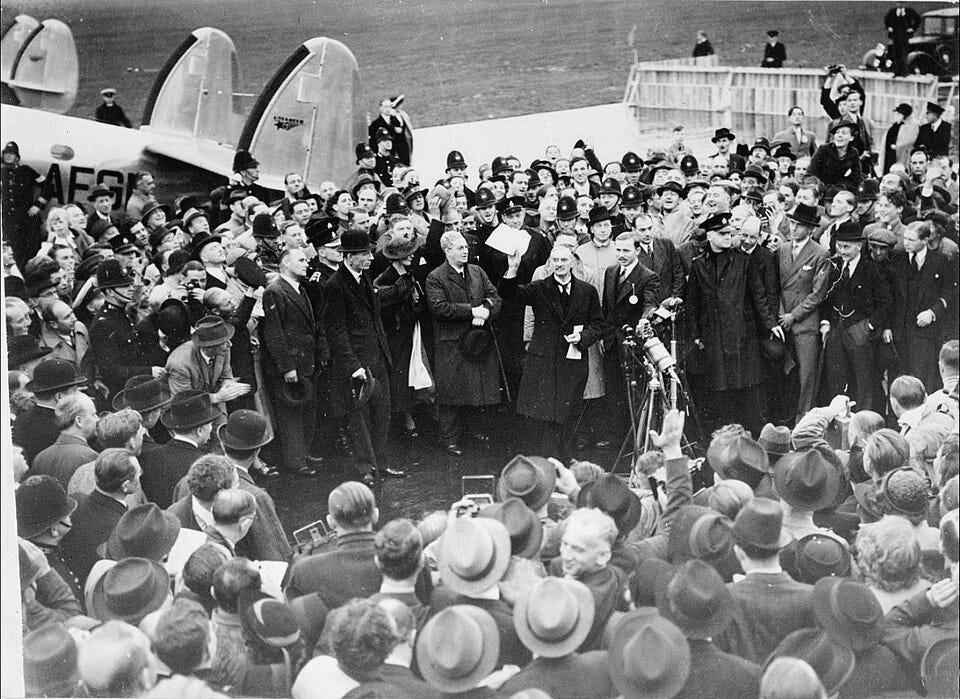
History doesn’t repeat, but it does instruct: When pressure consistently brings results, coercion becomes habit. Spain’s resistance puts this pattern to the test.
Resisting adversaries is routine. Resisting an ally, as Spain just did, sets a new and challenging precedent.
First: Spain is reasserting its sovereignty within its alliance. Spain’s position is clear: shared facilities are not a blank cheque. Joint operations do not erase sovereignty. This episode shows how quickly alliance unity can turn into automatic compliance in the face of economic threats. Spain’s refusal is important. It reinstates a boundary that transactional politics seeks to erase. Consent is not assumed or declared after the fact by others.
Spain is pushing back against the abuse of personal power by enforcing clear rules. Coercive leaders use ambiguity. When permissions are imposed and later called voluntary, the relationship becomes a patron-client dynamic. This is different from treaty-based cooperation. Spain’s refusal to be spoken for defends the process. No country can announce another’s consent and call it unity.
Spain brings Europe face-to-face with its credibility dilemma. If the EU can’t hold the line with Washington, how can it resist Moscow? Trump and Putin are very different—but both test Europe the same way: Will pressure bring concessions? If coercion works on one ally, it risks unravelling unity on security, trade, energy, and support for Ukraine.
Europe’s three camps: boundary-setters, limited accommodators, and transactional adapters
Europe’s divisions show in actions, not words. The continent splits into three groups: boundary-setters, limited accommodators, and transactional adapters.
Boundary-setters (Spain, Ireland)
Spain is the clearest example in this cycle. Madrid’s refusal was not just rhetorical. U.S. aircraft left Rota and Morón after Spain said the bases could not be used for attacks on Iran. The strategic signal is the same, whether this is restraint or obstruction. Spain’s boundary had operational consequences.
Ireland takes a different stance, determined by neutrality and domestic limits. In early March, the Dáil debated whether to condemn the strikes and block U.S. use of Shannon Airport. Oireachtas: Dáil debate record (3 March 2026). Irish media reported calls to ban U.S. military stopovers at Shannon for Middle East flights. Irish Examiner: calls to ban U.S. military stopovers. Ireland’s leverage is political and reputational, not military. It still tests whether constraints hold under pressure.
Accommodators with limits (UK, Germany, France)
The UK chooses accommodation with limits. It tries to preserve the alliance but avoid full escalation of support. Refusing Washington risks rupture. Cooperating too openly brings domestic fallout. The UK leans toward U.S. goals: keep Washington close, manage risks, and protect core security interests. But unity, if too negotiable, grows fragile.
France fits this camp for a similar reason. Paris often frames its position in the language of process and legality, but it has also authorised U.S. aircraft to use French bases in the region—cooperation, but not unconditional alignment. This is what “accommodation with limits” looks like in practice: enough cooperation to keep the alliance functional, enough distance to retain political control over what France is seen to endorse.
Camp C: Transactional adapters (Hungary as the clearest case)
Not every adapter stays quiet. Some adjust through leveraging ambiguity. They keep one foot in Western institutions while maintaining channels to bargain with both sides. Hungary is the clearest example. It remains in NATO and the EU, but has often used its veto to block or threaten EU sanctions against Russia and Ukraine financing packages. These are frequently tied to energy disputes. Reuters: Hungary maintains veto on Russia sanctions and Ukraine loan.
At the same time, Budapest has direct engagement with Moscow, calling it energy security, even as the war in Ukraine continues. Reuters: Szijjártó-Putin channel and POW release pledge. AP: Putin hosts Hungary’s foreign minister for energy talks. Meanwhile, Hungary seeks U.S. sanctions exemptions tied to Russia-related energy flows. This shows how pressure and permission become bargaining chips. Reuters: U.S. grants Hungary exemption linked to Russia sanctions
Europe’s patchwork of exceptions and side deals makes coercion easier. Leaders can target capitals or empower veto players to swap unity for concessions.
History does not give templates, but it reveals mechanisms
Munich 1938: The concession did not stabilise the situation. It validated the tactic. Promises did not bind because the incentive—expansion at low cost—remained. UK National Archives: Munich explainer. 1931: Japan’s move into Manchuria showed how fait accompli hardens when response is slow or divided. The US issued the Stimson Doctrine, a policy of non-recognition. Still, the conquest continued, and the new reality took hold. U.S. Office of the Historian: Mukden Incident and Manchuria
The pattern is practical: coercion spreads when it works.
The steelman: Maybe this isn’t appeasement—maybe it’s crisis management
The UK/Germany defence is clear: accommodation doubles as a crisis. If the goal is to avert escalation, maintain intelligence ties, and prevent a wider war, keeping Washington close escapes the charge of appeasement. It’s damage control.
That argument deserves respect, but it only applies if accommodation is limited and based on rules. It must not reward threats with compliance. The real danger is precedent. If threats reliably produce cooperation, coercion becomes the norm within the alliance. Europe should take note of Spain’s approach.
Spain’s significance is not that it is flawless or always correct. It offers an alternative to appeasement by fragmentation. Boundaries should not be set through pressure. If Europe wants to avoid teaching coercive leaders that threats work, it needs a simple, testable framework:
Public clarity: Allies shouldn’t claim each other’s consent. Consent can’t be declared. AP: Spain rejects White House’s claim, emphasising transparent rules—so exceptions don’t spread.
Collective line: a coordinated EU response that makes coercion against one member politically costly for the coercer. The Guardian: EU dimension of the Spain standoff
Symmetry principle: apply the “pressure shouldn’t work” logic to coercion from Washington and from Moscow.
Consequences matter: If a threat works, expect it to recur—unless it’s made unprofitable.
Appeasement is rarely a single grand decision. It creeps in—one exception, one calm permission, one delay at a time. Spain’s refusal interrupts this slide. Now is the moment for Europe to act decisively: assert clear boundaries within alliances, or accept that unity carries a price. The question is concrete for every citizen: Where will you draw the line? Actions taken today will define tomorrow’s sovereignty.
Peter Dosa is the founder and editor of The Hungary Report, an independent publication covering Hungarian politics, democracy and EU affairs. He holds an MA in Current Democracies from Universitat Pompeu Fabra and a BA in Political Science & Spanish from University College Dublin. His work focuses on elections, democratic institutions and European political developments.