

Peace in Theory, War in Practice: The Board of Peace
When institutions cannot enforce peace, peace becomes branding.

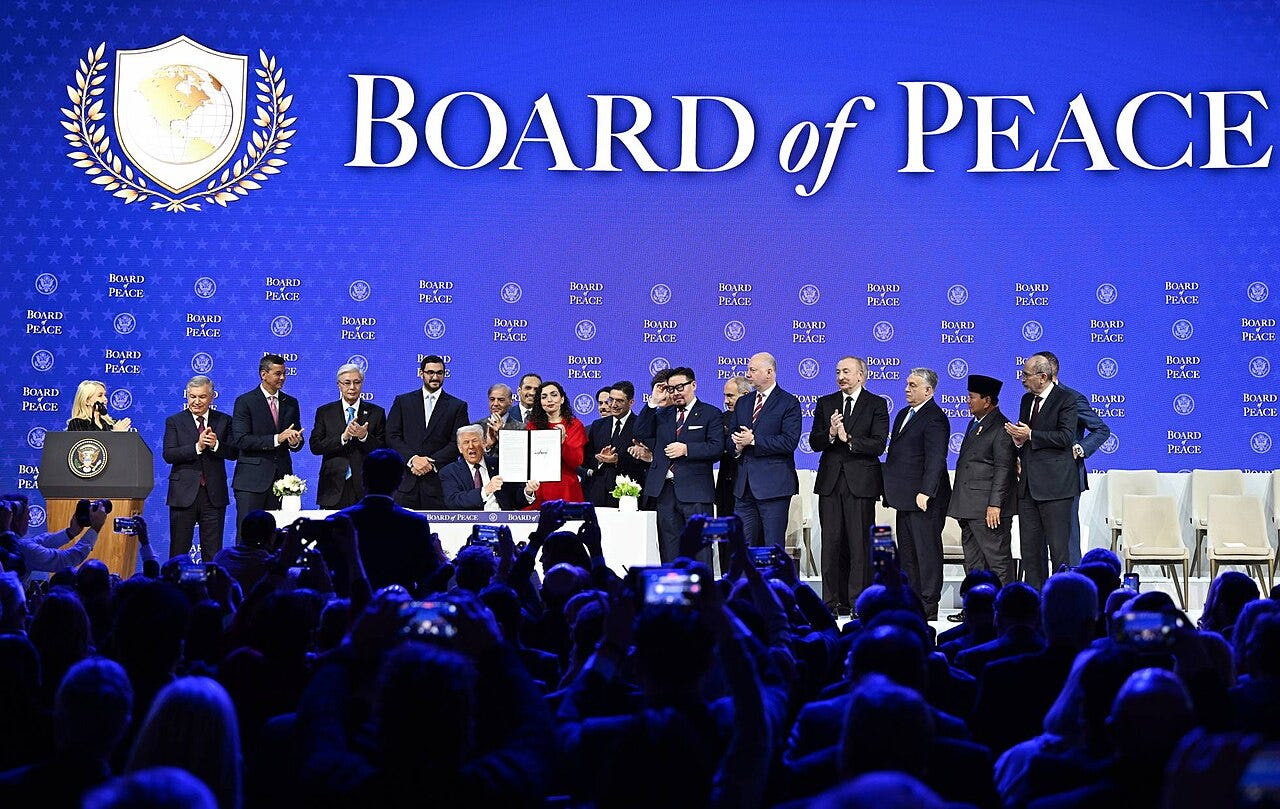
Board of Peace Charter Announcement and Signing Ceremony, January 2026. Photo: Press Service of the President of the Republic of Azerbaijan (President.az), licensed under CC BY 4.0.
Before dawn on 28 February 2026, the United States and Israel launched coordinated airstrikes across Iran. Within hours, escalation moved faster than diplomacy.
But what happens when peace exists more as rhetoric than as institutional power?
In my latest analysis, I examine the limits of the so-called “Board of Peace” — and what the crisis reveals about how governments use peace language as political positioning rather than enforceable policy.
Hungary’s response adds another layer. While invoking peace, Prime Minister Viktor Orbán raised Hungary’s counterterrorism alert and highlighted energy vulnerability, reinforcing a broader pattern in which peace serves as narrative flexibility rather than a binding doctrine.
When war accelerates, slogans fade. Institutions are tested. Consistency becomes visible.
Read the full analysis here:
👉 https://thehungaryreport.com/peace-in-theory-war-in-practice-the-board-of-peace/