

Orbán Could Lose the 2026 Election — But the System Still Favours Him
Hungary’s 2026 election may be more competitive than expected, but the system around it remains structurally unequal.

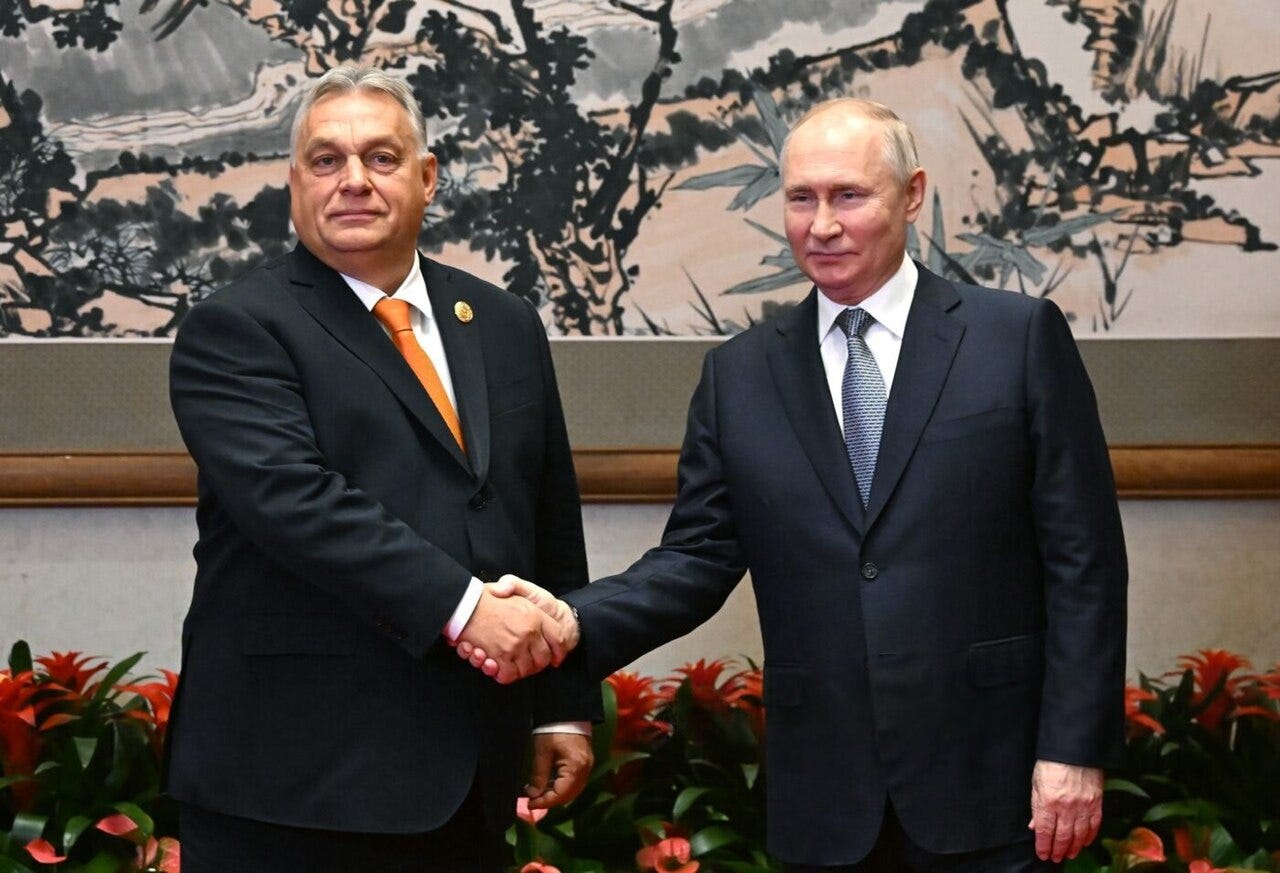
On 12 April 2026, Hungary votes. Orbán’s on the ballot, the opposition’s in the field, and the count will happen. All the ingredients of a democratic election — on paper. But strip that back and a harder question emerges: were the conditions for a genuinely fair contest ever in place? The evidence suggests those conditions are seriously compromised. This piece explores why.
To see how unfairness plays out, look beyond procedural violations. Skewed media access, state resources funnelled into campaign messaging, and toothless oversight can tilt a contest just as decisively — and far more quietly. Today in Hungary, that’s exactly what’s happening. Structural inequality is baked in long before anyone casts a vote. That’s what this is about.
What the observers actually say
Hungary doesn’t just tolerate international scrutiny — it formally invites it. The OSCE’s ODIHR has watched multiple cycles. ODIHR’s conclusions across recent election cycles have been broadly consistent. The 2022 report found the vote well run, but not conducted on a level playing field. Orderly polling stations. Parties are out campaigning. But underneath it, government and Fidesz messaging fused so tightly that observers couldn’t separate them, and media coverage so skewed that voters had no real shot at making an informed choice. A smooth process and a fair election are two very different things.
A clean polling station isn’t enough. One side has a state-backed media machine, structural dominance, and next to no institutional checks — by the time voters show up, the contest is already heavily shaped. ODIHR’s 2026 Needs Assessment records continued concerns about weak oversight, opaque campaign finance, concentrated media ownership, and a lack of confidence in public-broadcaster impartiality. And here’s the kicker — many of ODIHR’s earlier recommendations remained unaddressed by the time of the 2022 vote.
A media landscape built for incumbency
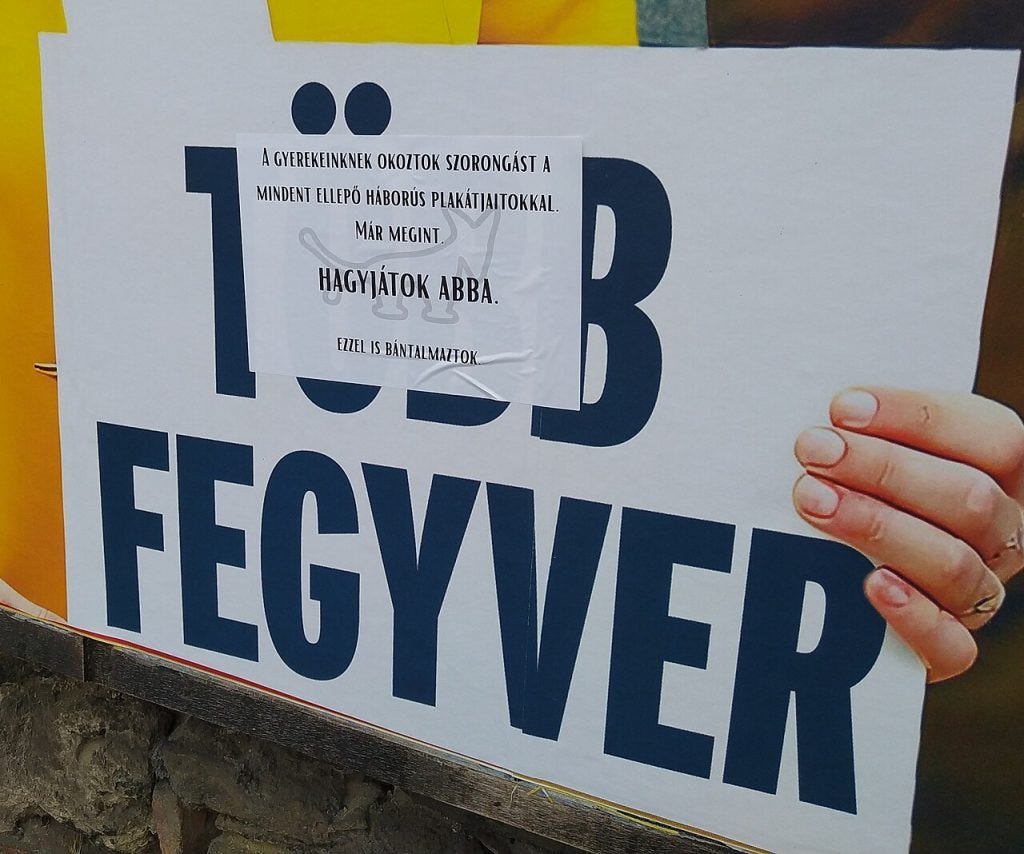
You can’t understand Hungarian elections without looking at the media. Over the past decade, it’s been systematically reshaped to serve the government. KESMA — a pro-government conglomerate that stood up in 2018 and swallowed 476 outlets in a single day. Print, broadcast, online. Done.
Independent outlets survive online and do serious work under real pressure. But reach is another matter entirely. Pro-government voices own TV, radio, and local print — especially outside Budapest, where national broadcasters set the terms of political reality. The ballot might offer a choice. The media landscape doesn’t.
Russian influence and the information environment
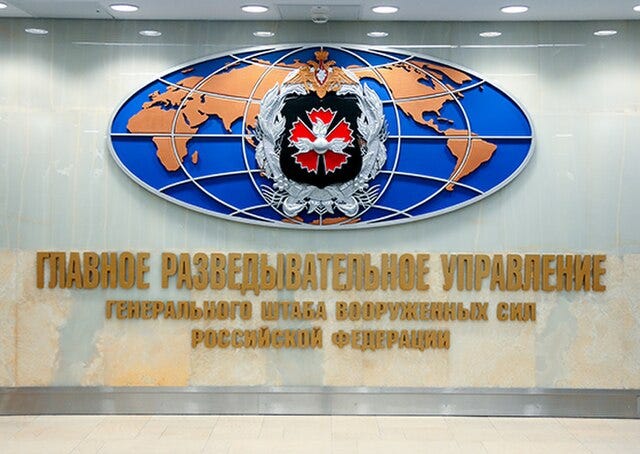
Then there’s Russia. Murkier. Harder to pin down. But working on the same thing — what voters see, read, and believe.
In March 2026, VSquare released a report stating that GRU-linked operatives in Budapest, operating under diplomatic cover, were there to shape the election outcome. The Kyiv Post later reported claims of a covert pro-Orbán disinformation operation, citing reporting first published by the Financial Times. Moscow and Budapest both deny it. None of it has been officially confirmed. But it fits a well-documented pattern. Russian influence operations typically focus less on ballot mechanics than on shaping the information environment around the vote. They go after the narrative — seeding doubt, stoking polarisation, nudging perceptions through social media. The count stays clean. The information flow doesn’t.
If GRU-linked agents were indeed operating in Hungary during the election period, the significance is not limited to Hungary alone. It would mark a Russian attempt to destabilise the democratic process of an EU and NATO member state from within. In a political system already shaped by media concentration, weak oversight, and blurred state-party boundaries, such interference would not need to falsify votes to have an impact. It would simply push an already unequal system further out of balance — and the rest of Europe should pay close attention to how that plays out.
State resources and campaign advantage
The other big structural problem is the line between governing and campaigning — or rather, the absence of one. State-funded campaigns on migration, sanctions, energy, Brussels, sovereignty: they track Fidesz messaging so closely that telling them apart takes real analytical effort. It’s not obvious, because it’s not meant to be. ODIHR flagged this as a primary driver of the uneven field in 2022. The underlying problem remains, and ODIHR’s 2026 assessment suggests it may have deepened. The assessment found government-organised actors account for 87% of all political advertising on Google and Meta. Eighty-seven per cent.
It goes further. Human Rights Watch found that personal data collected through government programmes — including from people who registered for the Covid-19 vaccine — was repurposed to send Fidesz campaign messages. Whether or not it was technically legal, the democratic problem is obvious: when the state’s resources are used to favour one side, the contest is already compromised.
This is why fixating on fraud misses the point entirely. Hungary’s problem isn’t what happens on election day — it’s everything that happens before it. Concentrated media, state-backed campaigning, weak oversight, and a controlled information environment. These factors structure the contest.
But Hungary isn’t Belarus — and that distinction matters
Opposition parties are legal. Voters have real choices. International monitors will be present. Comparing with hard authoritarian states flattens the picture. The game here is managing the competition. Democratic institutions are still standing. A realistic prospect of power changing hands exists, but under conditions that remain structurally skewed.
Illiberal democracy is still the sharpest label for what Hungary is. The institutions are there. So is the appearance of competition. But the foundation has been hollowed out. Votes on April 12 will likely be counted accurately. By the time voters walk in, the real contest — media, money, narrative — is already settled. The boxes get ticked. The observers take notes. None of that changes what came before. But equal competition was never meaningfully present.
That said, if anyone can beat Fidesz on a tilted pitch, the numbers point to Tisza and Péter Magyar. Independent polling has recently pointed in Tisza’s favour. Telex’s English report on the January Medián poll says Tisza stood at 40% to Fidesz’s 33% among the total population, 49% to 41% among respondents with a party preference, and 51% to 39% among likely voters with a party preference. A newer Reuters report on a 21 Research Centre poll put Tisza at 38% to Fidesz’s 30% among all voters, and 53% to 39% among decided voters. Government-aligned pollsters have shown a narrower race, underscoring how contested the picture remains.
This analysis was first published on The Hungary Report.
Peter, your core point is exactly right: Hungary’s elections are not defined primarily by ballot manipulation but by the conditions under which voters form their choices. That distinction matters. An election can be procedurally clean while still taking place on a structurally uneven playing field.
International observation reports have repeatedly drawn this same distinction. The problem identified is not typically the mechanics of voting day — polling stations, ballot counting, or tabulation — but the broader environment surrounding the vote: media concentration, the use of state resources in political messaging, and the blurred boundary between government communication and party campaigning. When those elements combine, they shape the political landscape long before a ballot is cast.
That does not place Hungary in the category of outright authoritarian systems where opposition parties cannot operate or votes are routinely falsified. Opposition parties compete, campaigning takes place, and results are counted. But competition under such conditions becomes asymmetrical. Political scientists often describe this type of system as competitive authoritarianism or illiberal democracy — institutional forms of democracy existing alongside structural advantages for the incumbent.
The media dimension is particularly important. When the information environment is heavily concentrated, voters may still formally possess choice, but the diversity of narratives reaching large segments of the electorate can narrow significantly. In such contexts, electoral competition increasingly depends not only on political organisation but on the ability to break through a structurally tilted information system.
External influence operations, if they exist, tend to exploit precisely that kind of environment. Russian information campaigns in Europe have historically focused less on altering vote counts than on shaping narratives, amplifying polarisation, or reinforcing existing political advantages. The strategic goal is rarely to falsify the ballot; it is to influence the perception of reality in which voters make decisions.
Your conclusion is therefore an important one. Hungary still holds elections, and the possibility of political change remains real. But the decisive arena is not election day itself — it is the information space, the regulatory framework, and the distribution of political resources that shape the contest beforehand.
In that sense, the April vote will test two things at once: not only the popularity of the parties competing, but also the resilience of democratic competition within a system where the institutional balance has been progressively altered.
Get putin the fuck out of Hungarian politics.