

I Left Hungary as a Child. I Want to Go Home.
A personal essay on loving a country that has been made unlovable.

There is a newsstand near my flat in Barcelona. Four papers every morning, four front pages, four arguments about what is true. I barely glance at them anymore. That is the point.
It was not always like that. In my first week here, I stopped dead in front of that newsstand. I read every front page. I read them again. A man behind me had to step around me on the pavement. I did not move. I was lost in my thoughts.
I left Hungary at nine. The last thing I did was say goodbye to my grandmother on the doorstep. She had raised me. That is not a small thing to leave behind, and I did not fully understand it at the time, because nine-year-olds rarely do.
She had lived through the war. She had lived through communism. She had seen Hungary remade by forces that did not care what she thought about it, and she had never stopped loving it anyway. Not the government, not the system. The country itself. The people in it. The stubborn, irrational belief that it was worth something. She carried that until the end. I used to find it baffling. Now I find it the most recognisable thing in the world. She never stopped hoping for Hungary. Neither, it turns out, can I.
We moved to Ireland, and like so many who leave before they can fully understand what they are leaving, I grew up with Hungary in fragments. A language at the dinner table. Relatives glimpsed across borders. Memories whose ownership felt uncertain, half mine and half borrowed from people who had stayed. My sense of origin settled somewhere deeper than geography. We had left, but in our minds, Hungary was still home. Not a former home. Home.
In Ireland, we found what Hungary had ceased to offer: the ordinary conditions for a decent life. Not paradise, but a country that functioned. The courts worked. The press was free. Governments changed when voters wanted them to. These are not remarkable things. They should not be. Yet, seeing our Hungary collapsing, they felt like they were breathing oxygen.
Ireland taught me this before I had the words: authoritarianism is not just a headline. It is the atmosphere in a household. It is whether your parents speak freely at dinner or lower their voices. Whether a child grows up believing the future is something you build, or something decided for you elsewhere. What Ireland gave us was not exceptional. It was simply normal. I had not realised, until we had it, how much had been missing.
It also taught me something less expected: gratitude does not replace grief. I was glad to be in Ireland. I was also always somewhere else. Hungary never let go. It simply waited.
Later, I moved to Barcelona for my master’s, where I studied democracies and multiculturalism. There is a particular irony in spending your seminars discussing democracy while watching your own country dismantle it in real time.
I have now spent most of my adult life in two of Europe’s most liberal countries. Living in functioning democracies year after year gives you something hard to name until you try to explain it to someone who has never been without one. A calibration. A sense, almost physical, of exactly what is absent elsewhere. Every time I read about Hungary, I am not reading it in the abstract. I am reading it against the grain of daily life in countries where the press says uncomfortable things and no one shuts it down, where governments are criticised daily, and the criticism is legal, where people argue in public, and nothing terrible happens. That contrast does not make the grief easier. It makes it sharper.
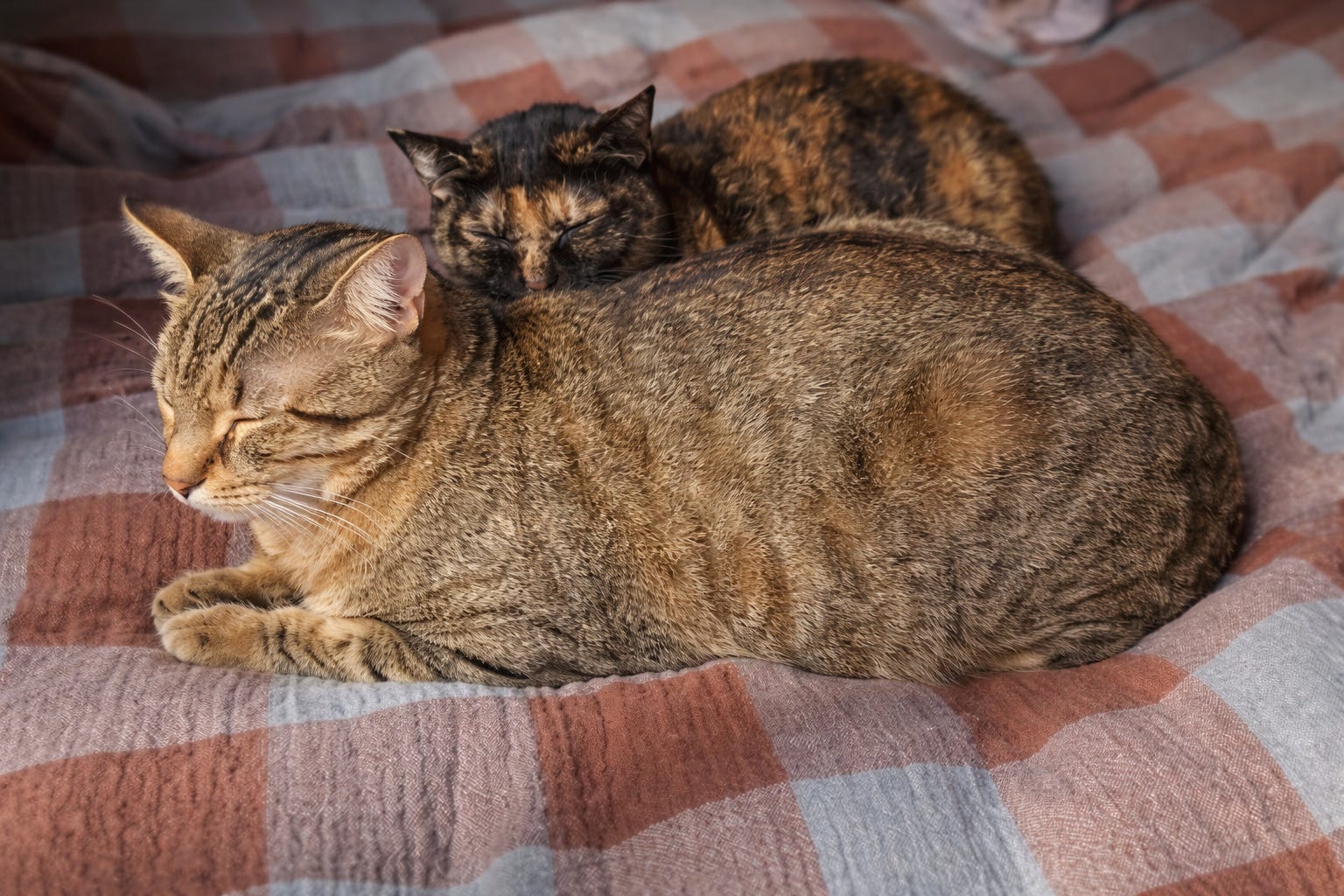
I have built a life here, which still surprises me. A real one: a partner, two cats, and a kitchen clearly designed by someone who has never cooked for two people at once. By any honest measure, it is a good life. She is Russian. I am Hungarian. Between us, we have become reluctant experts in countries warped by men who cannot relinquish power. We did not choose this expertise. It is simply the history we carry.
We do not spend our evenings in mourning. We have jobs, opinions about cheese (I’m lactose intolerant), and strong feelings about which cat is smarter. But some nights, usually when dinner has gone well, and the wine is nearly finished, one of us asks the question. You know the one. What would it actually look like? Russia without Putin. Hungary without Orbán. We sit with it for a while, the two of us, not only with bitterness, though there is plenty of that, but with something closer to homesickness for a place that has never quite existed. Not yet.
That is one of the cruellest things about Orbán’s Hungary: it is a country kept smaller than it has any right to be. Hungary should be one of Europe’s great countries, not only in beauty, which it already has, but in atmosphere, confidence, and possibility. Instead, for years, it has been governed by a single underlying logic: make the country smaller than its people. Drive out the university that attracted the best minds from across Europe. Plaster the streets with propaganda until fear becomes the background noise of daily life. Capture the press until the truth becomes a minority position. Hungary has the bones of a genuinely great country. What has been given instead is a government that needs it not to know that.
Orbánism reaches beyond courts, the media, universities, and state resources. It colonises the imagination. It distorts the relationship people have with their own country. It makes home harder to claim, patriotism tinged with embarrassment, belonging something conflicted and bitter. It pushes people out physically, then keeps hold of them psychologically. You leave, but it follows. Not as memory exactly. As weight. As the particular exhaustion of loving something you are also ashamed of, and being ashamed of the shame, and carrying all of it across borders where nobody else can quite see it. You build a life somewhere else. You get good at not thinking about it. Some things are just lost.
I hate what it has become. Not the idea of Hungary. Not the people in it. What has been done to it, deliberately, by people who knew exactly what they were doing.
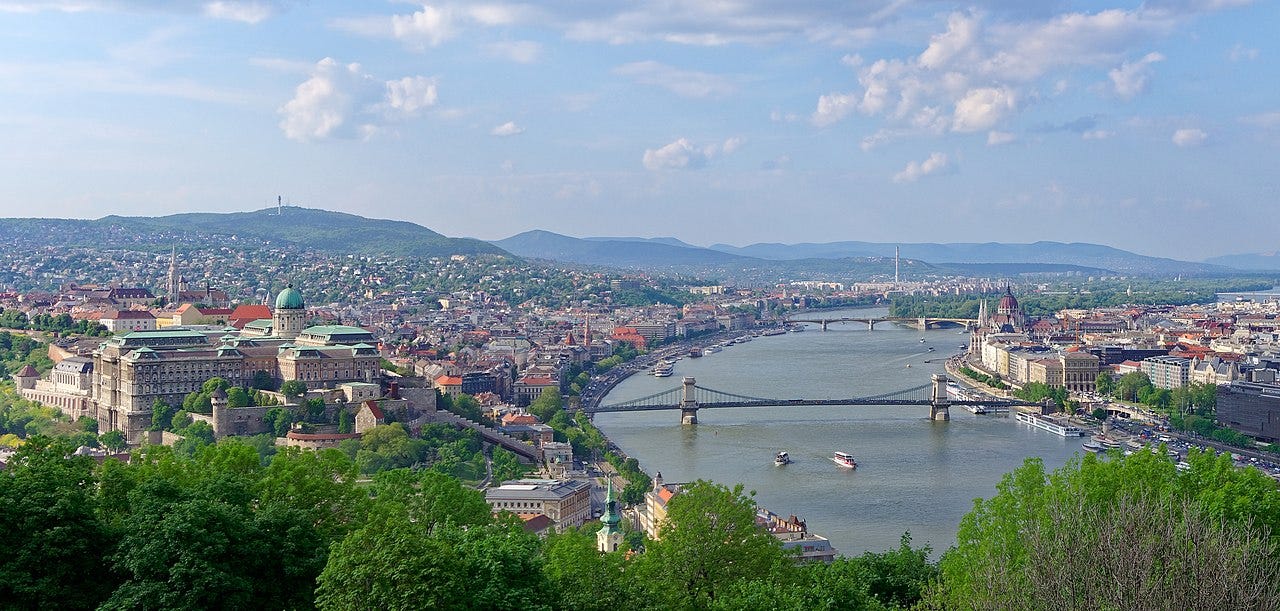
I miss the Hungary that lives underneath the regime. The one that surfaces in a joke told exactly right, in the way a stranger holds a door. I miss the country I knew as a child: the food, the summers, the particular smell of the Danube in July. Playing water polo on Margaret Island. Dreaming, with complete seriousness, of one day playing football at the Puskás Arena. The version of Budapest that existed before I understood what was being done to it. There were no billboards then. There was just the city, the river, and the uncomplicated certainty that this place was mine.
What followed was sixteen years of dismantling. The courts. The press. The universities. Each one taken apart with enough patience that the people inside could almost convince themselves it was not happening. I watched from abroad, from two of Europe’s most liberal countries, which meant I watched it with the particular helplessness of someone who could see exactly what was being lost and could not stop any of it.
I never lived in Orbán’s Hungary. That distance protected me from certain kinds of damage, leaving me with others. I did not have to come of age inside a system built on the management of reality itself, a system that does not need to censor everything because it has learned something more effective: flood the space, muddy the facts, make truth feel partisan, slippery, exhausting. Make clarity feel like labour. Make confusion feel normal. Make people so tired of sorting through lies that they stop trying. I did not live inside that machine. I watched it from outside, which is not the same as living inside of it. But it was close enough to understand what it was doing.
The expatriate’s guilt is specific and not particularly sympathetic. You left. You are fine. You watch from a country where the press is free, and the courts work, and you feel, alongside the relief, something that does not have a clean name. Not shame exactly. Something more like the awareness of a debt you did not choose and cannot repay. Looking in on your own country from a distance carries its own cost. The same history made you, but did not ask the same things of you.
I should also admit something that sits badly with me now. For years, when people asked where I was from, I said Ireland. I have the accent. It was an easy sell. I told myself it was simpler, that it avoided the conversation, that nobody really wanted a geopolitical explanation at a dinner party. But if I am honest, it was shame. Not shame about Hungary itself, but about what it had become, about the association, about watching people’s faces shift when you say the word. It is one of the quieter cruelties of what Orbán has done: he has made Hungarians abroad feel they have to apologise for their own country before they have even said anything about it.
I do not do that anymore. I say I am Hungarian. And when I say it now, I feel something I did not expect: pride. Not in the government, not in what the country has been made to represent abroad. Pride in the people who stayed inside it when I did not.
I think about the protesters in Budapest who turn up knowing full well the machine will still be there the next morning, and who turn up anyway. I think about the journalists whose newsrooms were taken from them, who lost colleagues, income, sometimes even safety, and who sat back down the next week and carried on, because apparently that is just what decent people do. I think about Bence Szabó, who handed over documents showing what was being done in the public’s name and accepted the consequences, because he had decided that truth was not something you sell off in exchange for a quiet life.
They are specific people making specific choices under real pressure. Hungary has spent sixteen years trying to convince its citizens that nothing they do will matter. It has produced, instead, some of the most stubbornly principled people I have encountered anywhere in Europe. They are living inside the thing I have only ever watched from a distance. And they have not flinched. I have spent my adult life in countries where none of this is asked of me. The worst professional consequence I face has nothing to do with the state. I do not know if I would have their courage. I suspect I would not. Hungary is full of people braver than me. That is not a small thing to say about a country. It is, in fact, everything.
The last time I was in Budapest, I turned a corner and walked into a police cordon. Orbán and Netanyahu were meeting nearby. The streets around them had been emptied. A local woman next to me said nothing. She just turned and walked the other way. I left shortly afterwards.
When I think about this election, I do not think about polling numbers or coalition arithmetic. I think about that woman turning away. I think about my grandmother on the doorstep. I think about a kid doing water polo on Margaret Island with no concept that any of this would one day require grieving. I think about whether that country still exists somewhere underneath everything that has been done to it.
For years, I watched as a witness. Every ruling, every closure, every friend’s message saying they were done and leaving. I read it all from the wrong side of Europe, staying informed, staying angry, staying out. But this time is different. I want to go back. Not eventually. After this. I want to build a life there again. To be present in Hungary rather than just shaped by it from a distance. Which means this election is asking me something I have been avoiding for years: is there a Hungary you can actually go back to, or have you already, without admitting it, said goodbye?
If the system survives, I will have my answer. The machine holds. The lies hold. The fear holds. Another message sent to everyone who left: this is still not your moment.
If Orbán falls, I do not expect a transformation. Sixteen years of rot do not clear overnight. It lives in institutions, in habits, in a generation taught that power is the only honest currency. Recovery will be slow, incomplete, and often demoralising. Some of what was built will outlast the builder. But it would mean the country is not sealed. That something in it can still say no. That the story has not ended as it was meant to.
I have been oriented toward Hungary my whole adult life, pulled by something older than reason. Not toward the regime. Toward home. Toward the version of the country that should exist and that I still, against most available evidence, believe is in there. Ireland gave my family stability. Spain gave me the feeling of living without fear in the ordinary air. Hungary is still the country I want those things for. Hungary is still the country I would give them back for.
Not because one election undoes sixteen years. Not because I have forgotten the people who left and did not look back. I understood them. I understand them still.
I want to go home because I cannot stop believing in a Hungary that, over the last sixteen years, has worked very hard to become unbelievable. I cannot prove it still exists. I cannot fully explain why I think it does. But I do. And after all these years, I have stopped trying to argue myself out of it.
Soon we will find out whether that belief has anywhere left to land.
And if it does not, if the machine holds, if another generation grows up learning that this is simply what a country is, then the question will no longer be when I go home.
It will be whether home still exists at all.
This is beautiful. As an American with Irish citizenship and once married to a Hungarian citizen I appreciate the paths you have followed and I agree with you about Hungary’s potential for greatness that would be a contribution not a threat. Minden Jôt!!
Gosh this is so touching,literally bursted in tears 🥺❤️