

Hungary’s Real Enemy Is the System Orbán Built, Not Ukraine
Ukraine is the latest scapegoat. Hungary’s real crisis was built at home.

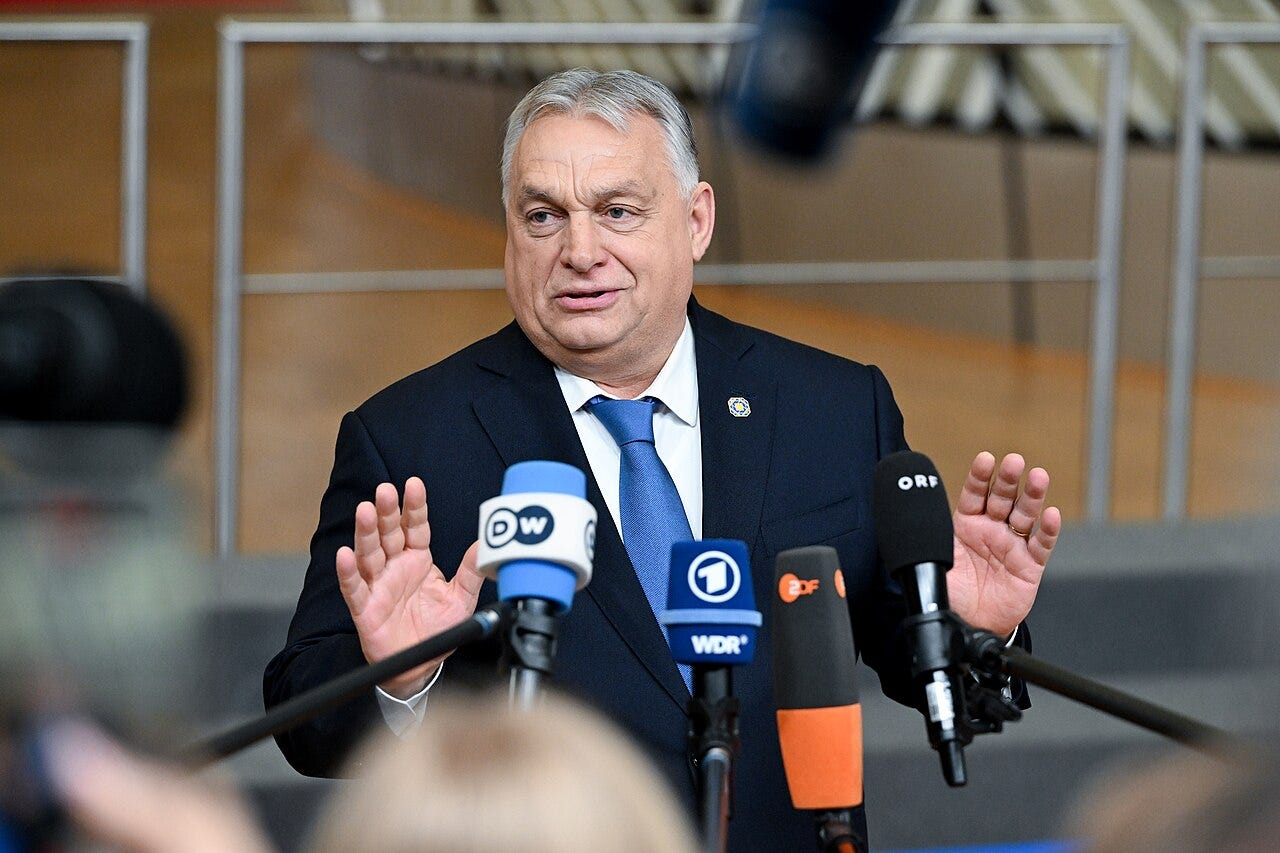
For sixteen years, the playbook has been the same: point east, name an enemy, repeat until the next election. It works because Orbán’s system ensures his message dominates, and any real alternative is nearly impossible to hear.
This time, Ukraine is cast as the villain, supposedly threatening security, the economy, and children’s futures—with Brussels implicated too. The focus stays east, but the real aim is to distract from those responsible for Hungary’s decline. The truth of the message doesn’t matter—only its effectiveness.
Look beneath the noise. Under Orbán, corruption isn’t a flaw in the system — it is the system. The Elios scandal said it plainly: millions in EU-funded streetlight contracts were handed to a company once co-owned by Orbán’s son-in-law, after OLAF identified serious irregularities in the projects. Hungarian police closed the case without charges. Some towns even complained that the new lights worked worse than the old ones. Then came the Völner case — a deputy justice minister accused of trading favourable decisions for bribes. And while all that was happening, Mérték Media Monitor found that 86% of state advertising spending in 2020 went to clearly pro-government media, starving independent outlets while rewarding loyalty with taxpayer money. The pattern doesn’t change because it doesn’t need to. Around €18 billion in EU funds remains frozen, and the European Commission’s latest Rule of Law Report on Hungary makes clear that Hungary has not yet resolved core problems in corruption, judicial independence, media pluralism, and checks and balances.
And who pays for it? Not the inner circle. Hospitals are crumbling. Schools are hollowing out. Public services are held together with a string. Meanwhile, Orbán’s people are doing just fine. He talks about defending the nation — but the state he built serves one group first, and everyone else knows it. That’s not governing anymore. That’s a racket that forgot to stop.
Freedom House has stopped being polite about it: Hungary is Partly Free. The constitution bent to fit power. Journalists pushed out. The Central European University was forced to leave Budapest. Civil society squeezed, watchdogs weakened, the opposition boxed in wherever it turns. Orbán calls this defending Hungarian liberty.
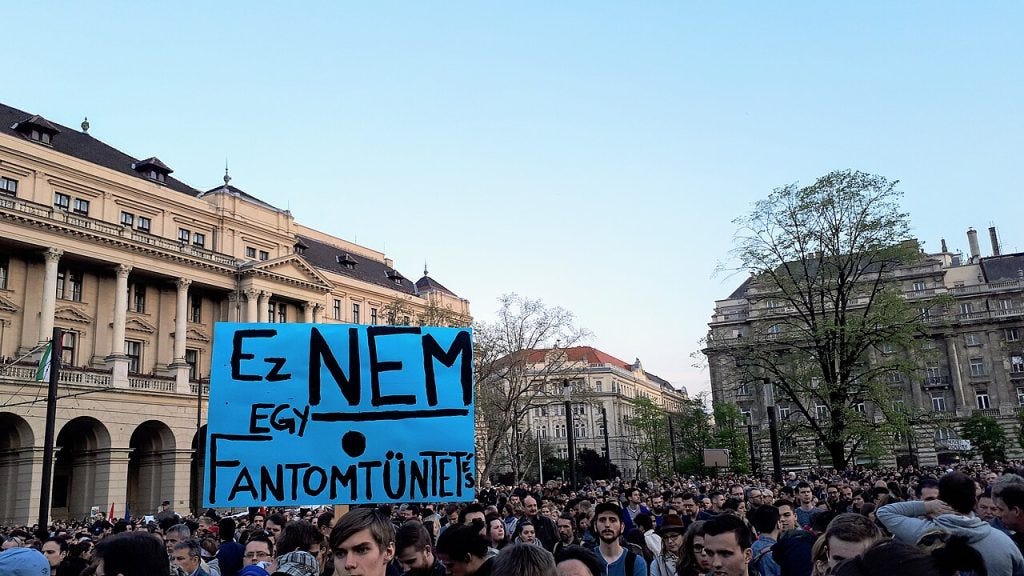
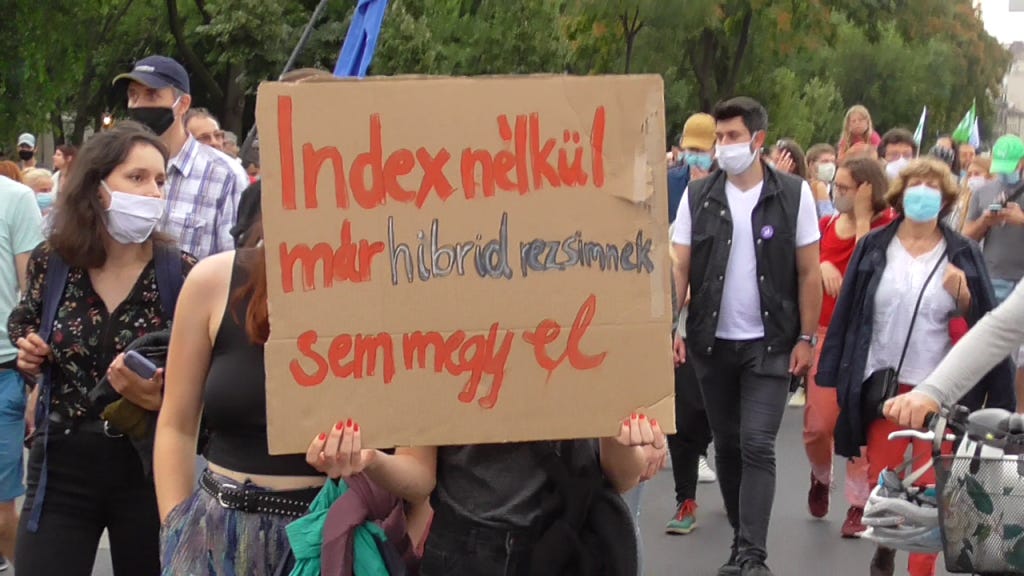
The same logic runs through the media. Orbán’s allies refer to it as “balance.” In 2018, more than 470 pro-government outlets were combined into a single conglomerate—KESMA—and the government designated the merger a national strategic issue, exempting it from competition scrutiny. In 2020, the editor-in-chief of Index.hu was dismissed, after which more than 80 journalists resigned in the same week. Human Rights Watch has reported years of editorial changes and politically motivated departures at the public broadcaster, where staff were replaced on an individual basis. As a result, independent outlets that rely on subscriptions have become fewer, while many employees have remained cautious or exited the industry.
A government without accomplishments sells anxiety instead. The faces of blame change — migrants, Soros, Brussels, Ukraine — but the mechanism doesn’t. The noise keeps coming. The question it’s designed to drown out never does: who actually did this to us?
That’s why Ukraine matters so much to Orbán’s system right now. Scapegoat, yes — but more than that, an alibi. Hospitals decay? Brussels and war. Prices rise? Sanctions and outsiders. Institutions rot? National sovereignty under siege. Anti-Ukraine politics is about shielding the system from accountability. Anger must be pushed outward, never upward. Ukraine didn’t hollow out Hungary’s institutions. Ukraine didn’t freeze billions in EU funds by dismantling the rule of law. Ukraine didn’t buy the media, pack the courts, or redirect public money into friendly pockets. Blaming the neighbour is easier than explaining what happened here.
Hungarians and Ukrainians have no natural quarrel — no billboard campaign can manufacture one from scratch. And real tensions do exist, especially around language and education rules affecting minorities, as the Venice Commission review of Ukraine’s minorities law points out. These deserve to be taken seriously. They deserve a negotiating table, not a billboard. But Orbán isn’t interested in solving them. Tension is more useful to him unsolved. Grievance is more useful when kept raw. He knows the difference between a problem and a weapon. He chose the weapon.
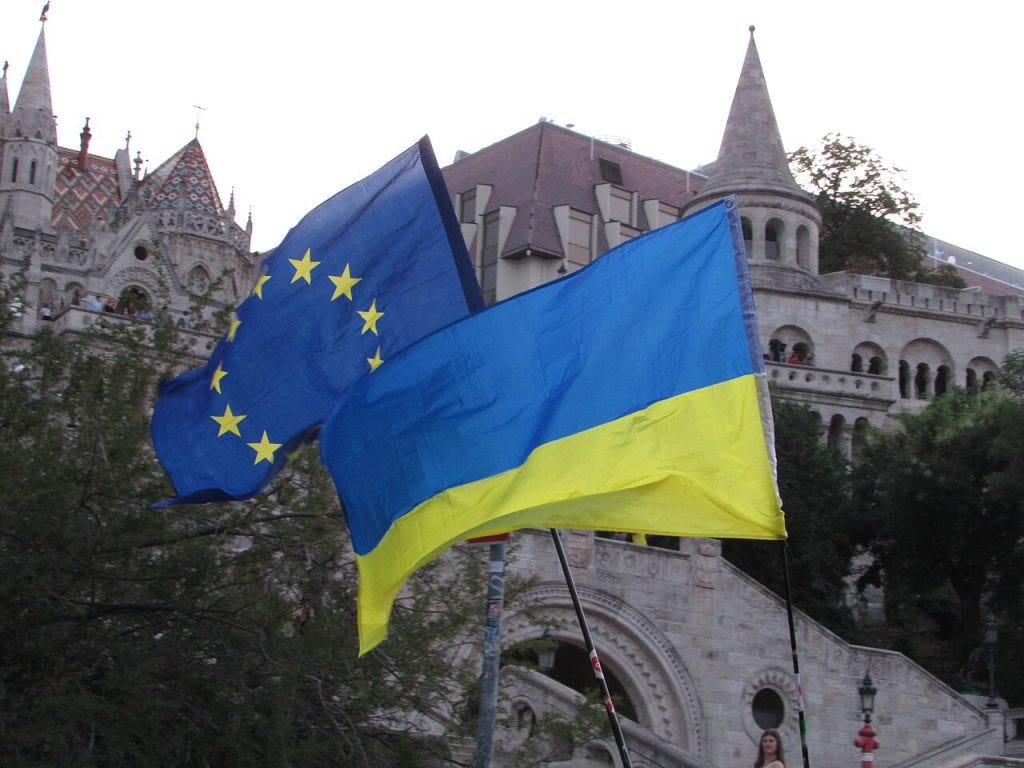
That politics was exposed in 2022. At the border, there were no slogans — only people. Children with bags. Families carrying what they had left. Ordinary Hungarians, without orders or spectacle, stepped in. They opened doors, brought supplies, drove strangers, stood in the cold and waited. Not because the government told them to. Because reality had arrived. And it revealed something: another Hungary still exists beneath the noise. The teacher who stays in a failing school because the children still need lessons. The journalist who keeps reporting despite the pressure. The volunteer at the border at three in the morning, wrapped in a coat and carrying a flask. No cameras. No slogans. No instruction. Just decency.
Making himself synonymous with Hungary has always been Orbán’s trick — criticise him, and you betray the nation. It’s one of the oldest moves in the playbook. And for a long time, it worked. But lies have a shelf life. And this one is starting to smell.
Healthcare crumbling. Graduates who leave and don’t come back. A press that’s learned to look the other way. A public sphere that keeps shrinking. At some point, the flag stops covering what’s underneath it. And patriotism — real patriotism — isn’t obedience. It’s holding power to account. It’s refusing to let a government loot the country while calling it love.
Hungary’s enemy is Orbán’s system. And Hungary’s future won’t be decided in Kyiv — it never was. It’ll be decided at home, the way it always is: at the ballot box, in the classroom, in the newsroom, by ordinary people who’ve had enough and finally say so.
This article was first published on The Hungary Report.
Ever notice that these dictators have no self-awareness? Just look at their hair, haircuts, hairstyles, or whatever it is residing on their heads. It's obvious no one around them dares to give them constructive criticism. If they only knew... that they are having bad hair days, everyday.