

Hungary’s Probationary Return to Europe
Péter Magyar’s first European tour placed Hungary back under Europe’s gaze: exposed, examined, and visible again under a harsher light.

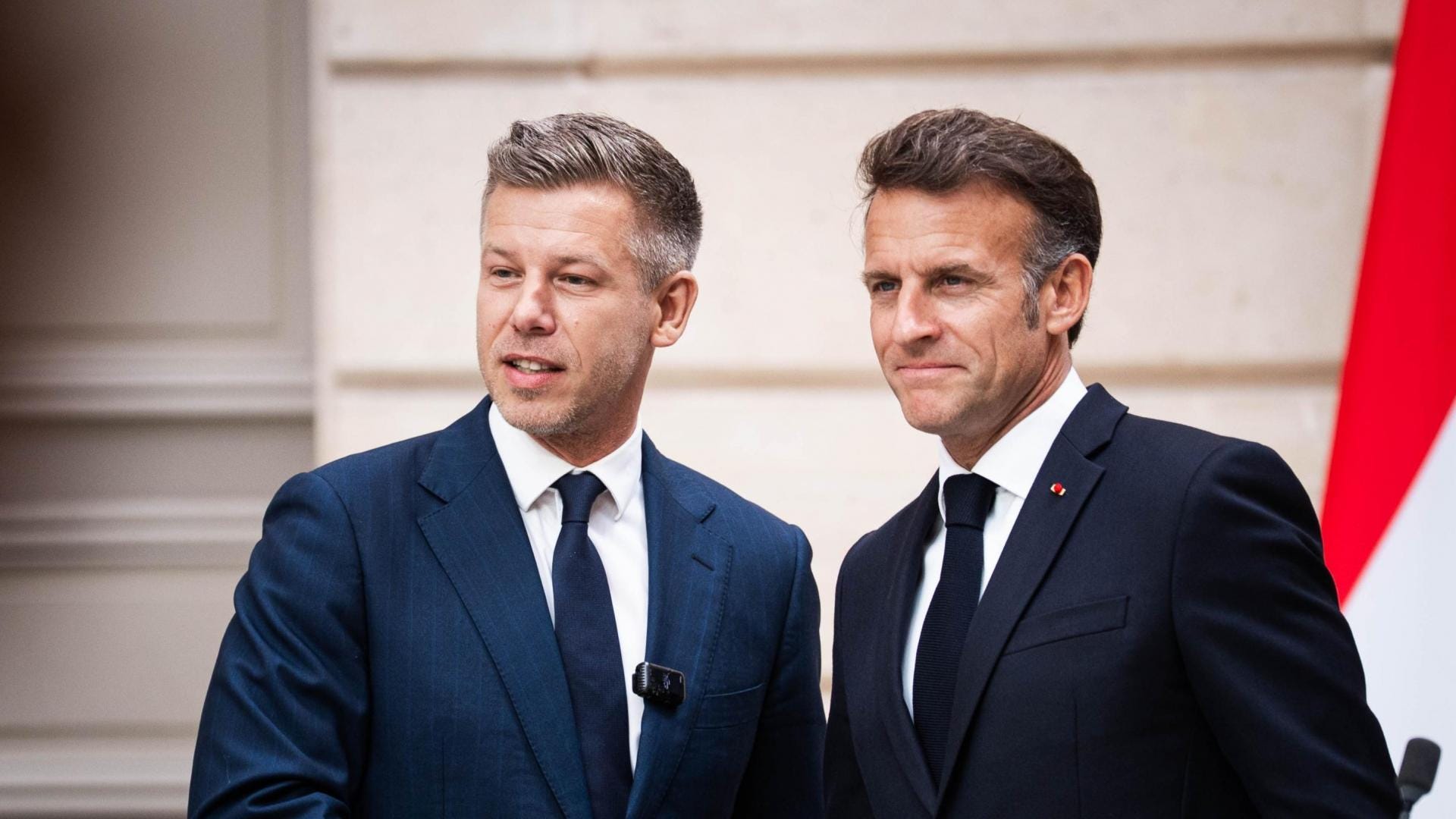
The itinerary itself carried a message. First Poland and Austria: Hungary’s regional ally and its western neighbour. Then Brussels, Berlin, Paris, the seats of European power. This was not the convenience of a travelogue. Rather, a sequence designed to signal intent and reorientation, tracing Hungary’s movement from Central Europe toward renewed engagement with the heart of Europe.
For too long, Viktor Orbán made Hungary visible in Europe by being problematic and disruptive. Péter Magyar is endeavouring to make Hungary visible by being serious and constructive. Visibility for Orbán meant spectacle. For Magyar, it now means accepting scrutiny. The continent’s attention has shifted. The old era of showmanship has faded, replaced by a climate of evaluation and audit.
Each visit tested whether Hungary could move past symbolism and accept real scrutiny and consequences. The process is public and uncertain. Europe is watching, with the terms still being written.
The Poland-Hungary bond is old and real, built over centuries. For Magyar, the visit was also a test. Poland’s recent struggles, including pressure on judges, captured public media, and conflict with Brussels, show that democratic recovery is sluggish and uncertain.
Meeting Donald Tusk and Lech Wałęsa, the symbol of Solidarity and Poland’s democratic uprising, Magyar was acknowledging the complexity of such repair. His presence marked Hungary’s re-entry into the region’s ongoing experiment with democracy.
Austria followed Poland, contrasting drama with intimacy. The neighbour, the old counterpart, the western doorway: Hungary has always lived beside Austria, even when the door seemed closed.
The Austrian-Hungarian relationship lives through daily life. It is work, trade, families, commuting, companies, roads, railways, wages, hospitals, universities, and border crossings. Many Hungarians see Austria as a practical part of Europe. It is close, richer, orderly, accessible, and a little humiliating, as nearby success often is. For them, Austria is no abstract concept. The old imperial ties remain, but should not be over-romanticised. Hungary’s western orientation was lived before it was declared.
With Poland as a mirror of democratic repair and Austria as a quieter threshold, the tour moved west. Each stop layered purpose. First came the struggle to recover democracy. Then came the lived habits of Western normality.
From Austria, the tour advanced to Brussels, where symbolism dissolves into bureaucracy, and scrutiny replaces applause. Here, Hungary’s true argument was put to the test: can Hungary move from performance to proof?
Brussels is where Europe audits. For Orbán, Brussels was both enemy and bank. He treated it as a villain for domestic politics and as a source of funds to exploit. For Magyar, the challenge is different. He must persuade Europe that Hungary deserves trust by strengthening institutions and prioritising substance over spectacle.
Hungary’s move to join the European Public Prosecutor’s Office would mark a decisive break. European prosecutors could investigate crimes affecting the EU’s financial interests, reducing dependence on domestic structures that have long protected allies. This would expose Hungary’s institutions to external review and signal to Brussels that Budapest is willing to cede some control in exchange for trust.
It would also break with the Orbán system, which treated EU funds as entitlement, leverage, and domestic political fuel. Now, the challenge is whether those funds will be governed by public rules and transparency rather than private bargains and patronage.
After Brussels came Berlin and Paris, raising the stakes. Hungary’s credibility now depended on engagement with the continent’s economic and strategic powers.
Berlin stands for economic seriousness. Germany anchors Hungary’s industry. German factories, investors, and political caution have defined Hungary’s place in Europe for decades. To be taken seriously in Berlin means being taken seriously by those who manage Europe’s ledger.
Paris gives the tour a different meaning. France stands for strategic Europe: defence, sovereignty, nuclear energy, Ukraine, and the language of power. In Paris, the difficulty is whether Hungary can reclaim sovereignty through coordination with Europe, reversing the old pattern set by Orbán, for whom sovereignty meant isolation.
Orbán manipulated sovereignty to authorise obstruction. Magyar is trying to use it as a language of alignment. Hungary’s interests, too often aligned with Moscow’s convenience, are now positioned differently.
Ukraine is where that difference becomes concrete. Here, posture is put to the test, and Hungary’s intent is exposed.
Orbán employed the Hungarian minority in Ukraine as a tool of obstruction and rarely as genuine advocacy. Language, schools, and political rights frequently stalled Brussels and pressured Kyiv. Under Orbán, minority defence became a pretext for delay. Now, the potential is for genuine advocacy.
Magyar’s approach is practical and conditional. The new Ukraine deal includes language, cultural and educational rights, oversight, and regular talks. If Ukraine delivers, Hungary will support its EU path. Reform must be proven. Hungary still has national interests. But now, national interest may no longer mean veto by default.
It is easy to be welcomed in Warsaw, Vienna, Berlin, and Paris. It is harder to sustain a consistent, principled Ukraine policy. Now it is time to separate advocacy for Hungarian communities from obstructionist tactics aligned with Kremlin interests — a distinction Orbán never made, but Magyar must pursue.
For Hungarians, the meaning is emotional and political. Dignity and belonging have become the stakes of the country’s external reputation.
The tour served another purpose: it told Hungarians their country is no longer represented abroad only by vetoes, scandals, frozen funds, Kremlin ambiguity, and lectures about Brussels. Hungary can be seen again as normal, competent, and wanted.
Hungarians abroad, such as myself, braced themselves when the country came up in a conversation. Hungary became shorthand for Orbán, illiberalism, Putin, corruption, anti-LGBTQ+ laws, EU blackmail, and new scandals in the news. Describing Hungary became a defensive act. Sometimes, silence was easier. Now, a shift is possible. Hungary’s representation can move from embarrassment to something closer to pride.
I have felt that shift myself. In Barcelona, when Hungary comes up now, people congratulate me. They are pleased that Orbán is gone. For over a decade, being Hungarian in political conversation meant embarrassment or silence. Now, for the first time in my adult life, it can mean pride.
But pride alone cannot rebuild a state. Now is Hungary’s chance to show it can repair institutions and reputation. Image is no substitute for substance. Approval is not an end in itself. The benchmark is whether international support leads to tangible improvements for Hungarians: a justice system free from political interference, media that informs, and public money spent in the public interest. Europe can offer encouragement and open doors, but the actual work of repair must be done in Hungary. It will take more than a single election to end the habits of Orbánism.
Magyar’s victory brings opportunity and risk. He promises regime change and new leadership. The moment requires both rapid reform and restraint. The agenda includes independent courts, fair media, anti-corruption, and fair elections. Some changes are moving. Others will test the constitution. The challenge is to dismantle the old order without making a new one in its image. Hungary’s renewal must be institutional and last beyond the tenure of leaders.
Europe should understand this too. Brussels, Berlin, and Paris may wish to celebrate Hungary’s apparent change: fewer blockades, more smiles, and re-engagement with Europe. Relief is understandable. But there remains a difference between procedural acceptance and earned trust. Acceptance lets Hungary back into the room. Trust can only be won by demonstrating an independent commitment to democratic rules, even in the absence of direct scrutiny.
Real trust shows when prosecutions reach the powerful. It is visible when courts and media are free from politics, contracts are truly competitive, and rights are defended under pressure. Hungary’s path from tolerated to trusted will be tested by these principles.
Hungary has been invited back into the room. But being present is not the same as being trusted. That distinction will define what comes next.
Magyar’s first European tour showed Europe a different Hungary, one that negotiates rather than obstructs, repairs rather than performs, and seeks belonging without surrender. That is a serious beginning, but beginnings are not proof.
Hungary once drew attention by being difficult. Today, it seeks recognition for seriousness.
The tour charted a new course. Power will decide where it leads.
What an interesting article. As usual, I learned so much from your analysis. I’m particularly pleased to hear about the engagement with each European country, especially Ukraine in its current war with Russia. Please say more!
I see that the Budapest Pride is once again enjoying the sanction of the national government-Good.