

Hungary After Orbán? Inside Péter Magyar’s Governing Plan
A closer look at the policies shaping Hungary’s emerging opposition alternative.

This article was originally published on The Hungary Report, an independent publication covering Hungarian politics and EU affairs. Read more analysis at thehungaryreport.com.
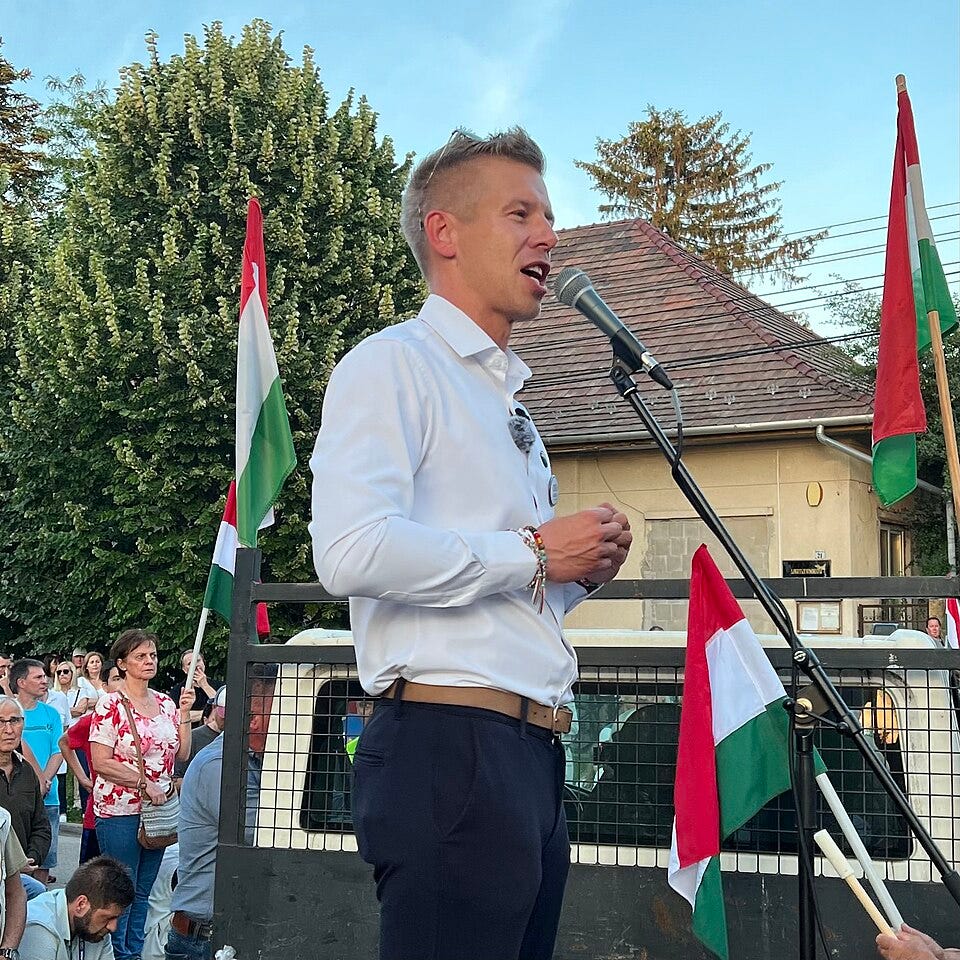
Péter Magyar speaks at a campaign event in Szigetszentmiklós, Hungary, 2 June 2024. Photo: MrSilesian / Wikimedia Commons (CC0)
As Hungary approaches the 2026 parliamentary election, political debate increasingly focuses on whether Prime Minister Viktor Orbán’s long period of dominance can be seriously challenged — a dynamic already visible in earlier analysis on The Hungary Report examining Hungary’s evolving political crossroads. Yet elections ultimately raise a deeper question than electoral arithmetic alone: what governing Hungary after Orbán might actually look like.
For more than a decade, Hungarian opposition politics largely organised itself around resistance rather than governance. Coalitions formed and collapsed, campaigns focused on defeating the government rather than replacing it with a coherent governing strategy, and public life hardened into a permanent confrontation between camps.
The emergence of Péter Magyar and the Tisza movement marks a notable departure from that pattern. Instead of building a purely negative project defined by opposition to Orbán, Tisza is attempting to present a governing alternative supported by a detailed policy framework — one that looks designed to persuade not only voters, but institutions, investors and external partners.
The most comprehensive statement of that vision is the Tisza Party’s governing 243 page programme, A működő és emberséges Magyarország alapjai (“Foundations of a Functioning and Humane Hungary”). Rather than a traditional manifesto, the document reads as a transition blueprint: part diagnosis, part institutional repair plan, and part attempt to redefine Hungary’s political centre after years of polarisation.
From political challenger to governing project
International attention first turned toward Magyar during the protest wave and rally politics of 2024, as he began drawing crowds far beyond the standard opposition base. Reuters’ reporting from May 2024 captured the significance of that moment: a former insider presenting himself as a serious threat in years to Orbán’s political machine, and doing so on terrain where the governing party has traditionally been strongest.
What matters for analytical purposes is not only Magyar’s rise, but how the movement frames the problem it claims to solve. Tisza’s programme repeatedly argues that Hungary faces intertwined economic, institutional and social crises — and that the state itself no longer functions reliably for citizens. This is the document’s organising idea: not an ideological revolution, but a claim of state malfunction requiring repair.
A diagnosis before a promise
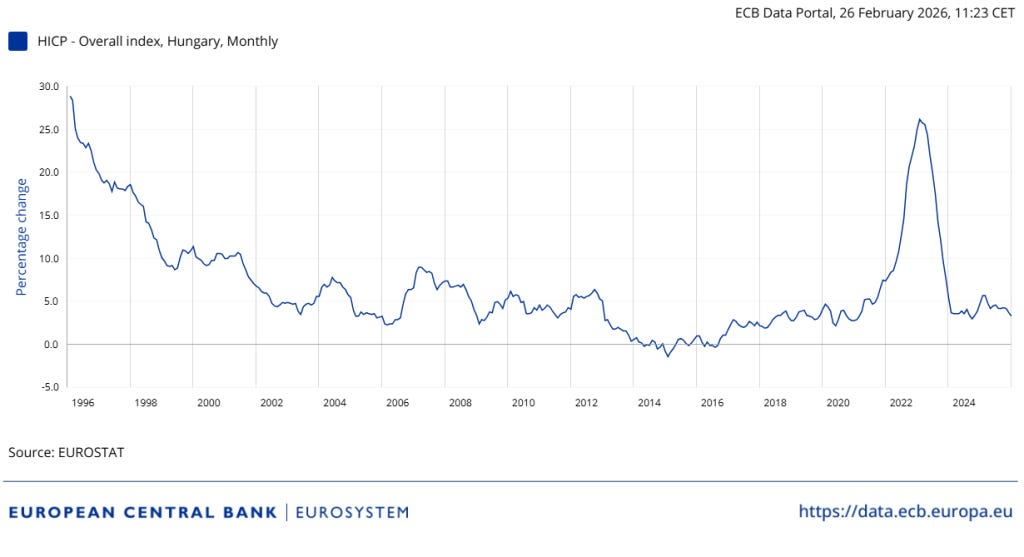
Hungary’s inflation shock following the 2022 energy crisis became one of the defining economic pressures shaping the current political moment.
The programme begins unusually for a campaign document. Instead of opening with flagship pledges, it builds a diagnosis: a country under strain economically, socially and institutionally, where public confidence has eroded, and day-to-day governance feels increasingly brittle. In effect, it treats politics less as a culture war than as a question of administrative competence and credibility.
This is in line with extensively documented external pressures. The aftermath of Hungary’s 2022 cost-of-living crisis and subsequent inflation fatigue has remained a subject of sustained international attention, reflected in the Financial Times’ Hungary coverage. Meanwhile, the ongoing dispute with Brussels over governance standards has had measurable consequences for financing conditions and investor confidence, as outlined by the European Commission through its Rule of Law Mechanism.
Tisza’s core wager is that institutional credibility is not a “nice to have” reform: it is the precondition for economic stabilisation, EU funding normalisation and a more predictable investment environment.
The first year: repair before reform
Perhaps the most revealing feature of the programme is its sequencing. Instead of promising dramatic change immediately, the first-year logic is institutional: rebuild the state’s basic operating capacity, restore predictability, and only then move into deeper sectoral reforms.
That sequencing includes proposals consistent with a “trust restoration” agenda: strengthening checks and balances, increasing transparency around state decisions, establishing mechanisms aimed at recovering misused public assets, and pursuing closer cooperation with European legal frameworks — including participation in anti-corruption structures associated with the European Union.
This matters because it implies a governing theory: Hungary’s problems are framed less as a shortage of policies than as a breakdown of trust in how policies are implemented — a breakdown affecting courts, procurement, regulation and public administration.
Economy: stability, investment, EU funds
Economically, the programme is striking for its moderation. It does not read like shock therapy. Instead, it emphasises stabilisation, EU investment flows, support for domestic small and medium-sized firms, housing accessibility and infrastructure renewal. The underlying message is that a post-Orbán transition should feel predictable rather than disruptive.
There is also a quieter political calculation embedded here. Several policies popular under Orbán-era governance — particularly family-related supports — are not framed for abolition. Rather, the programme suggests continuity of social protection, but a different institutional environment: more transparency, more oversight, and fewer politically selective outcomes.
In other words, the programme proposes changing how the state operates more than changing what the state provides.
Institutions: rule of law and the corruption question
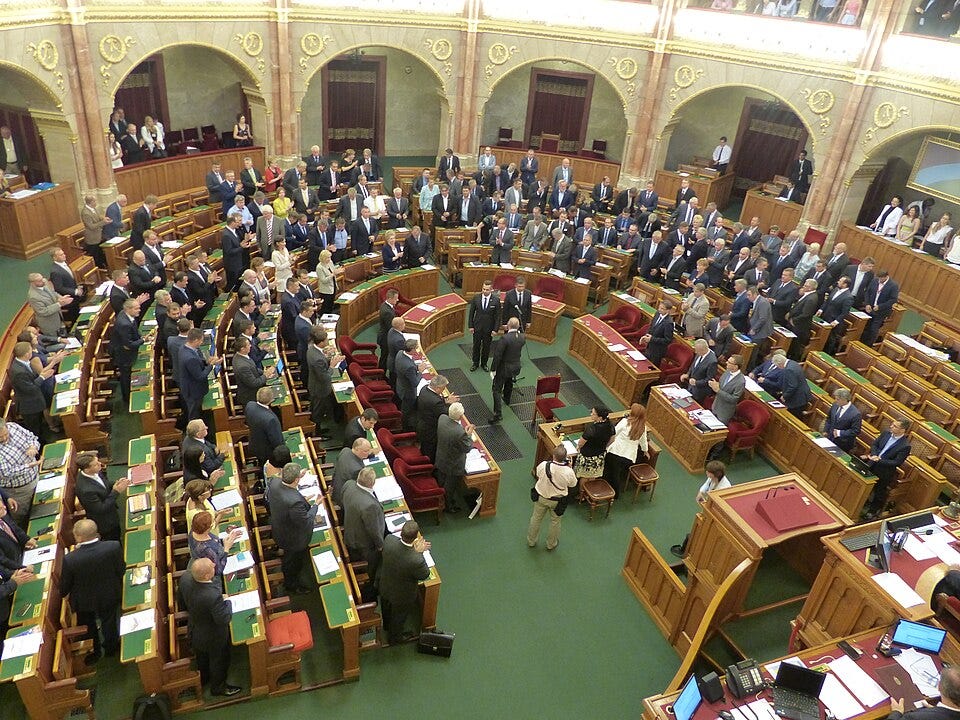
The most politically sensitive terrain is institutional reform. External assessments have repeatedly highlighted Hungary’s democratic backsliding and governance vulnerabilities. The Freedom House Nations in Transit 2024 country report for Hungary is one prominent reference point in this debate, describing the erosion of checks and balances. Meanwhile, Transparency International’s global dataset provides a widely cited benchmark for perceived public-sector corruption through the Corruption Perceptions Index 2023, with country-level context also available via Transparency International’s Hungary profile.
Taken together, these external assessments frame institutional reform as the central political fault line in Hungary today. The debate is no longer limited to partisan disagreement but increasingly concerns the resilience of democratic checks, administrative neutrality and public trust in state institutions — issues that any future government would be forced to confront immediately.
Tisza’s programme engages this directly with a strong emphasis on accountability architecture, transparency and institutional independence. It reads as an attempt to persuade sceptical voters — and sceptical partners — that the movement’s approach is reformist but orderly: legalistic rather than vengeful, and structural rather than symbolic.
Demography and social capacity
Hungary’s demographic decline is often discussed as background noise, yet it is among the most decisive long-term constraints on national development. Official European statistics — such as Eurostat’s population change indicators — show persistent pressure across the region, with outmigration and ageing affecting labour markets, public services and political expectations.
The programme treats demography not only as a family-policy issue, but as a broader “stay-or-leave” question tied to opportunity, service quality and trust. Whether or not one agrees with every policy proposal, the diagnosis is coherent: people stay in systems they believe are fair, functional and future-oriented.
Environment: water, drought, resilience
One of the programme’s more unusual emphases — relative to standard campaign messaging — is environmental vulnerability and resilience. That concern aligns with broader European assessments, such as the European Environment Agency’s European Climate Risk Assessment, which situates water stress and climate risk as strategic threats with economic and social consequences.
The programme’s integration of climate, water management and industrial strategy is analytically important: it signals an effort to frame “the environment” not as a niche issue, but as a governance competency test for the modern state.
Foreign policy: re-anchoring without rupture
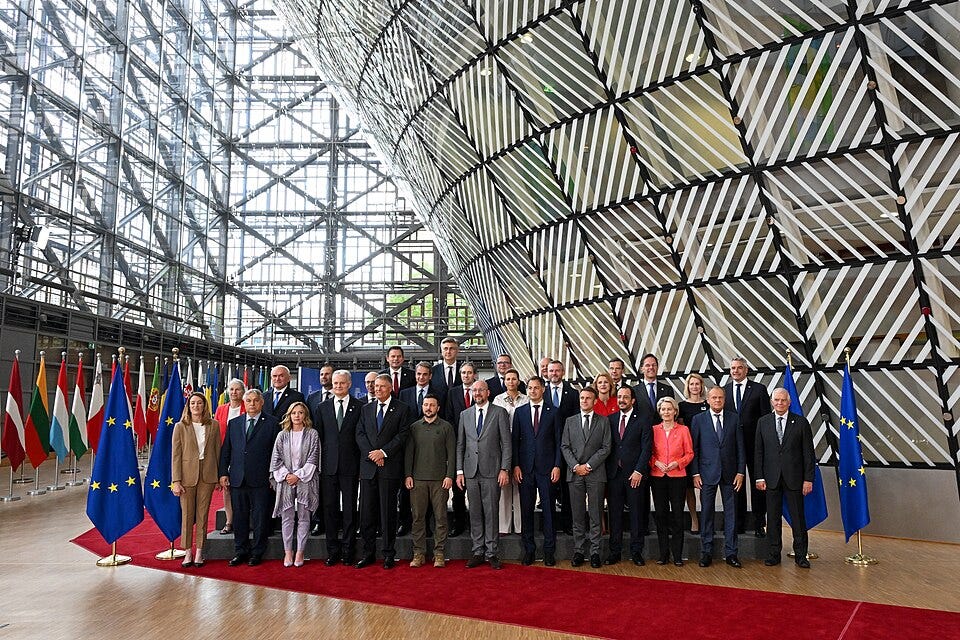
Foreign policy is where the programme implies the clearest change in tone. Over recent years, Hungary’s confrontational relationship with EU institutions has been widely reported and debated, including in Politico Europe’s coverage of Hungary’s EU rule-of-law tensions. Tisza’s programme suggests a re-anchoring: restoring credibility among Western partners while retaining sovereignty language that remains electorally powerful domestically.
Crucially, sovereignty is reframed less as isolation and more as capacity — a country that can protect its interests because it is credible, predictable and institutionally stable inside its alliances.
The real test: governing after dominant rule
There is a final, harder question embedded beneath the programme’s policy content: what happens after a dominant governing model is challenged — if change actually arrives? Transitions in highly centralised systems rarely produce immediate normality. They produce expectations, resistance, institutional friction and a public hungry for fast results.
Here, the programme’s emphasis on gradualism is not a weakness; it may be a recognition of political reality. It repeatedly cautions against expectations of overnight transformation, presenting reform as a process of institutional rebuilding rather than a single electoral event.
Hungary after Orbán?
Whether Péter Magyar’s movement ultimately succeeds electorally remains uncertain. But the appearance of a detailed governing programme is itself a meaningful development. It shifts the conversation from opposition coordination toward administrative competence, institutional trust and the mechanics of governing change.
If the programme offers a clear insight, it is this: any first year after Orbán — should it come — would likely be defined less by dramatic rupture than by the slow rebuilding of state functionality. The decisive question, then, is no longer simply who wins the election.
It is whether systemic political change can occur without systemic instability.