

Hungary After Dark: The First Transfer
Péter Magyar became prime minister. The transition has moved from mandate to office. Now the first tests begin.

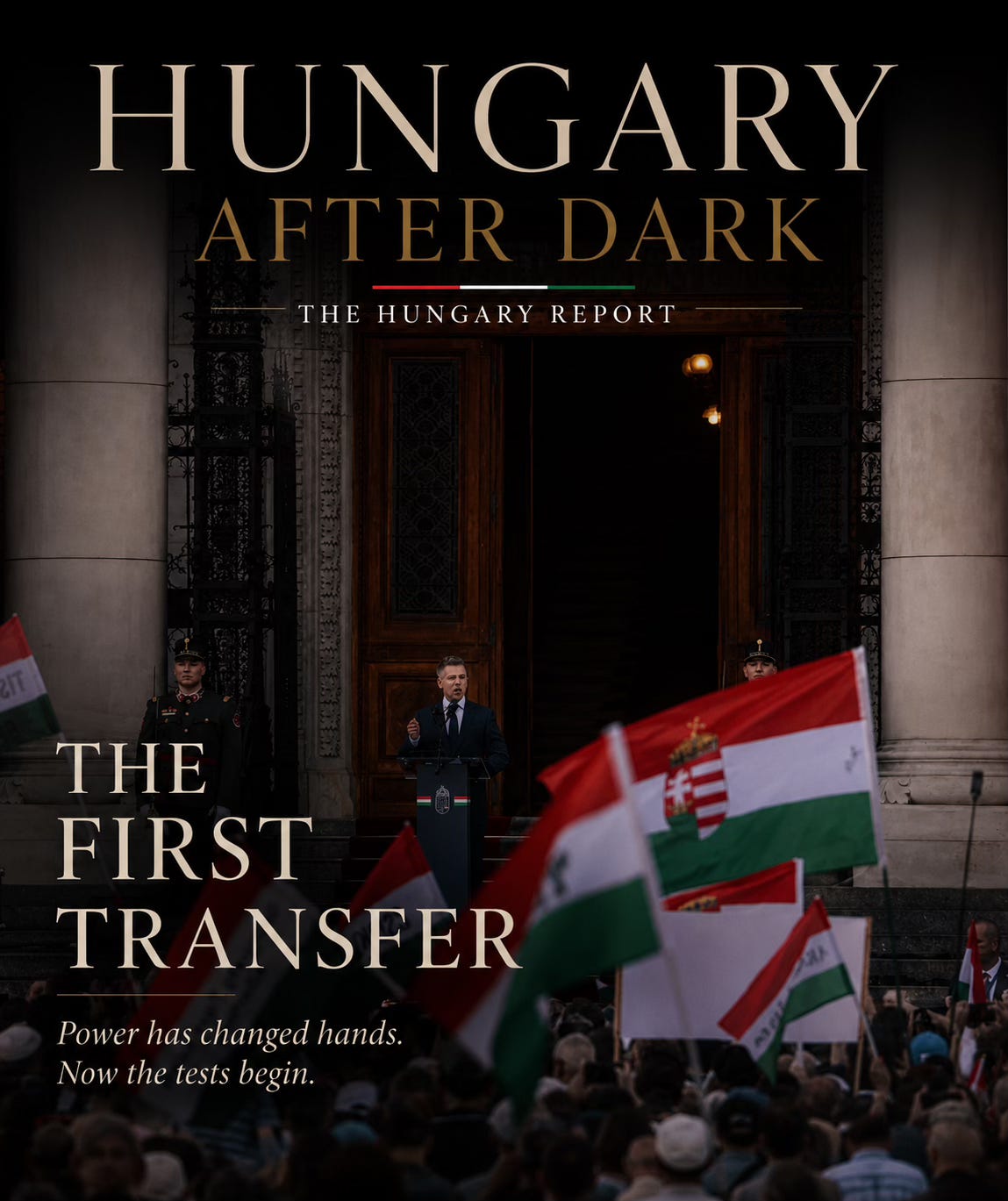
Péter Magyar became Hungary’s prime minister on May 9.
The sentence still looks strange on the page.
The vote was 140 in favour, 54 against, with one abstention. Under Hungary’s Fundamental Law, the prime minister enters office when Parliament elects him. After sixteen years of Viktor Orbán, Hungary has a new prime minister.
This is the fact around which every other reality now arranges itself.
Around it, early signals appeared. The European Union flag returned to Parliament. Ágnes Forsthoffer became Speaker. Asset recovery legislation was announced. Mi Hazánk walked out during the Roma anthem. Fidesz began framing accountability as aggression. Ministerial nominees now face committee hearings.
The election ended one government.
The first week will show how the next one understands the substance and limits of power.
The emotional force of Saturday was real. Kossuth tér mattered. The crowd mattered. The songs, flags, smiles and relief mattered. Magyar told the people gathered outside Parliament that this was their regime change, their homeland, their Parliament. For many Hungarians, that sentence carried the weight of years.
The question is what the day revealed.
It revealed a parliamentary majority with the power to remake the country. It revealed a government impatient to confront the institutional legacy of Orbánism. It revealed an opposition already preparing to call accountability revenge. It revealed a far-right bloc testing the new language of inclusion from the first hour. It revealed a prime minister who knows that the current public mood is temporary.
The country has moved from euphoria to discipline.
The work has begun.
What mattered
The most consequential event was the formal transfer of executive power.
Hungary did not enter a vague post-election phase. It now has a new prime minister, elected by Parliament and legally in office. That distinction matters because Orbánism relied heavily on blurring the distinction between political reality and state reality. On Saturday, the state had to register the electoral result in public.
The numbers also show the shape of the next Parliament. Tisza can govern with a commanding majority. Fidesz-KDNP enters opposition after sixteen years in power. Mi Hazánk remains as a far-right pressure force. The parliamentary structure is clear. The political culture is not so much.
Magyar’s majority can legislate quickly. It can also overreach quickly. That risk now shadows the transition.
Orbán has been defeated.
The harder question is whether the new government can use exceptional power without absorbing the habits that made it so dangerous.
