

“Don’t Even Try to Argue”: Inside the Orders That Shaped Hungary’s State News
For more than a decade, journalists inside MTI saved the emails, killed stories and political instructions passing through Hungary’s national news agency. The 482-page archive is now public.

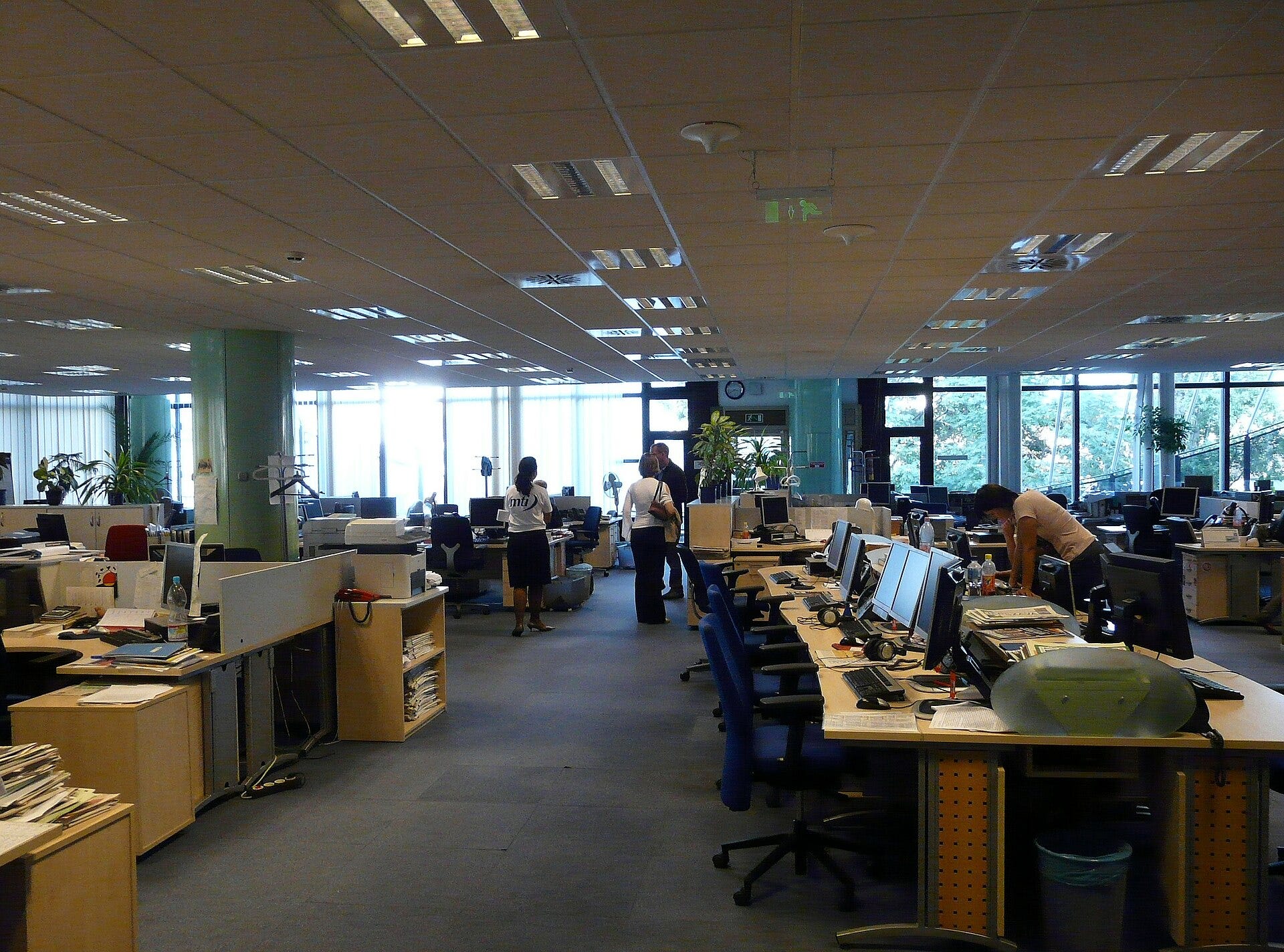
On 11 October 2023, Sándor Végh sent a message to journalists at MTI, the Hungarian News Agency.
“Once again I want to draw your attention to the fact that orders coming from above must be carried out.”
“Don’t even try to argue about them; the sooner we get them over with, the better for everyone.”
Hungary’s public-media management published that message on Tuesday inside a 482-page archive assembled by reporters and editors who worked inside MTI for more than a decade. The collection begins in 2015 and runs to 11 April 2026. It contains 266 documented cases drawn largely from MTI’s foreign-news operation: internal emails, chat messages, rejected stories, editorial instructions, rewritten copy, blocked reports and exchanges with government press offices.
The journalists who collected them called themselves Pro Domo. The current management of Hungary’s public media says it verified the authenticity of the documents before publication and is continuing an internal investigation. It says the material directly records managerial instructions, stories whose publication was prohibited and copy altered for political reasons.
I spent Tuesday reading the archive. Oh, and what a fascinating reading it was.
Reading page after page, I kept coming back to how little language it took to close a story. “No need.” Reporters Without Borders gets: “We’re not covering it.” A standing ban ends with: “Please stick to this.” Sensitive copy goes “to the chief”. When a piece has been killed, the message is simply: “It’s dead.” These were working instructions between journalists and editors deciding what Hungary’s national newswire would carry.
By the time this archive appeared, the political alignment of public media was hardly a secret. Independent journalists had documented its coverage for years. What the public had rarely seen was the production process itself: the instructions, edits, refusals and approvals made before a finished story reached a television screen, a radio bulletin, the MTI wire or another newsroom.
MTI gave those decisions unusual reach. As Hungary’s national news agency, it supplied reporting to the wider public-media system and media partners. Editors there decided which developments merited a story, which organisations could serve as sources, which facts survived editing and which political vocabulary appeared in the copy.
The record they kept
Pro Domo divided its archive into ten categories, including suppressed news, stories produced on command, discarded stories, rejected proposals, manipulation, instructions, delayed publication, false reporting and censorship. Its members also warn in the introduction that the collection is far from complete.
They called it Narancs csíkos, “Orange Stripe”, after the “red-striped confidential” bulletin circulated inside MTI during the Kádár era. That publication carried reports from Western news agencies that were withheld from the Hungarian public.
The Pro Domo journalists knew what they were preserving. In the introduction, they write that the interventions they documented violated MTI’s editorial rules and Hungary’s public-service obligations. They hoped the evidence could one day help create politically independent public media.
They saved decisions that would otherwise have disappeared into inboxes and internal chats.
In April 2018, Reporters Without Borders was preparing to release its annual report and country ranking on the situation of journalists. Végh emailed the newsroom to say the report was coming, then settled the coverage in the same message:
“We’re not covering it.”
In November 2019, another instruction removed two major human-rights organisations from MTI’s usable source pool.
“I was informed by Balázs Bende that we do not publish material from Human Rights Watch and Amnesty International. Please stick to this.”
Editors also prescribed political vocabulary. MTI staff received an instruction telling them to stop describing opposition mayors as “opposition” or members of an “opposition alliance”. They were to call them “left-wing”.
During Hungary’s dispute with the European Union over rule-of-law requirements attached to EU funds, another instruction targeted a phrase with obvious political weight.
“PLEASE DON’T use this expression,” the message said of “rule-of-law conditions”.
The approved wording was: “Only use ‘they tie it to political conditions’.”
The International Organization for Migration received its own compulsory description. MTI journalists had to call it a “pro-immigration intergovernmental organisation” and follow it with a sentence saying that, according to the organisation’s principles, global migration benefits migrants and society and should be managed rather than stopped.
The archive later records journalists avoiding an Associated Press story involving the IOM because using it would have required adding the prescribed language.
These choices shaped the language in which public-media audiences encountered politics. “Rule-of-law conditions” became “political conditions”. An international organisation arrived with an ideological label already attached. An elected opposition mayor acquired a political description dictated by the desk.
On 20 November 2019, Bertalan Havasi, Viktor Orbán’s press chief, emailed MTI. The subject line read:
“Hi, please use this as the headline and lead.”
Havasi supplied both. The proposed headline stated that the president of the European Jewish Association had thanked Viktor Orbán for Hungary’s support for Israel and the Jewish community. He also supplied the opening paragraph.
Three years later, MTI’s Moscow correspondent received instructions from the Hungarian Foreign Ministry before a joint press conference involving Foreign Minister Péter Szijjártó and Russian Foreign Minister Sergei Lavrov. Máté Paczolay, then the ministry’s press chief, discussed the questions expected from the correspondent and wrote:
“Under the agreement, then, we don’t ask the Russian side questions.”
“We will send MTI a statement for the Szijjártó part, so it will be enough for you to write the Lavrov part.”
Before the press conference began, the Foreign Ministry had told the state news agency that its correspondent would not question the Russian side and that the ministry would supply the Szijjártó part of the coverage.
When the approval chain reached the news
By April 2022, Russia had invaded Ukraine and MTI had introduced additional approval for reporting about the war. An internal email said Ukraine-war stories now had to be forwarded before publication. Editors were told to wake the responsible senior figure at night only for developments on the scale of Mariupol falling or a nuclear explosion. Less significant Ukraine stories could wait for morning.
Then, on the night of 13 April, the Russian Black Sea Fleet flagship Moskva caught fire.
MTI had the news, but according to Pro Domo, the person responsible for clearing Ukraine coverage was unavailable overnight. The agency published the report the following morning. When reports followed that the ship had sunk, the same approval arrangement threatened another delay.
One of the largest military developments of the early war sat unpublished at Hungary’s national news agency while the approval chain slept.
Other assignments began with a conclusion and sent correspondents looking for material that would support it.
In March 2023, an MTI correspondent in Britain received instructions for a report on inflation. The commissioning message acknowledged the problem: inflation was very high in Hungary and lower in Britain by comparison.
“Since inflation is very high here, and compared with that it is surely low there, please don’t give the number. Just say it remains high, or that it hasn’t been this high for ... years, etc.”
The correspondent replied:
“Talking about inflation without saying what the inflation rate actually is would be rather absurd.”
The number weakened the intended comparison, so the instruction was to leave it out.
Another assignment asked the British correspondent to show the damage caused by “Brussels’ sanctions policy” against Russia. The correspondent replied that Britain had left the European Union almost three years earlier, EU sanctions did not apply to it, and Britain had never imported significant quantities of Russian energy.
The response came back: “Since we indeed wouldn’t be able to talk about the sanctions, let’s drop it instead.”
Some journalists pushed back harder.
In July 2020, a London correspondent was asked to appear on Hungarian public television for a segment about Sadiq Khan. The planned report relied on a video accusing the London mayor of lying, crime figures the correspondent said did not exist in the form presented, and Khan’s Muslim background.
The correspondent checked the material and wrote that the video had been manipulated, the statistics were unsupported, and Khan’s religion had no relevance to the story. A phone call followed. The appearance was mandatory.
The correspondent refused.
Pro Domo preserved the exchange. It also preserved the ban on Amnesty, Havasi’s prescribed headline, the Foreign Ministry instructions from Moscow and the order telling journalists not to argue.
In October 2023, Pro Domo recorded another assignment involving material that allegedly arrived ready for publication. According to the editor involved, Végh first asked journalists to find examples of recent pro-Palestinian protests. When the search failed to produce enough material, the editor said Végh sent over a completed Word document containing information of unclear origin.
The editor said they were told embassies had compiled the material and that journalists should write the story as though local media had supplied it.
Pro Domo qualifies its conclusion. If the editor’s account was accurate, the authors write, the story had been produced on government commission and constituted falsification. The surviving documents do not independently establish every link in that chain.
The following day, Végh sent the message about orders “from above”.
“Orders coming from above must be carried out.”
“Don’t even try to argue about them.”
By this point in the archive, the instruction sits beside years of source bans, prescribed terminology, killed stories, government-supplied copy and approval procedures.
Behind the propaganda curtain
Reading the decisions together, I kept on thinking about the people on the other side of them. Each instruction could disappear into an ordinary workday at MTI. For the audience, the effects accumulated across years.
A Reporters Without Borders ranking vanished. Human Rights Watch and Amnesty International could not be used as ordinary sources. Editors replaced “rule-of-law conditions” with “political conditions”. A British inflation figure that weakened the intended comparison was withheld. Viktor Orbán’s press chief supplied a headline and lead. The Foreign Ministry ruled out questions to the Russian side before a press conference. Ukraine reporting waited for special approval.
Independent outlets continued to report outside this system. Hungarians who relied heavily on public television, public radio or reporting originating with MTI received news after the choices documented in these pages had already been made.
They could hear repeated criticism of the European Union while MTI suppressed an international press-freedom ranking. They could hear government attacks on human-rights organisations while journalists at the national news agency had been instructed not to publish those organisations’ material. They could hear about “political conditions” imposed by Brussels while editors had explicitly prohibited the phrase “rule-of-law conditions”. They could hear that inflation remained high in Britain without being given the figure that weakened the comparison with Hungary. They could watch coverage of a Szijjártó-Lavrov press conference after the Hungarian Foreign Ministry had already told MTI that its correspondent would not question the Russian side.
The curtain was made of very specific editorial decisions: withholding a ranking, banning a source, omitting a number, rewriting a phrase, ruling out a question before a press conference. People at the top could decide which story ran, which statistic appeared, which source could be quoted and which wording reached the wire. Those choices produced a heavily filtered account of events through a public-media system funded to serve the entire country.
This is how the bubble was maintained: story by story, source by source, sometimes word by word.
The archive shows that filtering occurred before the finished story reached the audience, and that the same practices continued into the final years covered by the collection.
In April 2025, another Amnesty International story died. A senior editor wrote:
“It’s dead. I don’t think anyone should write these anymore.”
Six years had passed since the instruction telling journalists not to publish Amnesty or Human Rights Watch material.
In May 2025, Reuters reported that Ukraine’s Security Service claimed it had uncovered a Hungarian spy network, detained two alleged agents and said they had been directed from Hungary while collecting information about Ukraine’s defence capabilities.
Inside MTI, a journalist wrote:
“Reuters has it. We’ll start writing and I’ll send it.”
According to Pro Domo, the senior editor responsible for the edition consulted the news director and stopped publication.
Three months later, every story connected to Israel received its own approval rule.
“Every story related to Israel to the chief before publication, please <3.”
The heart appears in the original message.
In September, journalists prepared a report quoting more than 20 aid organisations calling for international action over Israel’s offensive in Gaza City. Pro Domo recorded the outcome:
“The story did not pass censorship.”
By the later pages, phrases that would sound extraordinary in an independent newsroom recur as ordinary instructions between colleagues. “No need.” “We’re not covering it.” “Please stick to this.” “Send it to the chief.” “It’s dead.” The people writing those messages were deciding what Hungary’s national news agency would tell the country. Other people inside the same institution were saving the evidence.
Who stood above them?
Pro Domo says its members kept these records because they hoped the documents could one day help create politically independent public media.
The archive now has new management, which says it has authenticated the material and is continuing an internal investigation. For more than a decade, people within MTI preserved enough of the record to trace those chains.
Near the end of the archive, in March 2026, an MTI correspondent prepared a report from a Fitch Ratings event in London. The story reported warnings about Hungary’s fiscal position, growth outlook and risks facing the next government.
MTI killed it.
“The story is dead,” came the message.
The correspondent replied: “I noticed. Shame.”
Then: “MTI survived two world wars, the Arrow Cross, Rákosi, 1956, the Kádár regime and ‘regime change’. It did not survive Fidesz.”
Source: Pro Domo, Narancs csíkos, published by Duna Médiaszolgáltató/MTVA: full PDF. Additional reporting and publication context: Telex, 24.hu, and 444.